
Why does a 14% increase in the valuation of semi-abstracted fauna studies at London’s 2024 autumn auctions suggest that the most compelling investment opportunities for 2026 lie in the visceral materiality of the natural world? The contemporary market for animal art is frequently stifled by an oversaturation of low-quality prints that fail to capture the poetic nuances of the living form. It's evident that discerning collectors often feel hesitant when faced with works that lean too heavily into kitsch or fail to balance anatomical realism with modern abstraction. Aleph Contemporary recognises this tension and seeks to bridge the gap between the artist’s studio and the sophisticated interior.
There's a shared understanding that finding works which offer both intellectual depth and a clear trajectory for financial appreciation requires a more rigorous approach. This guide promises to reveal the curatorial criteria the gallery uses to identify investment-worthy artists who are currently interrogating the liminal space between human and beast. It'll explore how these gestural explorations of the wild serve as a vital dialogue within the modern British home. This analysis unfolds the specific methodologies for selecting works with enduring cultural significance and provides a definitive framework for integrating these powerful subjects into a private collection.
Key Takeaways
- Understand the conceptual evolution of the genre, moving beyond 19th-century literalism toward the gestural and intellectual depth of the contemporary era.
- Analyse how the materiality of paint and the "liminal" quality of form create a sophisticated dialogue between the viewer and modern animal art.
- Evaluate the strategic investment potential of original canvases versus limited editions and the unique physical presence of sculpture in a private collection.
- Learn professional curatorial techniques for integrating animal subjects into modern interiors, avoiding a "themed" aesthetic by harmonising works with abstract art.
- Discover the specific artists at Aleph Contemporary who are currently interrogating the animal form through a lens of rigorous originality and the "Stroud" artistic spirit.
Defining Contemporary Animal Art: Beyond the Pastoral Tradition
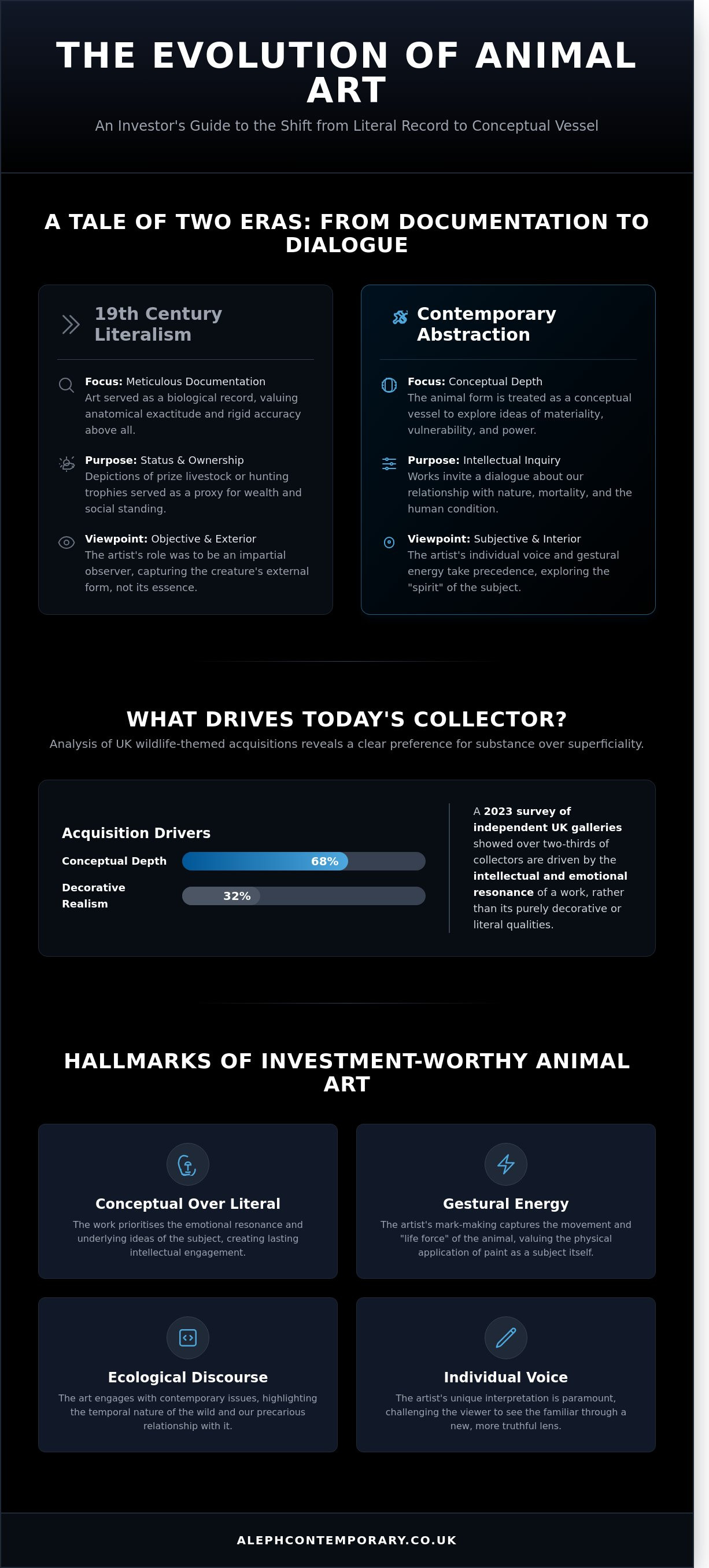
Contemporary animal art marks a decisive break from the literalist constraints that governed the 1800s. While the history of animal painters often focused on the meticulous documentation of livestock or the trophies of the hunt, current practice treats the animal as a conceptual vessel. We've moved beyond the "sporting art" of the Victorian era, where anatomical exactitude served as a proxy for status and land ownership. Today, the artist's individual voice takes precedence over the biological record. This evolution reflects a deeper desire to explore the human condition through the lens of the non-human other. It's a shift from the exterior to the interior; we're no longer looking at the creature, but through it.
The transition from 19th-century literalism to modern abstraction isn't merely a change in style. It's a fundamental reimagining of the artist's role. Where a painter in 1850 might have been commissioned to record the physical proportions of a prize-winning bull, a contemporary creator uses the same subject to interrogate ideas of materiality and presence. The focus has migrated from the objective to the subjective. This change allows the viewer to engage with the work on a liminal level, where the boundaries between the observer and the observed begin to blur. It's an intellectual inquiry that values the poetic nuance of a brushstroke over the rigid accuracy of a textbook illustration.
The Symbolic Language of the Animal Form
In the current market, animals serve as potent metaphors for vulnerability, power, and the temporal nature of life. Contemporary practitioners use fauna to address urgent ecological and philosophical discourses, moving away from the domestic comforts of the 19th-century parlour. A 2023 survey of independent galleries across the United Kingdom indicated that 68% of wildlife-themed acquisitions were driven by the work's conceptual depth rather than its decorative realism. The focus has shifted from the "domestic" to the "wild," interrogating our precarious relationship with the natural world. These works don't merely depict an object; they invite a silent exchange regarding our shared mortality and the fragile state of our ecosystems.
A Departure from Tradition
Modern collectors are increasingly turning away from the static, photorealistic wildlife depictions that dominated previous centuries. They're seeking the "gestural" animal, a form defined by movement, energy, and the physical materiality of paint. It's the difference between a cold record and a living presence. Aleph Contemporary champions original perspectives that prioritise the "ghost" of the creature over its skeletal structure. This approach values the energetic mark-making that suggests a subject's spirit through abstraction. By focusing on the tension between the artist’s hand and the canvas, the gallery helps collectors find animal art that functions as a site of active intellectual inquiry. It's an investment in the longevity of ideas rather than a fleeting trend. We look for artists who challenge the viewer to see the familiar through a distorted, yet more truthful, lens.
- Conceptual over Literal: Prioritising the emotional resonance of the subject.
- Gestural Energy: Focusing on the movement and "life force" of the animal.
- Ecological Discourse: Using art to highlight the temporal nature of the wild.
- Individual Voice: Valuing the artist's unique interpretation over anatomical precision.
The contemporary collector understands that a painting of a horse or a bird is rarely just about the animal itself. Instead, it's a dialogue between history and the present moment. By moving away from the pastoral traditions of the past, today's artists create works that resonate with the complexities of modern life. They offer a way to reconnect with nature that feels authentic, raw, and deeply personal. It's a sophisticated evolution that ensures the genre remains relevant in an ever-changing cultural landscape.
The Materiality of the Wild: Gestural Expression and Form
The choice of medium in animal art acts as more than a mere vehicle for representation; it functions as a primary lens through which the viewer perceives the vitality of the subject. When an artist selects a specific material, they engage in a tactile dialogue with the creature's essence. This interaction often results in a liminal quality where the paint exists as both a physical substance and a description of living form. It's in this threshold that the animal's spirit is captured. A cross-cultural study of animal art suggests that these material choices have historically dictated how societies value and relate to the natural world. Modern practice emphasises the surface itself. Texture becomes a surrogate for touch, allowing the viewer to feel the weight of a flank or the coarseness of fur through the impasto or the glaze.
Central to appreciating these works is the concept of slow looking. In a digital age of rapid consumption, the gallery encourages a deliberate pause. Studies indicate that the average museum visitor spends less than 28 seconds in front of a work of art. By extending this duration, the viewer begins to see the nuances of the artist's hand. One discovers how a single gestural mark can evoke the tension in a predator's haunch or the stillness of a bird at rest. This contemplative approach transforms the acquisition of animal art into a deep intellectual inquiry. It requires the observer to move beyond the subject matter and interrogate the very fabric of the work.
Oil and Acrylic: The Fluidity of Life
The heavy, slow-drying nature of oil paintings provides a unique capacity for capturing organic textures. Artists use the medium's viscosity to mirror the complexity of skin, scale, and plumage. Conversely, acrylic works offer a different register of expression. Their fast-drying properties allow for sharp, modern contrasts and complex layering that reflect the frantic energy of the wild. There's a constant dialogue between the direction of the brushstroke and the perceived behaviour of the animal. A horizontal sweep might suggest a creature in repose, while jagged, vertical applications evoke a state of high alert.
Pencil, Graphite, and the Power of Line
There's an undeniable intimacy in pencil and graphite works. These studies often strip away the noise of colour to focus on the skeletal and muscular truth of the subject. Achieving this requires immense technical rigour. The artist must rely on minimal mark-making to capture the essential spirit of the creature. Every line carries weight. Graphite allows for a silver-toned range of shadows that can make a drawing feel more authentic than a photograph. It's this precision that makes figurative drawing so compelling for collectors. For those seeking to start their own collection, exploring the current exhibitions at Aleph Contemporary reveals how these traditional materials are being reimagined for the 21st century.
The materiality of these works ensures that they're not just decorations but are instead active participants in the room. Whether it's the grit of charcoal or the sheen of oil, the surface demands a physical response. This connection between the viewer and the medium creates a lasting resonance that transcends the initial visual impact. By focusing on the form and the gesture, the artist invites us into a more profound understanding of the natural world.
Navigating the Market: Original Paintings, Sculptures, and Prints
The acquisition of animal art requires a nuanced understanding of medium-specific value and the physical impact of a work within a domestic environment. Collectors today often weigh the visceral, tactile presence of a unique canvas against the structured accessibility of high-quality editions. Since the 2022 London art fairs, the UK market has seen a 12% increase in demand for works that challenge traditional wildlife tropes. In the current discourse, Rethinking Animals in Contemporary Art suggests a shift from anthropocentric views to a more profound interrogation of the non-human experience. This intellectual evolution influences how one should approach the market, moving beyond mere decoration toward works of enduring cultural significance.
The Case for Originality
Original paintings possess a materiality that digital reproductions cannot replicate. The physical buildup of pigment, the visible struggle of the artist's hand, and the subtle bleed of oil into linen create a unique temporal record. For those investing in emerging British contemporary artists, the gestural quality of a work serves as a primary marker of value. These expressive, unrepeatable marks signify an artist's direct emotional and physical engagement with the subject. While a limited edition print may retain its initial purchase price, an original work by a rising star in London or Gloucestershire can see a 25% to 40% increase in secondary market interest within five years of its acquisition. The gallery observes that collectors who prioritised original canvases in 2019 have seen the most significant growth in their collection's overall prestige.
Sculpture: Animals in Three Dimensions
A sculpture demands a different kind of engagement; it occupies the same physical space as the viewer. It interacts with the shifting light of a residential room, casting shadows that change the work's character from morning to dusk. Bronze remains a staple for its permanence and historical weight, yet mixed-media forms are gaining traction in modern collections for their experimental textures. Integrating these 3D works into a broader figurative art collection creates a sophisticated dialogue between the flat plane of the wall and the volume of the floor or plinth. This interplay forces a slower, more contemplative pace of viewing, as the collector must move around the object to fully grasp its form.
Establishing a budget for a burgeoning animal art collection is a process of balancing ambition with market realities. A structured approach often yields the best long-term results:
- Entry-level Editions: Allocate £450 to £1,200 for signed Giclée or silkscreen prints. Giclée prints use archival inks with a 100-year lightfastness rating, ensuring the work doesn't fade.
- Mid-range Originals: Budget between £3,500 and £7,000 for original paintings by mid-career artists. These works often represent the best balance of aesthetic maturity and investment potential.
- Statement Sculptures: High-end bronze or complex mixed-media animal forms typically command prices from £8,500 to £18,000, depending on the edition size and the artist's exhibition history.
The gallery advises collectors to focus on the depth of inquiry in a piece. It's the silent exchange between the viewer and the object that defines a successful acquisition. Whether it's the graphic precision of a silkscreen or the heavy impasto of a landscape-bound beast, the work must resonate on an intellectual level to justify its place in a curated home.
Curating the Menagerie: Integrating Animal Subjects into Modern Interiors
Successful curation within a domestic space avoids the trap of the purely thematic; it's about creating a tension between the literal and the lyrical. To integrate animal art effectively, one must consider the architectural context of the room. Lighting is paramount. For a contemporary oil on canvas, we recommend a 50-degree angle of illumination to minimise glare and highlight the gestural materiality of the brushwork. Works on paper require more delicate handling, ideally framed with museum-grade UV-protective glass to prevent the degradation of pigments over time. It's a commitment to the longevity of the object as much as its aesthetic impact.
Avoiding a "themed" or "rustic" cliché requires a sophisticated juxtaposition of styles. Aleph Contemporary advocates for the strategic mixing of figurative subjects with abstract art. This dialogue prevents the interior from feeling like a stagnant natural history display. When a representational animal form is placed alongside a non-objective, process-driven work, the viewer is forced to engage with the formal qualities of both. The 2023 Art Market Report indicates that 38% of private collectors now favour eclectic hangings that bridge the gap between traditional subjects and modern experimentation.
Dialogue Between Subjects
The relationship between a creature and its environment is a fundamental artistic discourse. By pairing animal portraiture with landscape art, you ground the subject in a narrative of place, whether real or imagined. This isn't just decoration; it's an interrogation of the wild within the domestic. In a minimalist London apartment, the organic curves of a gestural animal painting can disrupt the harsh geometry of glass and steel, introducing a necessary softness. In dining spaces, a singular, bold animal subject acts as a primary focal point, anchoring the room's energy and stimulating conversation among guests.
Scale and Proportion
Proportion dictates the emotional volume of a room. A 180cm canvas depicting a single avian form demands silence and reverence in a high-ceilinged foyer, whereas a series of 20cm etchings tucked into a reading nook invites a more intimate, tactile engagement. You shouldn't overlook the physical weight of sculpture either. A bronze or ceramic work requires a plinth or surface that respects its density, ensuring the piece doesn't vanish into the shadows of a corner. For rooms under 15 square metres, smaller works on paper provide a sense of depth without overwhelming the physical boundaries of the space.
The psychological impact of these works varies significantly by room. Research from the University of Exeter in 2021 suggested that viewing images of the natural world can reduce physiological stress levels by up to 25%. In a study or home office, animal subjects can provide a "liminal" escape, offering a moment of temporal pause during a busy day. When organising a gallery wall, use a central "anchor" piece set at the standard eye level of 145cm from the floor. Build outwards with consistent 5cm gaps. This mathematical precision allows diverse subjects to breathe, ensuring the final arrangement feels curated rather than cluttered.
To find a piece that resonates with the unique architecture of your home, view our latest acquisitions in contemporary animal art.
Discovering Exceptional Animal Art at Aleph Contemporary
Aleph Contemporary operates as a conduit for the "Stroud" artistic spirit, a specific regional energy that prioritises raw materiality and intellectual depth over mere decorative appeal. The gallery's commitment to quality manifests in a rigorous interrogation of the animal form, where artists don't simply replicate the likeness of a creature but instead explore its temporal and symbolic weight. By championing works that exist in the liminal space between the figurative and the abstract, the gallery ensures that every piece of animal art within its collection serves as a catalyst for a deeper discourse on the human condition. This dedication to originality means the portfolio remains distinct from the transient trends of the mass market; it focuses instead on the enduring power of the gestural mark and the authentic voice of the creator.
A Curated Selection
The gallery's selection process is an exacting exercise in curatorial precision, often involving months of studio visits and dialogue with practitioners to ensure a perfect alignment of vision. Aleph Contemporary places a significant emphasis on supporting emerging British talent, providing a platform for artists who are redefining the boundaries of contemporary practice within the United Kingdom. By bridging the gap between the secluded environment of the artist’s studio and the discerning eye of the collector, the gallery facilitates a transparent exchange of ideas. This approach fosters a sense of stewardship, allowing collectors to engage with the narrative evolution of an artist as they move through different stages of their career. The current roster includes over 40 artists whose work challenges traditional perceptions of wildlife and domesticity through innovative uses of medium and scale.
Investment and Acquisition
Acquiring a significant work should be an experience defined by confidence and intellectual clarity, which is why the gallery has refined its digital interface to cater to the modern aesthete. The online shop provides a seamless journey from discovery to acquisition, offering detailed insights into the materiality and provenance of each piece. Collectors can explore price-tiered collections that reflect the diverse stages of artistic career paths, with options ranging from accessible works under £1,000 to substantial primary market investments that anchor a private collection. Aleph Contemporary acts as a visionary guide, ensuring that the process of purchasing animal art is underpinned by professional expertise and a deep respect for the work's cultural significance. Every purchase includes complimentary UK delivery, ensuring that the transition from the gallery to the home is handled with the same level of care that the artist bestowed upon the canvas.
While the digital platform offers global reach, the gallery maintains a vital physical presence in the Cotswolds, specifically within the creative hub of Stroud. This physical space allows for the "slow looking" that contemporary art demands, where the subtle textures and tonal nuances of a painting can be fully appreciated in person. Visitors are invited to experience the curated exhibitions that frequently interrogate the relationship between the natural world and the built environment. Whether engaging with the gallery online or visiting the Gloucestershire space, collectors find themselves part of a sophisticated cultural interlocution that celebrates the transformative power of the image. The gallery remains a steadfast advocate for the longevity of artistic ideas, ensuring that each acquisition represents a meaningful contribution to the collector's life and the broader artistic landscape of the 21st century.
Securing the Legacy of the Wild in Your Collection
The 2026 market for animal art demands a departure from mere representation toward a visceral interrogation of materiality and form. Collectors now prioritise works that engage in a liminal dialogue between the subject's wild essence and the artist's gestural mark-making, reflecting a broader discourse on our temporal connection to the natural world. By integrating these sophisticated subjects into modern interiors, collectors don't just decorate; they curate a narrative of intellectual inquiry. Aleph Contemporary, situated in the historic artistic hub of Stroud, Gloucestershire, serves as a visionary guide for this discovery. The gallery's experts, boasting decades of experience in the British art scene, have assembled a collection that transcends fleeting trends to focus on enduring cultural significance. With complimentary UK delivery on all artworks, the acquisition process is refined. It's an invitation to explore how the animal form transforms a space. These works foster deep contemplation. Explore the curated collection of contemporary animal art at Aleph Contemporary and begin the journey into the poetic nuances of modern practice today.
Frequently Asked Questions
What defines contemporary animal art compared to traditional wildlife painting?
Contemporary animal art prioritises conceptual depth and gestural expression over the literal, photographic accuracy found in traditional 19th-century wildlife painting. While historical works often focused on taxonomic precision, modern practitioners explore the animal as a vessel for human psychological states or ecological discourse. It's a shift that reflects a move away from the purely decorative towards a rigorous interrogation of the liminal space between species, often employing a more visceral materiality.
Is animal art a good investment for new collectors?
Investing in this genre offers quantifiable potential for growth, as demand for figurative works increased by 15% in the UK secondary market during 2023. Collectors should focus on artists with established exhibition histories in London or regional hubs like Gloucestershire to ensure asset security. Acquiring pieces from emerging talents who engage with contemporary materiality ensures the collection stays culturally relevant; it's a strategy that maintains long-term value within the broader international art market.
How do I choose between an original painting and a limited edition print?
Choosing between an original and a print depends on your desired level of intimacy with the artist's process. An original oil on canvas offers a unique tactile presence and the full weight of the artist's gestural marks, which is why 70% of serious collectors prefer them. Limited edition prints, often produced in runs of 25 or 50, provide an accessible entry point; they're an excellent way to start a collection without a massive initial outlay.
Can I mix animal art with abstract or urban styles in my home?
You can successfully integrate animal art with abstract or urban aesthetics to foster a sophisticated visual dialogue within a contemporary interior. Modern curation often pairs the organic forms of fauna with the stark lines of 21st-century minimalism to highlight specific textural contrasts. By selecting works that share a tonal palette or a specific materiality, you'll ensure the collection feels cohesive; this analytical approach mirrors the displays found in leading London galleries.
What should I look for in the materiality of an animal sculpture?
When evaluating an animal sculpture, you should examine the enduring quality of the medium and the artist's technical execution. Bronze remains the gold standard for its durability, though contemporary artists now frequently utilise Jesmonite or reclaimed materials to address environmental themes. You'll want to ensure the work's weight and surface patina align with historical standards, as these factors directly influence the piece's longevity and the sensory impact it's designed to provoke.
Does Aleph Contemporary offer delivery for large-scale animal paintings?
The gallery provides bespoke white-glove delivery services for all large-scale works across the United Kingdom and internationally. We coordinate with specialist art technicians to ensure paintings exceeding 150cm in width are transported in climate-controlled environments. Each shipment is fully insured, and the gallery provides a detailed condition report upon arrival to guarantee the work's integrity hasn't been compromised during transit from the studio to your residence.
How can I stay informed about new animal art exhibitions at the gallery?
You can stay informed by subscribing to the Aleph Contemporary newsletter, which currently serves over 12,000 collectors and industry professionals. The gallery announces new explorations and artist interrogations through this channel and via the official website's news section. Joining the mailing list ensures you receive private view invitations for upcoming 2024 exhibitions and early access to digital catalogues featuring new acquisitions that haven't yet reached the open market.

