
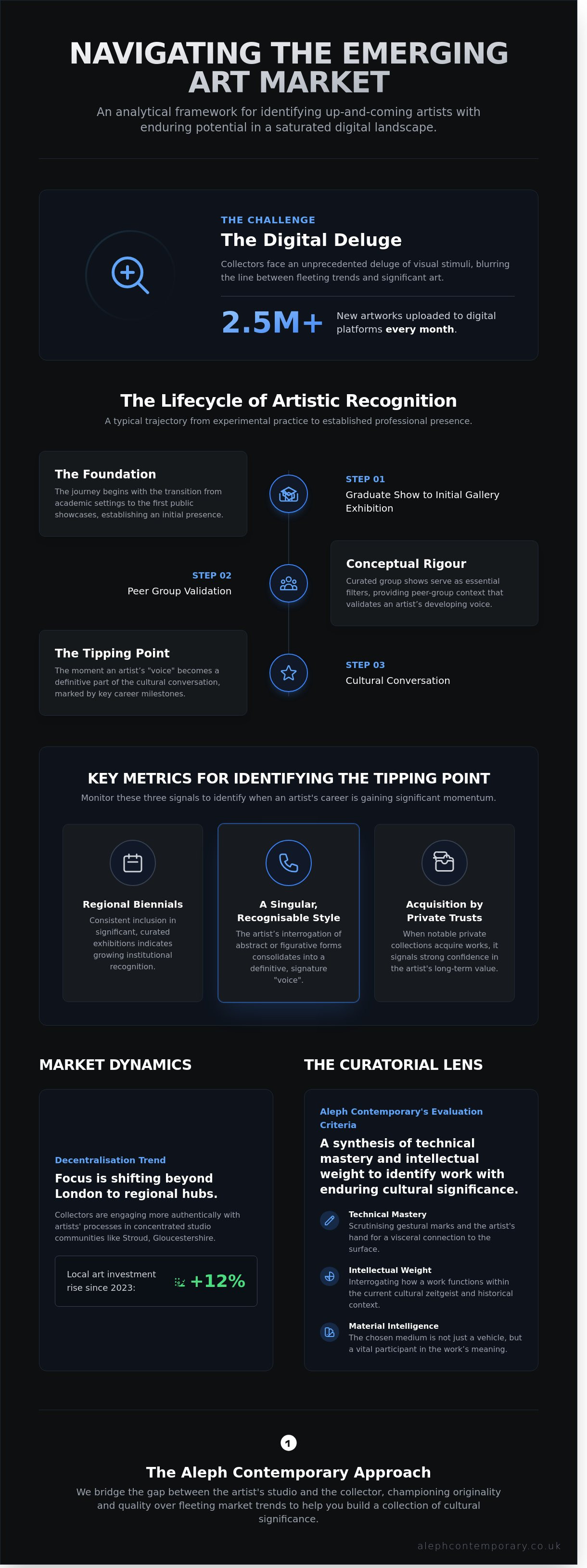
What if the most profound artistic voices of 2026 are currently obscured by the very digital noise intended to amplify them? Collectors today face an unprecedented deluge of visual stimuli, with over 2.5 million new artworks uploaded to global digital platforms every month; this creates an environment where the distinction between a fleeting aesthetic trend and a significant contribution to art history becomes increasingly blurred. You likely recognise that the traditional markers of value are shifting, making it difficult to discern which practitioners possess the intellectual depth and material rigour to endure beyond a single season.
Aleph Contemporary offers an intellectually rigorous framework designed to navigate this complexity, providing the analytical tools necessary to identify up and coming artists whose work resonates with both poetic nuance and historical weight. This resource delivers a systematic approach to evaluating new talent, moving from the technical interrogation of an artist's process to the broader philosophical contexts that define their practice. The following analysis examines the vital role of the curator as a cultural interlocutor and provides a curated selection of investment-worthy pieces that represent the next generation of contemporary excellence within the London and international markets.
Key Takeaways
- Master the distinction between emerging talent and established practitioners by applying a rigorous framework to identify up and coming artists with enduring potential.
- Learn to evaluate the technical rigour and materiality of new works through a curatorial lens that prioritises conceptual depth and philosophical interrogation.
- Gain insights into the pivotal genres currently shaping the British contemporary scene, including the significant resurgence of figurative art and new explorations in abstract form.
- Develop a strategic acquisition plan by learning how to vet gallery rosters and align collection budgets with the long-term cultural significance of new acquisitions.
- Understand how Aleph Contemporary bridges the gap between the artist’s studio and the collector to champion originality and quality over fleeting market trends.
Defining the Emerging Market: What Characterises Up and Coming Artists?
In the contemporary British art market, the designation of up and coming artists describes a specific, high-potentiality phase where creative output begins to transcend the private confines of the studio to enter the public consciousness. Aleph Contemporary views this stage as a critical juncture within the wider ecosystem, marked by a shift from experimental practice to a more codified professional presence. An emerging artist is one who is currently establishing a distinctive visual language and critical discourse. While established practitioners rely on a settled provenance and a predictable secondary market, these newer voices represent the vanguard of aesthetic evolution. Their work often occupies a liminal space, balanced between raw innovation and the formal structures of the gallery system.
Institutional recognition and commercial momentum don't always move in parallel. A painter might gain significant traction through curated exhibitions before their price points reflect their cultural weight. By 2026, the British scene will likely prioritise artists who bridge the gap between digital fluency and traditional oil techniques, as collectors seek tangible materiality in an increasingly virtual world. Historical precedents remain vital when Defining the Emerging Market, as seen in the rapid ascent of the 1990s London scene, yet the current climate favours a more sustained, intellectual growth over sudden, volatile fame.
The Lifecycle of Artistic Recognition
The trajectory typically begins with the transition from the graduate show to the initial gallery exhibition. Curated group shows serve as essential filters, providing the peer-group context that validates an artist’s conceptual rigour. Identifying the tipping point in a career involves monitoring three specific metrics: consistent inclusion in regional biennials, the acquisition of works by notable private trusts, and a shift in the artist's abstract or figurative interrogation toward a more singular, recognisable style. It's the moment when the artist’s "voice" becomes a definitive part of the cultural conversation.
Market Dynamics and Cultural Value
Market demand often follows a period of intense aesthetic innovation. Sophisticated collectors are increasingly looking beyond London, focusing on regional hubs like Stroud, Gloucestershire, where a concentration of studio spaces has fostered a 12% rise in local art investment since 2023. This decentralisation allows for a more authentic engagement with an artist's process. The gallery facilitates this discovery by offering accessible entry points, such as works under £1,000, ensuring that the dialogue between the creator and the collector begins early in the artist’s professional life.
The Curatorial Lens: How We Evaluate New Talent
Aleph Contemporary employs a rigorous methodology when identifying up and coming artists whose work transcends mere aesthetic appeal. The gallery prioritises a synthesis of technical mastery and intellectual weight. As explored in The Curatorial Lens, the process of evaluation requires a deep interrogation of how a new body of work functions within the current cultural zeitgeist. The gallery looks for a specific kind of material intelligence. Here, the artist’s chosen medium isn't just a vehicle for an image; it's a vital participant in the work’s meaning. This analytical precision ensures that every acquisition possesses the potential for enduring cultural significance.
Materiality and Process
In contemporary practice, the physical presence of an object often dictates its emotional resonance. Aleph Contemporary scrutinises the gestural marks and the specificities of the artist’s hand, seeking a visceral connection to the surface. This is particularly evident in the tactile nature of oil paint works, where the impasto or the delicate glazing creates a temporal depth that digital reproductions cannot capture. The gallery values the labour of the studio. It identifies artists who demonstrate a profound commitment to the physical evolution of their craft over a sustained period. It's common for the gallery to track a practitioner's output for 24 to 36 months before formal representation to ensure technical rigour remains consistent.
Conceptual Discourse and Originality
Beyond the surface, the gallery interrogates the artist’s conceptual framework. Does the work contribute to a broader art-historical conversation, or does it merely echo existing tropes? Aleph Contemporary champions the practice of slow looking, a deliberate and unhurried engagement that allows the work’s philosophical layers to unfold. This process reveals the tension between tradition and innovation. An artist might reference 17th-century chiaroscuro to address 21st-century anxieties, creating a liminal space between the past and the present. Consistency is paramount. The gallery seeks a coherent thread that runs through an artist’s evolving practice. This ensures that each piece is a deliberate step in a lifelong inquiry rather than a fleeting response to market trends. Identifying up and coming artists requires this balance of looking back at history while looking forward at potential.
This discerning approach provides a bridge between the artist’s studio and the collector’s world. It's a process that values depth over speed. For those beginning their journey into collecting, exploring the gallery's curated selection of works under £1,000 offers an entry point into a world of sophisticated contemporary practice.
Key Genres for Modern Collectors: Where to Find Fresh Perspectives
The contemporary British art market is currently defined by a rigorous interrogation of traditional forms, moving away from the mass-produced aesthetic toward a deeper focus on materiality. Collectors are increasingly seeking works that bridge the gap between historical technique and modern discourse. This shift is particularly evident in the UK, where a new generation of up and coming artists is redefining how we perceive space, identity, and the environment. Data from 2024 suggests a growing appetite for works that offer tactile engagement, as collectors prioritise the physical presence of the object in an increasingly digital world.
The New Figurative Movement
The human form has returned to the centre of artistic inquiry, though it's no longer bound by the constraints of traditional realism. Contemporary practitioners are using the body as a vessel for exploring complex narratives of identity and social belonging. By distorting proportions or placing figures in surreal, liminal spaces, these artists challenge the viewer's perception of the self. This revival is not merely aesthetic; it's a profound Sotheby's Institute on collecting emerging artists highlights how these fresh perspectives are essential for a dynamic collection. You can explore a meticulously curated selection of figurative art at Aleph, where the intersection of portraiture and modern practice is on full display.
Abstraction and Materiality
Non-representational work continues to serve as a vital site for intellectual inquiry. The current focus lies in the "gestural" quality of the paint and the physical properties of the medium itself. Artists are experimenting with the tension between control and spontaneity, often using light and colour to evoke specific temporal moments. For the private collector, the enduring appeal of these compositions lies in their ability to transform a space through atmospheric resonance. To discover how these concepts are being pushed forward, view our collection of abstract art by emerging names who are currently making significant waves in the London and regional scenes.
Beyond these primary movements, several other genres are experiencing a notable evolution:
- Digital Landscapes: Traditional scenery is being reimagined through the lens of technology, incorporating glitch aesthetics and synthetic palettes.
- Urban Interventions: Artists are capturing the grit and geometry of UK cityscapes, often reflecting on the rapid pace of urban regeneration.
- Sculptural Innovation: There's a marked increase in the use of unconventional materials, such as repurposed industrial waste or organic matter, to explore the relationship between the man-made and the natural.
Identifying up and coming artists within these genres requires a discerning eye for technical skill and conceptual depth. The gallery functions as a bridge in this process, ensuring that every acquisition represents a meaningful contribution to the ongoing dialogue of contemporary art.
Strategic Acquisition: A Guide to Building a Contemporary Collection
Building a meaningful collection requires a transition from impulsive acquisition to a deliberate, curated strategy. This process begins with a rigorous evaluation of an artist's trajectory and the gallery’s role in shaping their career. Aleph Contemporary views the collector not merely as a buyer, but as a vital participant in a cultural dialogue that sustains the arts ecosystem. It's a partnership that demands both analytical precision and an openness to the evocative power of the medium.
Budgeting and Price Tiers
A strategic budget allows for the systematic growth of a collection without compromising on quality. In the current 2024 market, identifying high-quality work early in a creator’s career is a hallmark of a discerning eye. Collectors often begin by exploring exceptional works under £1,000 to support up and coming artists whose conceptual foundations are already firmly established. This entry point provides a unique opportunity to acquire pieces before their market value reflects their burgeoning critical acclaim. Investing at this stage isn't just a financial decision; it's an investment in the artist's future potential and their ongoing interrogation of materiality.
The Acquisition Process
The transition from digital discovery to physical possession should be seamless and intellectually grounded. When you find a piece that resonates, the first step is to enquire directly with the gallery about its provenance and the artist's broader body of work. Aleph Contemporary facilitates this through a transparent digital platform, where original paintings can be acquired with confidence. To ensure the safety of these delicate objects, the gallery provides complimentary UK delivery and uses professional handlers trained in the specific requirements of fine art transport. This logistical precision ensures the work arrives in pristine condition, ready to be integrated into your space.
In addition to original works, collectors often look for high-quality wall art to complete their interior vision; you can learn more about Flexo Draws to discover premium paper posters that suit contemporary spaces.
- Review the artist’s exhibition history to understand their professional momentum.
- Assess how the work fits within your existing collection’s thematic or formal discourse.
- Maintain a consistent dialogue with the gallery to receive early access to new releases and private views.
Acquiring art is a long-term commitment to patronage. It's about more than the object; it's about the enduring relevance of the artist's voice in the UK's contemporary landscape. Supporting up and coming artists through Aleph Contemporary ensures that your collection remains at the forefront of the nation's evolving artistic narrative. By vetting a gallery’s curatorial history, you ensure your collection is built on a foundation of intellectual rigour and artistic excellence.
The Aleph Contemporary Approach: Championing Originality
Aleph Contemporary maintains a rigorous standard that distinguishes its collection from the volatile cycles of the broader art market. The gallery prioritises the intrinsic value of a work, focusing on how materiality and process intersect with historical narratives. By acting as a deliberate conduit between the artist's studio and the collector's environment, the gallery ensures that the transition of a piece is grounded in intellectual depth rather than speculative hype. It's a philosophy that rejects fleeting trends in favour of works possessing enduring cultural weight.
The gallery's role extends beyond mere representation; it serves as a sophisticated cultural interlocutor. This involves a commitment to identifying up and coming artists whose practices demonstrate a profound interrogation of their chosen medium. Whether the work is a gestural abstraction or a precise figurative study, the selection process is governed by a search for poetic nuance and technical mastery. This analytical precision helps collectors build portfolios that aren't just aesthetically pleasing but are also intellectually robust.
Curated Excellence in the Cotswolds
The Stroud gallery space, situated in the heart of Gloucestershire, functions as a vital hub for contemporary discourse. It's a location where the quietude of the surroundings facilitates a deeper, more contemplative engagement with the art. Aleph Contemporary provides comprehensive support for its roster of up and coming artists, offering them a platform where their technical experimentation is met with scholarly interrogation. The gallery's guiding principles are rooted in the belief that art should challenge the viewer, fostering a silent exchange that transcends the temporal. This regional centre provides a necessary counterpoint to the hurried pace of the London art scene.
Next Steps for the Discerning Collector
For those seeking to build a collection with enduring significance, the gallery offers several points of entry. Collectors can examine the digital catalogue, which categorises works by medium, including oil paintings and mixed-media compositions. Engaging with the gallery's collection allows for a systematic exploration of various price points, ranging from works under £1,000 to established pieces reaching £20,000. Personalised consultations are available to help navigate the nuances of the current market. These sessions provide evidence-based insights into the career trajectories of the creators we represent.
Cultivating a Collection for 2026 and Beyond
Building a resilient portfolio requires a shift from chasing ephemeral trends toward a rigorous engagement with the profound materiality of the work itself. The gallery's 2026 projections indicate that long-term value resides in creators who navigate the complex dialogue between historical precedent and modern interrogation. By prioritising works curated by seasoned experts who understand the nuances of the creative process, collectors ensure their acquisitions possess enduring cultural weight. Identifying up and coming artists is a deliberate act of intellectual inquiry that transforms a simple purchase into a meaningful contribution to the art historical canon. Based in the historic art centre of Stroud, Aleph Contemporary provides the requisite expertise to guide these strategic decisions with analytical precision. Every original work acquired through the gallery includes complimentary UK delivery, ensuring a seamless transition from the studio to the collector's environment. It's an opportune moment to refine your perspective and invest in the voices that'll define the next decade.
Discover the next generation of talent at Aleph Contemporary and begin your journey into the heart of original contemporary practice.
Frequently Asked Questions
How do I know if an artist is truly 'up and coming'?
You can identify an artist on an upward trajectory by examining their consistent exhibition activity and institutional recognition within 3 to 5 years of graduation. These up and coming artists often feature in curated group shows at established venues like the Royal Academy Summer Exhibition or the Bloomberg New Contemporaries. A steady progression from local prizes to regional residencies signals a credible trajectory of growth. Collectors should assess if the work maintains a distinct conceptual rigour that transcends fleeting aesthetic trends.
Is it better to buy abstract or figurative art when starting a collection?
The choice depends on your personal intellectual engagement with the work's narrative or formal qualities rather than a strict investment rule. Abstract works often invite a more meditative, subjective dialogue through gestural marks and colour fields; figurative pieces might provide a more direct interrogation of the human condition. Data from the 2023 Art Basel and UBS Report shows that contemporary painting remains the largest market sector at 54 per cent of global sales. Begin with what resonates with your aesthetic philosophy.
What role does a gallery play in the career of an emerging artist?
A gallery serves as a critical bridge between the artist’s studio and the broader cultural discourse by providing curation, marketing, and institutional networking. For up and coming artists, the gallery acts as a visionary guide that facilitates introductions to museum curators and serious collectors. They manage the temporal aspects of a career; they ensure the work is seen in contexts that preserve its long-term value. This partnership allows the artist to focus on their creative process while the gallery builds their professional legacy.
Can I buy original paintings online with confidence?
You can purchase original paintings online with confidence by verifying the gallery’s reputation and checking for detailed provenance documentation. Reputable platforms provide high-resolution images that capture the work’s materiality and offer 14-day return periods under UK Consumer Contracts Regulations. Aleph Contemporary ensures every digital transaction includes a physical Certificate of Authenticity signed by the artist. Professional shipping services use bespoke crating to protect the investment during transit across the UK or abroad. It's a secure way to build a collection.
Why is materiality so important in contemporary art evaluation?
Materiality is vital because the physical substance of a work, such as the texture of the impasto or the weave of the linen, dictates how the piece interacts with light and space. In contemporary art evaluation, the choice of media is an intellectual decision that informs the viewer's sensory experience. A 2022 study on art perception indicated that the tactile quality of a surface significantly influences a collector's emotional resonance with the object. Understanding these physical properties allows for a deeper appreciation of the artist's technical labour.
How does the Stroud art scene compare to the London market?
The Stroud art scene offers a concentrated hub of creative interrogation that rivals London’s larger market through its lower overheads and collaborative community spirit. While London remains the epicentre for high-value auctions, Stroud’s Lansdown Hall and local studios host over 80 professional artists during the annual Site Festival. This regional focus provides a more intimate environment for discovery. It allows collectors to engage with high-level artistic practice outside the frenetic pace of the capital's commercial galleries.
What should I look for in an artist’s CV or exhibition history?
Prioritise artists who demonstrate a consistent history of solo exhibitions and inclusion in juried competitions over the last 24 to 48 months. Look for residencies at institutions like the British School at Rome or the Delfina Foundation; these indicate a high level of peer recognition. A robust CV should also list acquisitions by public or private collections, such as the Arts Council Collection. These milestones provide a verifiable record of the artist's professional development and cultural relevance. Don't ignore smaller group shows if the curation is tight.
How can I stay updated on new releases from Aleph Contemporary?
Subscribe to the Aleph Contemporary newsletter for monthly dispatches on new releases and upcoming virtual exhibitions. This curated communication provides deep dives into the practice of each artist, offering insights that go beyond simple commercial listings. You can also follow the gallery’s social media channels for real-time updates on gallery talks and artist interviews. Engaging with these digital platforms ensures you're informed about the latest dialogues shaping the contemporary art world. It's the most direct way to discover new talent.

