
What if the most costly error in art collecting isn’t a matter of price, but a failure of resonance between the work and your home? Many of our visitors in Stroud arrive with a familiar weight of anxiety, fearing they might overpay for a fleeting trend or worry that a delicate mixed-media piece won't survive the decades. It’s a natural concern, but avoiding common art buying mistakes begins with shifting your perspective from a mere transaction to a long-term dialogue with the artist’s vision.
In this curator-led guide, we invite you into a high-level conversation about selecting contemporary works that offer both aesthetic joy and technical endurance. From understanding the nuances of materiality to finding the perfect scale for modern interiors, Nicholas Wells shares the insights needed to navigate the 2026 art world with absolute confidence. We'll show you how to look past the "safe" choice and find a piece that truly belongs on your white walls, bathed in the soft light of your own space, ensuring your next acquisition is as rewarding as it is beautiful.
Key Takeaways
- Learn to distinguish between a fleeting market trend and a work with enduring substance that resonates with you long after the initial rush of discovery.
- Master the art of avoiding common art buying mistakes by understanding the technical longevity of materials like oil, mixed media, and gouache.
- Discover how to select works that are perfectly scaled for modern interiors, ensuring your new acquisition feels "easy to live with" in your unique space.
- Gain confidence in vetting galleries by looking for a focused curatorial voice and absolute transparency regarding artist stories and pricing.
- Explore practical steps for starting your collection, including how to find original paintings online that match both your aesthetic taste and your budget.
The Emotional Landscape: Why We Make Art Buying Mistakes
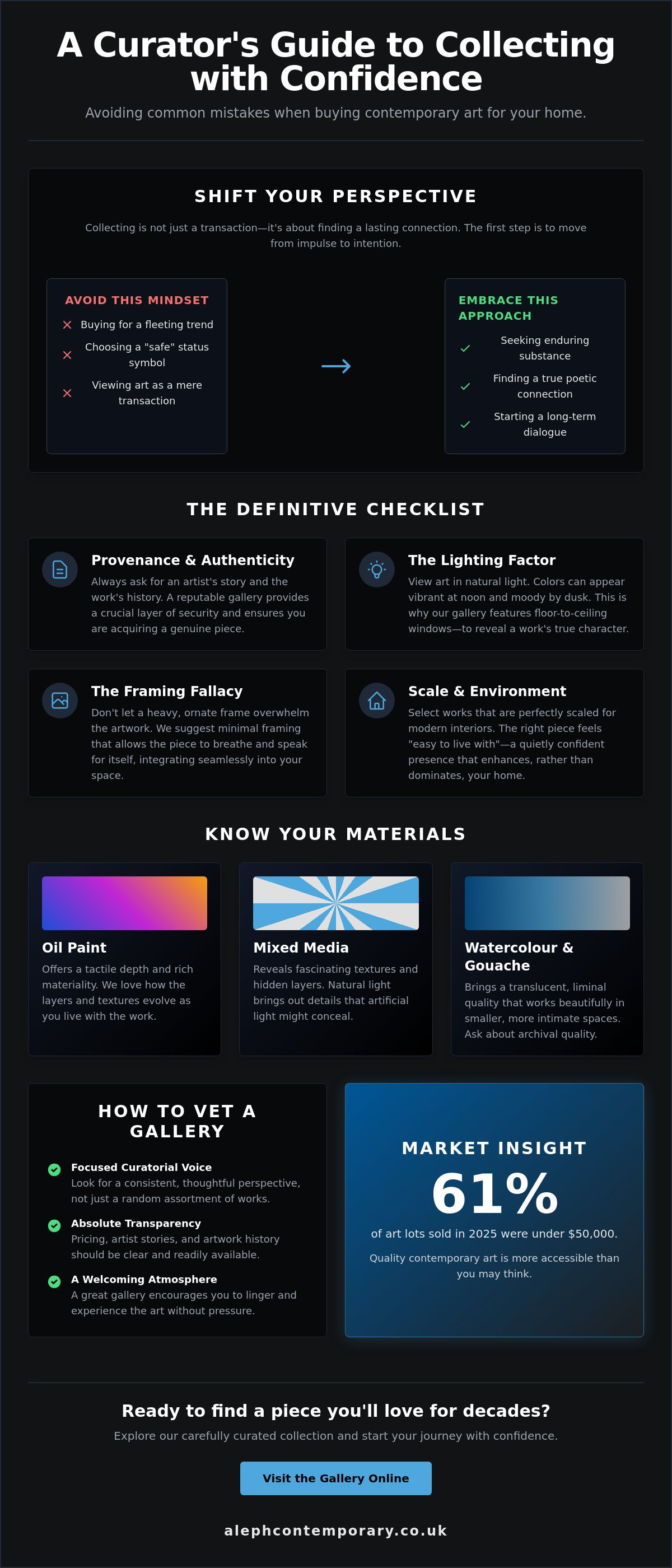
We've all felt that sudden, breathless pull when standing before a new painting. It’s a feeling that has fueled the history of art collecting for centuries. However, a vital part of avoiding common art buying mistakes is learning to distinguish between this initial spark and the quiet, enduring presence a work needs to have in your home. With artworks under $50,000 making up 61% of total lots sold in 2025, the market is full of choices; the challenge is finding the one that truly lasts.
Our gallery brings a specific perspective we call "London eye, Cotswolds warmth." This means we use a sharp, professional eye to find works of high quality, then present them in a way that feels approachable and real. Visitors often notice that our abstract art and figurative pieces are chosen because they are easy to live with. We want you to find a poetic connection rather than just a status symbol. When you focus on how a piece speaks to you rather than what it says about your social standing, you're already well on your way to avoiding common art buying mistakes.
The Trap of the "Safe" Choice
It’s tempting to choose "polite" art that simply fades into the background. While these pieces don't offend, they also don't inspire. We love how a carefully curated selection can offer a gentle presence in a room, perhaps even a soft questioning of the space, without being overwhelming. Nicholas Wells curated our current collection to ensure that even the boldest oil paint works possess a certain Cotswolds warmth. They don't just sit on the wall; they start a genuine dialogue with your home interiors.
Impulse vs. Intention in the Gallery
In our light-filled gallery in Stroud, we always encourage you to linger. We've designed the space with white walls and sharp spotlights, but it's the floor-to-ceiling windows that truly change the experience. They allow natural light to dance across the canvas throughout the day. This reveals the true materiality of mixed media pieces, showing textures and layers that artificial light might hide. Taking your time helps you see the difference between a clever visual hook and a deep, lasting story that you'll cherish for decades.
The Definitive Checklist for Avoiding Common Art Buying Mistakes
Building a collection is a journey that requires both an eye for beauty and a mind for detail. While the emotional pull is vital, avoiding common art buying mistakes involves a practical assessment of how a piece functions in your physical world. When you visit our light-filled gallery in Stroud, you'll see how we prioritise works that are easy to live with, yet possess a quietly confident presence. Nicholas Wells curated our current selection specifically for modern interiors, ensuring each piece feels at home on a white wall under sharp spotlights or bathed in the soft glow of a Cotswolds afternoon.
- Provenance and Authenticity: Buying from a reputable gallery provides a layer of security that auction sites often lack. We provide clear artist stories and transparent histories for every work we represent.
- The Lighting Factor: Our floor-to-ceiling windows allow you to see how natural light interacts with pigments. A colour that looks vibrant at noon might turn moody and deep by dusk, which is a crucial consideration for any long-term acquisition.
- The Framing Fallacy: Don't let a heavy frame overwhelm a delicate work. We often suggest minimal, thoughtful framing that allows the core artwork to breathe rather than distracting from the artist's intent.
Technical Considerations: Materials and Mediums
Understanding what you're buying is essential for long-term satisfaction. We love how oil paint works offer a tactile depth and a rich materiality that evolves as you look at them. In contrast, watercolour and gouache bring a liminal, translucent quality that works beautifully in smaller, more intimate spaces. Always ask about the archival quality of the paper and pigments used. This attention to detail is a cornerstone of any professional art investment guide, as it ensures the technical longevity of your collection against fading or deterioration.
Spatial Awareness: Beyond the Measuring Tape
Scale is frequently misunderstood. It isn't just about the physical dimensions; it's about visual weight. A small, intense abstract painting can sometimes anchor a large room more effectively than a sprawling landscape that lacks focus. Consider the breathing room around a piece. A work needs space to speak without being crowded by furniture or other objects. If you're unsure about how a piece might fit your aesthetic, you can explore our curated collections online to compare scales and styles before visiting us in person in the Cotswolds.
The Investment Myth: Balancing Value with Aesthetic Joy
Many collectors approach the 2026 market with an eye on art as a "safe haven" asset. While it's true that J.P. Morgan's art-financing portfolio grew by 90% in recent years, avoiding common art buying mistakes means looking past the spreadsheet. If you buy a piece solely for potential financial gain, you risk losing the very thing that makes art essential: the daily, poetic connection that feeds the soul. At our light-filled gallery in Stroud, we believe the best acquisitions are those that balance market intelligence with genuine aesthetic joy.
We see a clear "flight to quality" in the current landscape, where discerning collectors are looking for artists with a consistent narrative. A gallery’s roster should reflect this commitment to longevity. Nicholas Wells curated our artists not because they’re chasing a fleeting trend, but because their work has substance that endures. Whether they are emerging names or established figures, these creators are part of a larger conversation about the human condition that won't fade when the market shifts.
Defining "Value" in Contemporary Art
Value isn't just a number; it's the strength of an artist's "dialogue" across their career. When we evaluate a work, we look at exhibition history and the depth of curatorial support it has received. This is why British contemporary artists are attracting such focused attention right now. They offer a unique blend of tradition and innovation that resonates deeply with those who value intellectual substance. By focusing on the artist's story rather than just the price tag, you're making a more secure choice for your collection's future.
The "Easy to Live With" Standard
A "trophy" piece might impress guests, but we prefer "quietly confident work" that improves your daily life. Visitors often notice how our figurative art feels like a companion in the home. These works aren't just objects; they’re presences that change with the natural light pouring through our floor-to-ceiling windows. In the Cotswolds, we’ve found that the most successful collections are those built on pieces that are easy to live with, offering a sense of calm and inspiration every time you walk into the room. This approach is the secret to avoiding common art buying mistakes that lead to "collector's remorse" later on.
How to Vet a Gallery: The Nicholas Wells Approach
Choosing where you buy is just as important as the piece itself. A foundational step in avoiding common art buying mistakes is selecting a gallery that acts as a visionary guide rather than a simple storefront. You should look for a clear, focused curatorial voice that prioritizes artists with enduring cultural significance. We aren't a "catch-all" shop; instead, Nicholas Wells curated our roster to ensure every piece has a reason for being here, creating a bridge between the artist's studio and your personal collection.
Transparency is the next pillar of a good gallery relationship. You deserve to know the full story behind a work, from the artist's inspiration to clear, honest pricing. We encourage you to engage in conversation. A good curator is a welcoming guide, not a gatekeeper. Whether you're looking at abstract art or figurative pieces, we love to unfold the narrative of the work for you. This dialogue helps you feel a personal connection to the art before it even reaches your walls.
The Stroud Gallery Experience
Since our relocation from London to the Cotswolds in late 2023, our space in Stroud has become a site for deep thinking and slow looking. Visitors often notice how the white walls and sharp spotlights create a focused environment, but the real magic happens through our floor-to-ceiling windows. This Cotswolds art gallery was designed to be an intimate exhibition space where you can see how a painting truly lives. It's a vital part of avoiding common art buying mistakes, as it allows you to visualize the work in a real-world setting.
Questions Every Collector Should Ask
- "What inspired the artist’s use of these specific materials, such as oil paint or mixed media?"
- "How does this piece sit within the artist’s broader career trajectory?"
- "Can you tell me more about the dialogue this work creates in a modern interior?"
Finally, check for post-purchase support. We believe the acquisition process should be as smooth as the art is beautiful. This is why we offer complimentary UK delivery on all our works, ensuring your new piece arrives safely and ready to be enjoyed. If you're ready to start a conversation about your next piece, we invite you to view our latest curated collections or visit us in person at our contemporary art gallery Stroud to experience the light for yourself.
Starting Your Collection: Practical Next Steps
Once you have balanced the emotional resonance of a work with the technical checks of materiality, the final step is moving from observation to acquisition. We find that avoiding common art buying mistakes is much easier when you have a structured way to explore a gallery’s roster, allowing you to find a piece that truly harmonizes with your life. At our contemporary art gallery Stroud, we’ve designed the collecting process to be an unhurried journey of discovery, whether you are visiting us in person or browsing from afar.
For those who cannot reach the Cotswolds immediately, buying original paintings online in the UK has become an increasingly sophisticated experience. We provide high-resolution imagery that allows you to explore the surface textures and gestural details of a work, ensuring the materiality of the piece is clear before it reaches your home. This digital transparency is a vital tool for the modern collector, offering a way to linger on a work’s nuances from any location.
Navigating Our Online Shop
If you are feeling overwhelmed by choice, we suggest narrowing your focus by genre to see what dialogue a specific style creates with your interior. You might find that the expansive horizons of our landscapes offer a sense of calm, or perhaps the intimate focus of a still life is what your space requires. To support new collectors, we have curated a selection of works under £1,000, all of which are perfectly scaled for modern homes and include complimentary UK delivery to ensure a smooth acquisition process.
A Personal Invitation to Stroud
There is no substitute for the physical experience of art, and we warmly invite you to visit our Cotswolds art gallery to see our current curated selection in person. In our light-filled space, you can observe how the natural light from our floor-to-ceiling windows interacts with the pigments throughout the day, revealing depths that artificial lighting simply cannot capture. It is an environment designed for slow looking, where the white walls and sharp spotlights allow each work to speak for itself.
Let Nicholas Wells guide you through our latest explorations, helping you find a quietly confident work that resonates with your personal taste. Whether you are looking for your first original piece or adding to an established collection, our gallery remains a site of active intellectual inquiry and welcoming discovery. We look forward to sharing the unique atmosphere of our Stroud space with you during our next intimate exhibition.
Building a Legacy of Poetic Connection
Collecting art is a journey that moves far beyond the initial spark of discovery. We've explored how a successful acquisition relies on balancing that emotional pull with a practical eye for technical longevity and scale. By prioritizing the archival quality of materials and understanding how natural light interacts with a canvas, you're already avoiding common art buying mistakes. Remember that the most meaningful collections aren't built on fleeting trends; they're built on works that offer a daily, quiet confidence within your modern interior.
We invite you to continue this exploration with us. Whether you visit our light-filled gallery in the Cotswolds to see the floor-to-ceiling windows for yourself or browse our latest Nicholas Wells curated selection online, we're here to guide you. Every piece we represent is chosen to be easy to live with and is supported by complimentary UK delivery for your peace of mind.
Explore our carefully curated collection of original British art and find the next piece that speaks to your soul. We look forward to helping you build a collection that truly endures.
Frequently Asked Questions
What is the most common mistake first-time art buyers make?
The most common mistake is rushing into a purchase based on a fleeting impulse without considering how the work functions within a lived environment. Many new collectors forget to ask about the technical materiality of the piece or how it might react to the natural light in their home. Taking a moment to linger and visualize the work on your own walls is a vital step in avoiding common art buying mistakes.
How do I know if a piece of art is priced fairly?
Fair pricing is determined by an artist's career trajectory, their exhibition history, and the consistency of their market presence across the UK. A reputable gallery will always be transparent about these factors, explaining why a specific work is valued at its current level. We recommend looking for a clear curatorial voice that prioritizes artists with enduring cultural substance, as this ensures the pricing reflects the genuine quality of the work.
Should I buy art that matches my sofa or curtains?
While it's helpful for a piece to feel easy to live with, you should avoid choosing art simply to match your soft furnishings. Art works best when it creates a dialogue with your space rather than fading into the background. A quietly confident work will have its own poetic presence, offering a sense of companionship that outlasts your current interior trends or specific color schemes.
Is it a mistake to buy art as a financial investment?
It's often a mistake to buy art solely for financial gain, as the market can be unpredictable and the primary value of art lies in its daily inspiration. However, avoiding common art buying mistakes usually involves balancing market intelligence with personal joy. We suggest focusing on the artist's story and the materiality of the work first, as a piece that resonates emotionally is always a more rewarding long term addition.
How can I tell if an artist is "emerging" or "established"?
You can distinguish between the two by looking at their documented exhibition history and gallery representation. Emerging artists are often at the beginning of their journey, perhaps having their first intimate exhibition or showing in smaller group settings. Established artists usually have a long career with solo shows in public institutions and a body of work that has been consistently recognized by curators and critics over many years.
What should I look for when buying contemporary art online?
When buying online, focus on the quality of the imagery and the reputation of the gallery behind the screen. It's essential to see high-resolution photos that reveal the texture of oil paint works or the translucency of watercolours. You should also check for clear information regarding delivery and how the gallery supports you after the purchase, ensuring the process feels as welcoming and professional as a physical visit.
How do I determine the right size of art for my wall?
A helpful rule is to choose a work that covers between 60% and 75% of the available wall space. However, you must also consider the visual weight of the piece; a small, intense abstract painting can often hold a wall just as well as a larger, more airy landscape. Don't forget to account for the white space around the work, allowing it enough room to breathe within your interior.
Why is the gallery environment important when choosing a piece?
The physical gallery environment acts as a vital testing ground for a work's true character. In our light-filled gallery in Stroud, the white walls and sharp spotlights allow you to see the art without distraction. Most importantly, floor-to-ceiling windows show you how natural light interacts with the pigments, which is something you can't truly experience through a digital screen or in a dark, crowded environment.

