
Have you ever wondered how a painting that looks striking in a gallery will actually feel once it's hanging on your own wall? At Aleph Contemporary, we bring a "London eye" to our beautifully light-filled gallery in Stroud, following our late 2023 relocation from our London roots to the heart of the Cotswolds. Our floor-to-ceiling windows allow us to see exactly how an oil painting interacts with the shifting natural light throughout the day, while our white walls and sharp spotlights reveal the intricate textures that make this medium so unique. It's a focused environment where we can appreciate the slow-drying materiality that gives contemporary art its soul.
We understand that for new collectors, the fear of choosing a piece that doesn't "work" in your specific light or confusion over maintenance can be daunting. We agree that art should be something you connect with deeply and find easy to live with every day. In this guide, we'll show you exactly how to select and evaluate contemporary works that are perfectly scaled for your home. You'll gain the confidence to build a Nicholas Wells curated collection that brings sophisticated warmth and enduring value to your modern interior.
Key Takeaways
- Understand why the unique materiality of an oil painting offers a depth of colour and texture that remains unmatched by other mediums.
- Learn how to distinguish between "clean" pigment mixes and muddy tones to ensure your chosen piece maintains its visual clarity.
- Discover how to balance natural light and sharp spotlights to best showcase the rich surfaces of contemporary works in a modern interior.
- Gain confidence in navigating art pricing by understanding the relationship between artist reputation, work complexity, and canvas scale.
- See how we use our light-filled gallery in Stroud to test how original works interact with changing environments throughout the day.
The Timeless Appeal of Oil: Why Collectors Choose This Medium
We often hear visitors in our Stroud gallery remark on the distinct "glow" of a particular canvas. It is a quality unique to The Timeless Appeal of Oil, where pigments are bound in linseed oil rather than the synthetic resins found in acrylics. This organic bond creates a medium with unparalleled depth. Because oil paint dries through oxidation rather than evaporation, it allows for a "slow art" process. Artists can spend weeks or months pushing the paint, creating textures that feel alive. In 2026, as collectors increasingly look for quality and permanence, the oil painting remains the gold standard for any serious collection.
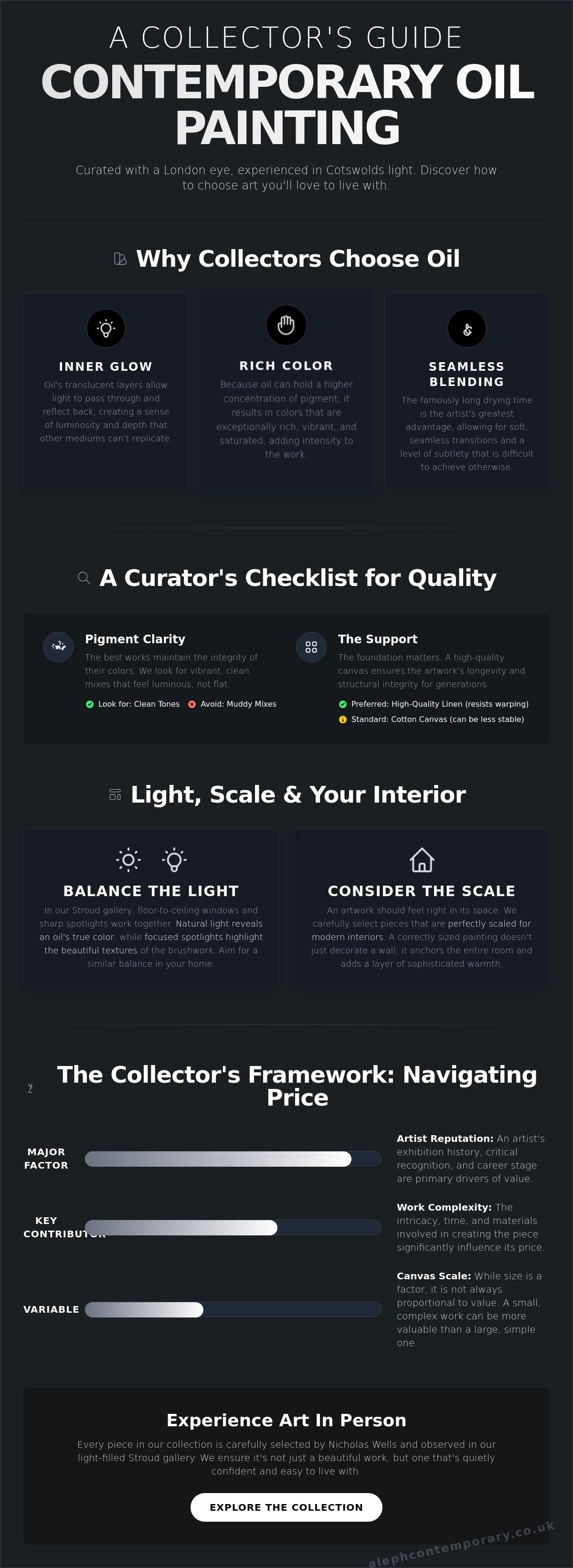
The way light interacts with oil is fundamentally different from other mediums. While acrylics can sometimes appear flat or plastic-like, oil paint allows light to travel through the upper layers of pigment and reflect back from the primer below. This creates a natural luminosity that we love to see under the sharp spotlights of our gallery. It is a material that doesn't just sit on a wall; it interacts with its environment. Here are a few reasons why oil continues to dominate the contemporary market:
- Light Refraction: The translucent nature of oil layers creates a sense of inner light.
- Colour Saturation: Oil can hold more pigment, resulting in richer, more vibrant tones.
- Blending Capabilities: The long drying time allows for soft, seamless transitions that other paints can't match.
The Materiality of the Canvas
There is a tactile joy in living with oil. You can see the physical history of the artist's hand in every stroke. Whether it's the thick, sculptural ridges of impasto or the whisper-thin layers of a delicate glaze, the materiality is undeniable. These works have a physical presence that anchors a room. We often notice how a well-placed canvas changes the atmosphere of a minimalist space, adding a layer of sophisticated warmth. Because of its archival nature, an oil work isn't just a purchase; it's a future heirloom that your family will enjoy for generations.
A Dialogue Between Tradition and Modernity
It's fascinating to see how contemporary artists use these centuries-old techniques to explore modern themes. The versatility of the medium is stunning. We see it in the sweeping, gestural movements of abstract paintings and the quiet precision of modern figurative works. Many people assume oil is traditional or "heavy," but it's actually incredibly easy to live with in modern architectural spaces. The floor-to-ceiling windows in our Stroud space show how these works breathe in natural light, making them perfect for the airy, light-filled interiors of today's homes.
Evaluating Quality: What to Look for in a Contemporary Oil Painting
When we look at a canvas through our "London eye," we're searching for a technical precision that ensures the work will stand the test of time. Since our late 2023 relocation from London to our light-filled gallery in Stroud, we've found that our floor-to-ceiling windows are the ultimate judge of paint quality. Visitors often notice that a truly superior What to Look for in a Contemporary Oil Painting is the clarity of the colour. We look for "clean" pigment mixes where the artist has avoided the trap of muddy tones, allowing the natural light of the Cotswolds to reveal a vibrant, internal glow within the layers.
The physical support of the piece is just as vital as the paint itself. While many standard works use cotton, we prefer the enduring strength of high-quality linen, which offers a stable, fine-textured surface that resists the warping sometimes seen in lesser materials. A well-constructed piece should feel substantial and perfectly scaled for a modern home, acting as a visual anchor on your wall. This attention to detail is a hallmark of a Nicholas Wells curated selection, ensuring that every oil painting we represent is easy to live with and built to last as a future heirloom.
Texture and Surface Interest
We love how the sharp spotlights against our white walls catch the physical ridges of a gestural brushstroke, creating a sense of movement that changes as you walk past. This surface interest, often called impasto, gives the work a three-dimensional life. When evaluating quality, observe the layers; you want to see a rich history of the artist's process, perhaps with glimpses of underpainting that suggest a long, meditative journey toward the finished image.
The Artist’s Intent and Narrative
A painting's value is deeply tied to the "quietly confident" story the artist tells. Whether it's a piece that captures the soft warmth of a local landscape or a bold abstract work, the narrative adds a layer of soul to the physical object. Our carefully curated oil works are chosen specifically for this resonance. We invite you to explore our Cotswolds art gallery, where we can help you find a piece that doesn't just decorate a room, but starts a meaningful conversation in your home.
Oil Paintings for Modern Interiors: Light, Scale, and Placement
At Aleph Contemporary, we believe that an oil painting isn't a static object; it's a living participant in your home's daily life. This is why our light-filled gallery in Stroud features expansive floor-to-ceiling windows. We love how the shifting Cotswolds weather allows us to see exactly how a piece will behave in a real-world environment. It's a "Stroud Gallery Experience" that we encourage all our visitors to lean into. By observing a canvas as the morning mist gives way to bright afternoon sun, you can begin to understand the true depth of the medium. We've found that this approach helps collectors choose works that are truly easy to live with.
When you bring a piece home, lighting becomes your primary tool for curation. While natural light reveals the subtle glazes of the paint, sharp spotlights are essential for catching the physical ridges of a gestural stroke against your white walls. We often suggest a mix of both. Ambient light provides a soft, atmospheric glow, while directional lighting creates the shadows that give the work a three-dimensional quality. It's this interplay that makes a Nicholas Wells curated selection feel so vibrant and alive.
Scaling is equally important for modern interiors. While some might be tempted by massive, wall-swallowing canvases, we find that "perfectly scaled" works often have a more profound impact. A piece that leaves room for your architecture to breathe creates a better dialogue with your existing furniture and decor. It's about finding a work that feels like it has always belonged in the room, rather than one that demands to be the only thing you see.
The Interaction of Light and Oil
The way daylight moves through a room can completely transform landscape art. In the morning, cool light might highlight the blue undertones of a distant hill, while the warm evening sun brings out golden highlights in the foreground. We recommend avoiding placing your oil painting in direct midday sun, as this can sometimes flatten the textures and cause unwanted glare. Instead, look for a spot where the light is indirect but plentiful, allowing the natural luminosity of the paint to shine through.
Room-by-Room Selection
Different rooms require different emotional temperatures. For a dining room, a bold, conversational piece acts as a wonderful focal point for evening gatherings. In contrast, bedrooms often benefit from "quietly confident" works that invite reflection and calm. We've seen how urban art can bring a sophisticated, rhythmic energy to a transitional hallway space, while seascapes offer a sense of expansive peace that works beautifully in private studies. Each choice is an opportunity to create a unique atmosphere in your home.
The Collector’s Framework: Navigating Price and Style
Many new collectors feel a bit of hesitation when they first look at an exhibition price list. We believe the process should be transparent and welcoming, mirroring the open, light-filled atmosphere of our Stroud gallery. Pricing an oil painting involves a few key factors: the physical size of the canvas, the technical complexity of the artist's process, and where they are in their professional journey. A Nicholas Wells curated selection ensures that every piece, regardless of price, has been chosen for its enduring quality and cultural significance.
If you're just starting out, there's a unique thrill in discovering works under £1, 000. These pieces often come from incredibly talented emerging artists whose work shows significant promise. We love how these smaller canvases can act as the first step in a lifelong journey of collecting. For those looking at the investment tier, works from £5, 000 to £10, 000 often represent mid-career artists with established museum histories and more intricate technical narratives. At this level, you're often looking at larger scales or works that required months of meditative layering.
Budgeting for Your First Original
It's often tempting to fill a wall with high-end prints, but we always encourage collectors to choose an original work whenever possible. An original oil painting has a physical soul and a depth of light that a digital reproduction simply can't replicate. Even if you start with our under £500 collection, you're acquiring a unique piece of an artist's lived experience. These works are archival, meaning they'll stay vibrant and stable for decades, eventually becoming a part of your family's personal history.
Style Selection: Abstract vs. Figurative
Deciding between styles is a deeply personal choice that often depends on the "temperature" of your home. Abstract art is often easy to live with because its focus on colour and rhythm allows it to adapt to different interior moods. However, the emotional weight and narrative connection of figurative art can create a powerful anchor in a modern room. We often see visitors in our Stroud space mixing both. By placing an abstract work near a figurative one on a white wall, you create a silent dialogue between the two. This mix makes your home feel like a personal gallery rather than a showroom.
Ready to find a piece that resonates with your space? We invite you to explore our current collection of original oil paintings and discover the joy of living with authentic contemporary art.
Standout Oil Works: Standout Pieces from the Aleph Collection
The flight to quality we've seen throughout early 2026 has made our upcoming joint exhibition, "Confluence," a focal point for our collecting community. Opening on Friday, July 10th, 2026, this intimate exhibition features the landscape painter Angie Spencer alongside figurative artist Howard Mason. We love how these two artists represent the "quietly confident work" that has become a hallmark of our gallery. In a market that increasingly rewards selectivity and proven technical skill, these pieces anchor a room with a sense of permanence and intellectual weight. Visitors often notice that while the global art market continues to evolve, the physical presence of a well-executed oil painting remains an unmatched sensory experience.
The materiality of these works is best appreciated in person, where the sharp spotlights of our Stroud gallery can catch the specificities of the artists' process. Angie Spencer's work, for instance, is a masterclass in the slow build-up of pigment and glaze. Her canvases possess an exceptional surface texture that seems to shift as you move across the room, a quality that our floor-to-ceiling windows highlight beautifully throughout the day. By focusing on works with this level of depth, we ensure that our collectors are acquiring pieces with enduring cultural significance rather than chasing fleeting digital trends.
Curated Highlights for New Collectors
For those looking to begin their journey, we've highlighted several pieces that embody our "easy to live with" philosophy. Angie Spencer's landscape art uses a sophisticated palette of earth tones and sudden, vibrant highlights that work perfectly in modern, minimalist interiors. Her use of colour creates a natural dialogue with the light-filled spaces typical of contemporary architecture. Similarly, Howard Mason's figurative art is perfectly scaled for the home, offering a poetic narrative that doesn't overwhelm the room's existing decor. Pieces in this curated tier offer exceptional value for an original work, providing a museum-quality aesthetic at a scale that fits comfortably into a private study or living area.
The Final Step: Bringing the Cotswolds Warmth Home
We understand that selecting an original oil painting is a deeply personal process. That's why Nicholas Wells takes a personal, curator-led approach to every acquisition, helping you understand how a specific piece will interact with the light and scale of your own home. To make the transition from our gallery to your wall as seamless as possible, we offer a complimentary UK delivery service for all original works. We invite you to visit our light-filled gallery in Stroud to experience these works under natural light, or you can browse our full oil painting collection online to find the piece that speaks to you.
Bringing Contemporary Depth to Your Home
Choosing an original work is about more than just filling a space on a wall; it's about finding a piece that speaks to your own narrative. We've explored how the unique oxidation process of an oil painting creates a surface depth that shifts beautifully with the moving light in your home. By focusing on quality materials and a perfectly scaled composition, you can find art that is both sophisticated and incredibly easy to live with.
Our light-filled gallery in Stroud provides the perfect environment to experience these nuances firsthand. Every work we represent is part of a Nicholas Wells curated selection, chosen for its technical mastery and lasting resonance. To support your journey, we provide complimentary UK delivery on all original works, ensuring your new acquisition arrives safely at your door.
We invite you to explore our carefully curated collection of original oil paintings and discover a piece that anchors your modern interior with quiet confidence. There is a profound joy in living with authentic art, and we're here to help you find the perfect match for your collection.
Frequently Asked Questions
How do I know if an oil painting is "good" quality?
High quality is usually marked by the clarity of the colour mixes and the stability of the support material. You should look for "clean" tones rather than muddy ones, which show the artist's technical control over the pigments. Visitors often notice that a well-executed oil painting on linen has a structural integrity that lasts for generations. This is why we focus on "quietly confident" works that demonstrate a deep understanding of the medium's history and materiality.
Does an oil painting need to be framed behind glass?
No, an original work on canvas should never be framed behind glass. Oil paint is a living material that needs to breathe as it continues to cure over many years. Framing it behind glass can trap moisture and lead to surface damage. Instead, a professional varnish provides all the protection the piece needs from dust and light. This allows you to appreciate the tactile texture of the brushstrokes without any distracting reflections.
How long does it take for a contemporary oil painting to fully dry?
While a canvas might feel touch-dry within a few weeks, it can take six months to a year for the paint to fully cure. This slow oxidation process is exactly what gives the medium its unique depth and durability. Because contemporary artists often work in layers, the drying time depends on the thickness of the paint. We always ensure that every oil painting in our collection is stable and ready for a home environment before it leaves our Stroud gallery.
What is the best way to clean and maintain an oil painting at home?
The best way to maintain your art is to simply dust it occasionally with a clean, soft-bristled brush. You should never use water, cleaning chemicals, or damp cloths, as these can snag on the texture of the paint or leave behind unwanted residue. If you notice any significant changes in the surface over the years, it's best to consult a professional. Keeping your room at a stable temperature also helps the canvas stay taut and healthy.
Why are oil paintings generally more expensive than acrylics?
The higher price point reflects both the cost of premium organic materials and the significant amount of time required to finish a piece. Professional-grade pigments and linseed oils are more expensive than synthetic acrylic resins. Additionally, the slow drying time means an artist cannot rush the process, often spending months on a single work. When you invest in an oil work, you're paying for that meditative, layered history that defines the "slow art" movement.
Can I hang an oil painting in a room with lots of natural sunlight?
You can certainly hang your art in a bright room, but you should avoid placing it in the path of direct, harsh midday sun. While modern varnishes offer some UV protection, consistent heat and intense light can eventually cause the paint to become brittle. We love how the floor-to-ceiling windows in our gallery show off the natural luminosity of the works. Just ensure the light is ambient or indirect to keep the colours vibrant for the long term.
What should I look for when buying original art online for the first time?
When buying online, you should look for a gallery that provides high-resolution images showing the physical texture and side profiles of the work. It's helpful to work with a curator-led space that can describe the "feel" of the piece in a real room. We often send additional photos of our works under different lighting conditions to help collectors feel confident. A trusted gallery will also have clear, professional policies regarding delivery and authenticity.
Do you offer advice on how to scale art for specific wall sizes?
We certainly do, as we believe a piece must be "perfectly scaled" to truly work within a modern interior. Nicholas Wells often provides personal advice on how a specific work will sit alongside your existing furniture and decor. Whether you're looking for a bold focal point or a quiet study piece, we can help you calculate the right dimensions for your wall. This ensures the art breathes within your architecture rather than overwhelming the space.

