
What if the most profound connection you feel with a piece of art has nothing to do with its rarity? Many new collectors arrive at our light-filled gallery in Stroud feeling a certain pressure to choose between an original painting vs limited edition print, often fearing that anything other than a unique canvas is merely a secondary choice. We understand that hesitation. You want to ensure your investment is sound and that the work will truly sing on your walls, especially when terms like Giclée or Artist's Proof feel more like barriers than descriptions.
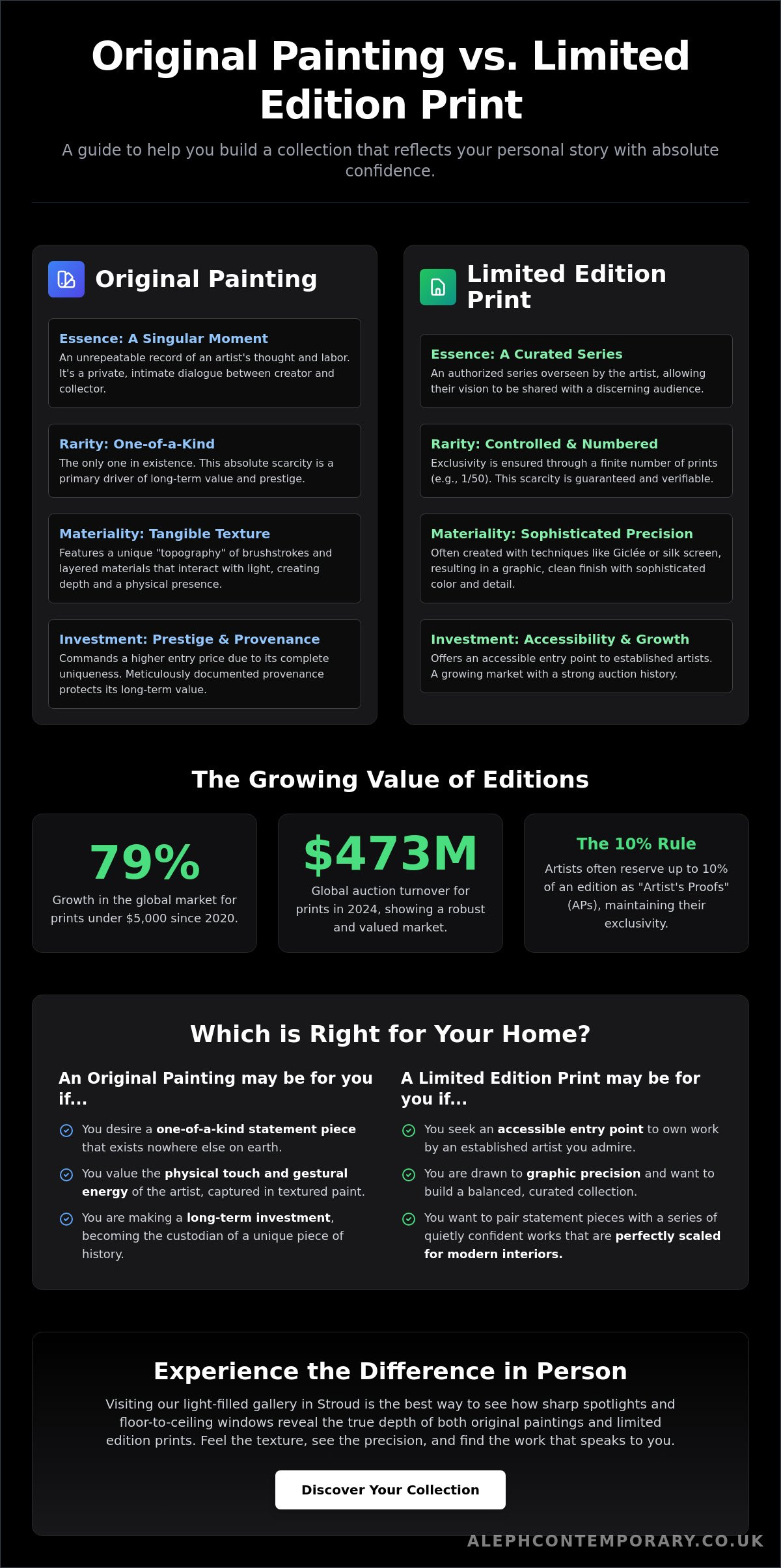
I've curated this guide to help you move past the jargon and focus on what matters: the dialogue between the work and your home. You'll discover how the 10% rule for Artist's Proofs maintains exclusivity and why the global market for prints under $5,000 has grown by 79% since 2020. We'll look at the textured materiality of oils and the sophisticated precision of silk screens to help you find art that's both easy to live with and quietly confident. By the end, you'll have the clarity to build a collection that reflects your personal story with absolute confidence.
Key Takeaways
- Discover how the unique topography of a canvas captures unrepeatable gestures that shift and change as natural light moves across your room.
- Understand the nuanced choice between an original painting vs limited edition print to build a balanced collection that pairs bold statement pieces with accessible curated series.
- Learn to decode art world terminology with ease, identifying how signatures and numbering establish the rarity and long-term value of a professional edition.
- Find out why both formats are perfectly scaled for modern interiors and how to choose the right medium to suit your home's unique atmosphere.
- See why visiting our light-filled gallery in Stroud is the best way to witness how sharp spotlights and floor-to-ceiling windows reveal the true depth of different artistic materials.
The Essence of Originality: Understanding One-of-a-Kind Works
An original painting represents a specific, unrepeatable moment in an artist's career. It's a physical record of time and thought captured in pigment, often reflecting months of contemplation and labor. When you stand before a unique work in our light-filled gallery in Stroud, you're engaging with a singular object that exists nowhere else on earth. This is the central tension in the debate of an original painting vs limited edition print; it's the difference between a shared narrative and a private, intimate dialogue between the creator and the collector. We find that our visitors are often drawn to this sense of exclusivity, recognizing that they are becoming the custodians of a one-of-a-kind vision.
We love how the materiality of a canvas reveals itself under the sharp spotlights of our space. Every brushstroke is a gestural signature, a permanent record of the artist's physical presence at that exact moment in history. The paint isn't just a color; it's a substance with weight and movement. This creates a quiet reverence in the room, where the art doesn't just sit on the wall but actively participates in the environment. Owners of original works often describe a sense of prestige that comes from knowing the piece's history began and ends with their specific acquisition.
The Tangible Marks of the Artist
Visitors often notice the visceral texture of our oil paintings as they walk through the gallery. The way the paint rises and falls creates a miniature topography that shadows and highlights itself. In mixed media works, these layers of different materials tell a story of process and discovery. These pieces are perfectly scaled to become the soul of a room, drawing the eye through their physical depth and presence. The interplay of natural light from our floor-to-ceiling windows often makes these textures feel alive, changing as the day progresses from the soft morning glow to the sharp afternoon sun.
Investment and Provenance
While Understanding print editions is vital for any collector, the prestige of the original remains unparalleled in the art world. These works command a higher entry price because they are finite. There is only one. That rarity is a significant driver of long-term value. As a curator-led gallery, we take great care in ensuring the provenance of every piece is meticulously documented. If you're looking at buying original paintings online in the UK, this history of ownership and authenticity is what protects your investment. We act as a bridge, offering the same discerning eye online as we do in our physical Stroud space, ensuring you feel confident in your choice between an original painting vs limited edition print.
The Art of the Edition: Why Limited Prints Hold Their Own
A common misconception we encounter is the idea that a print is merely a digital copy of a pre-existing work. In reality, a limited edition print is a curated series authorized and overseen by the artist, often requiring a completely different technical approach to the image. While section one explored the singular topography of a canvas, the choice between an original painting vs limited edition print often comes down to how you wish to experience the artist’s vision. A print allows a discerning audience to access the work of established names, offering a point of entry that is both sophisticated and accessible. We love how a carefully curated series of etchings or silk screens can hold its own alongside unique works, bringing a graphic, quietly confident energy to a collection.
The rarity of these works is anchored by the numbering system, such as 1/50, which ensures the edition remains finite. Global auction turnover for prints reached $473 million in 2024, reflecting a market that deeply values these curated series. When considering the pros and cons of limited editions, collectors often find that the ability to own a piece by a major artist outweighs the lack of a unique canvas. It’s a strategic way to build a collection with a "London eye" while maintaining the warmth of a home environment.
Decoding Print Terminology
Visitors to our Stroud gallery often ask about Giclée prints. These aren't standard reproductions; they use archival-grade pigments and specialized papers to achieve a depth of color that rivals the original. We also frequently discuss Artist’s Proofs (AP). Traditionally, the standard for artist's proofs is no more than 10% of the total edition size. These are often highly sought after by collectors because they sit outside the main numbered run, sometimes carrying slight variations that reflect the artist's final adjustments to the process.
The Collector's Logic for Editions
For those starting their journey, prints offer exceptional value. The segment of the market for works priced under $5,000 has seen a 79% increase in sales since 2020, driven by collectors who value both quality and liveability. We find that works on paper are incredibly versatile in modern, light-filled Cotswolds interiors, where natural light from floor-to-ceiling windows can highlight the crisp lines of a silk screen or the delicate bite of an etching. If you’re looking to introduce a new voice to your walls, exploring our collections under £1,000 is a wonderful way to find pieces that are perfectly scaled for contemporary living.
Whether you choose a bold abstract or a delicate landscape, these editions provide a focused and thoughtful way to engage with the international art world from the comfort of the countryside. You might find that a mix of formats creates the most interesting dialogue within your home.
Physicality and Presence: Original Painting vs Limited Edition Print
Choosing between an original painting vs limited edition print often comes down to the specific atmosphere you want to create within the sanctuary of your home. In our light-filled gallery in Stroud, the physical presence of a work is a topic we explore with every visitor who walks through our doors. An original canvas possesses what we often call "topography," a three-dimensional surface where the artist's tools have left a permanent, tactile map of their movement and intent. A print, by contrast, offers a refined "flatness" that prioritizes the purity of color and the crispness of a graphic line. Neither format is inherently superior; they simply offer different ways to experience the artist's vision. While a painting might provide a bold visual impact that defines a primary living area, a print often brings a sense of quiet reverence to a more private, intimate space.
Light and Materiality in the Cotswolds
We love how the natural light from our floor-to-ceiling windows plays across different mediums as the day unfolds. Under our sharp spotlights, the gestural marks on an original abstract painting become incredibly vivid, casting tiny, subtle shadows that shift as you move around the room. This tactile quality is exactly why many collectors choose unique works for their main statement walls. Conversely, visitors often notice that prints feel more "contained" and focused. They are perfectly scaled for intimate hallways or a quiet study, where the viewer can linger closely over the delicate bite of an etching or the smooth ink of a silk screen. The crisp white walls of our contemporary art gallery Stroud help highlight these differences, showing how each piece interacts with the surrounding architecture.
Durability and Longevity
Thinking about the future of your collection means considering the long-term stewardship of each piece. An original oil painting is a robust object, built to endure as a cherished family heirloom for generations. However, works on paper require a slightly different approach to care. When you acquire a limited edition print, we always suggest using UV-protective glass and archival mounting materials. This is particularly important in the bright, airy interiors of contemporary homes where natural light is abundant. Professional framing can elevate a print, giving it a physical weight and museum-quality feel that rivals a canvas. Both formats are remarkably easy to live with when they are placed in the right environment, ensuring the dialogue between the work and your space remains vibrant for years to come.
Building Your Collection: Strategic Considerations for New Buyers
Building a collection is less about the act of acquisition and more about the art of curation. Nicholas Wells often advises new collectors to start with what they love, then consider the space the work will inhabit. This approach ensures your home remains a sanctuary rather than a showroom. When weighing an original painting vs limited edition print, think of your collection as an evolving dialogue between different voices and textures. You might choose a large, gestural oil painting as a primary statement in your living room, while using carefully curated editions to create rhythm in a hallway or study. This balance allows for a home that feels both sophisticated and welcoming, embodying that sense of Cotswolds warmth we value in our Stroud space.
Cultural significance often reveals itself over time. It's about the longevity of the artist's ideas rather than just the immediate price tag. Visitors to our light-filled gallery often notice how a mix of formats creates a more lived-in, thoughtful atmosphere. A collection that features both unique canvases and high-quality prints feels more personal and less prescriptive. It reflects a collector who values the artist's vision in all its forms, whether that's an unrepeatable mark on linen or a precisely numbered etching.
Defining Your Collection's Dialogue
We love how figurative art can anchor a room with a human presence, especially when paired with more fluid abstract pieces. This tension between form and color keeps a collection feeling alive. Interestingly, landscape art remains a favorite for many of our collectors because it works so effectively in both original and print formats. There is also a particular joy in discovering up and coming artists early in their careers. Investing in their early original works allows you to be part of their journey from the very beginning, often at a more accessible price point.
Budgeting for Beauty
Deciding when to stretch your budget for an original or when a limited edition is the smarter choice is a key part of the collector's journey. If a specific work speaks to you on a profound level, the unique materiality of a canvas is often worth the investment. However, if you're looking to fill multiple spaces or explore a wider range of artists, our collections under £500 offer incredible entry points. These pieces are quietly confident and perfectly scaled for modern interiors, ensuring that the choice between an original painting vs limited edition print always leads to a work you'll love living with.
If you're ready to find the next centerpiece for your home, we invite you to explore our Nicholas Wells curated oil paintings and discover a piece that truly resonates.
The Aleph Experience: Discovering Art in our Light-Filled Stroud Gallery
Since moving from London to our light-filled space in the Cotswolds in late 2023, we've focused on creating an environment where art can truly breathe. While the technical debate of an original painting vs limited edition print is important, nothing replaces the visceral reaction of standing before a piece in person. Our gallery in Stroud is designed to be a site of active inquiry, where white walls and sharp spotlights meet the soft, shifting natural light of the Gloucestershire countryside. We've brought our "London eye" for quality to a setting that offers "Cotswolds warmth," making the experience of discovering art feel both prestigious and deeply personal.
Nicholas Wells curated each exhibition with a specific focus on works that are "easy to live with" and perfectly scaled for modern interiors. We don't chase fleeting trends; we look for pieces with enduring cultural significance. This personal approach ensures that every visitor feels welcomed into a high-level conversation about art. If you're drawn to the depth of physical pigment, our collection of oil paint works offers a wonderful starting point for experiencing the materiality we champion.
Slow Looking in Stroud
We often encourage our visitors to practice "slow looking." It's a way of letting the story of a work unfold at its own pace. Because of our floor-to-ceiling windows, the materiality of the art changes throughout the day. You might notice the gestural depth of an oil painting in the morning glow, or see the crisp, clean lines of a silk screen sharpen as the afternoon sun hits the white walls. We've worked hard to make contemporary art approachable and inviting, stripping away the barriers that sometimes make galleries feel exclusionary. Whether it's an original painting vs limited edition print, each piece in our carefully curated exhibitions is chosen because it's quietly confident and holds its own in a domestic setting.
Your Journey as a Collector
Every collector's journey is unique, and we provide personal support to help you find works that resonate with your personal story. We act as a bridge between the artist’s studio and your home, whether you're visiting us in person or exploring our collections online. We love helping new collectors understand the nuances of different formats while ensuring the art fits the specific atmosphere of their living space. We invite you to visit our contemporary art gallery Stroud to experience this dialogue firsthand. Come and linger in front of the work, enjoy the light-filled atmosphere, and find a piece that speaks to you with clarity and soul.
Finding Your Personal Narrative in Art
Choosing between an original painting vs limited edition print isn't about following a hierarchy of value; it's about deciding how you want to live with art. We've explored how the unique topography of an oil canvas brings a specific gestural energy to a room, while a carefully numbered edition offers a focused, graphic clarity. Both formats possess a quiet confidence that can transform a modern interior, especially when you consider how natural light interacts with different materials. Building a collection is a journey of discovery, and your home will be all the richer for having a dialogue between these different mediums.
We invite you to explore our carefully curated collection of original paintings and limited editions, each piece hand-selected by Nicholas Wells for its enduring cultural significance. Whether you're visiting our light-filled gallery in Stroud or browsing from afar, we provide a welcoming, curator-led experience with complimentary UK delivery on all acquisitions. We look forward to helping you find art that resonates with your life and brings the warmth of the Cotswolds into your home.
Frequently Asked Questions
Is a limited edition print considered 'original art'?
A limited edition print is a work of art in its own right, though it differs from a unique, one-of-a-kind painting. These works are part of a fixed series authorized and often hand-signed by the artist. Because the artist chooses the specific medium, such as an etching or silk screen, to express a particular vision, each numbered piece is a genuine artistic expression rather than a simple reproduction.
Why are some limited edition prints more expensive than original paintings?
The market value of a work is often driven by the artist's reputation and institutional standing. A print by a world-renowned, blue-chip artist frequently commands a higher price than a unique canvas by an emerging creator. When you evaluate an original painting vs limited edition print, the artist's career trajectory and cultural significance are often more influential than the medium itself.
What does 'archival quality' mean in the context of art prints?
Archival quality refers to the use of museum-grade materials that are designed to last for a century or more without fading or yellowing. This involves using acid-free papers and lightfast pigment inks, such as those found in high-end Giclée prints. These materials ensure that the work maintains its depth and integrity, even in the light-filled rooms common in modern Cotswolds homes.
How do I know if a limited edition print will increase in value?
While no acquisition comes with a guarantee, works by artists with strong gallery representation and a history of museum exhibitions tend to be more resilient. Look for pieces that are part of a small edition run, as rarity is a key driver of secondary market interest. We always suggest choosing "quietly confident work" that you'll love living with regardless of its future market performance.
Can I buy original British art for sale directly through your website?
Yes, you can acquire both original works and curated editions directly through our online gallery. We've curated our digital space to reflect the intimate, personal atmosphere of our Stroud gallery, providing detailed information on every piece. We offer complimentary UK delivery on all purchases, making it easy to bring a piece of the Aleph experience into your own home.
What is the best way to light an original painting in my home?
The best approach is to use dedicated picture lights or adjustable spotlights with a high color rendering index to reveal the true materiality of the pigment. In our Stroud space, we use sharp spotlights to highlight the gestural marks on a canvas. You should avoid placing an original painting vs limited edition print in direct sunlight, as UV rays can damage the work over time.
What happens if a print run is 'open' instead of 'limited'?
An open edition means the artist or publisher can produce an unlimited number of copies. These works don't possess the same scarcity or investment potential as limited editions, where the numbering system (like 1/50) guarantees a finite supply. Collectors who are interested in long-term value generally focus on limited runs because they represent a more exclusive tier of the artist's output.
Do you offer framing for both originals and prints at the Stroud gallery?
We don't offer custom framing services, but many of the works in our carefully curated exhibitions arrive already framed. Nicholas Wells selects frames that complement the artist's vision and ensure the work is perfectly scaled for contemporary interiors. If a work is unframed, we're always happy to provide professional advice on the best styles and materials to protect your new acquisition.

