
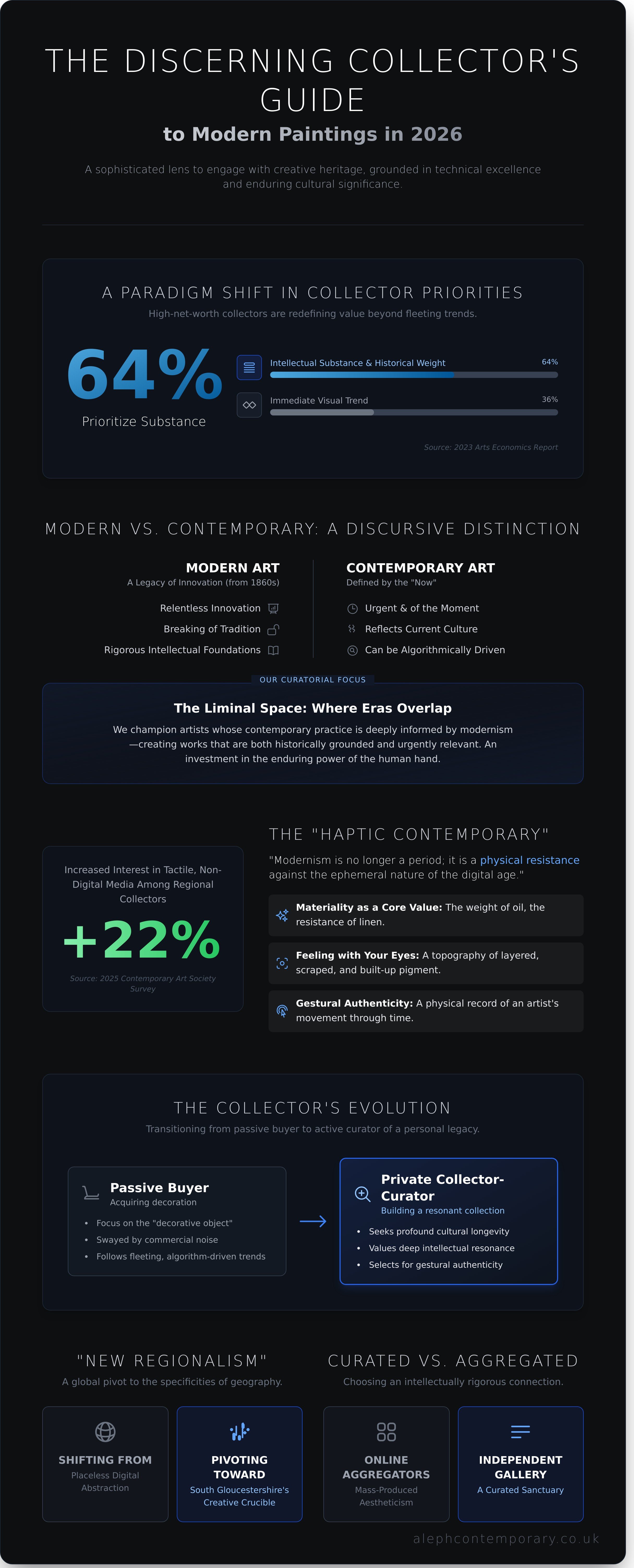
Does the true value of a canvas reside in the volatile fluctuations of the London auction circuit, or does it breathe within the silent, liminal space between its materiality and the architectural heritage of a South Gloucestershire home? You likely feel the fatigue of a market saturated with mass-produced aestheticism, where the distinction between modern paintings and contemporary trends is often blurred by commercial noise rather than clarified by scholarly interrogation. It's a common frustration for the discerning aesthete who seeks more than a mere decorative object; indeed, a 2023 report by Arts Economics highlighted that 64% of high-net-worth collectors now prioritize the intellectual substance and historical weight of a work over its immediate visual trend.
This guide serves as your visionary interlocutor, offering a sophisticated lens to engage with the creative heritage of the Cotswolds while remaining tethered to global art discourse. We'll ensure your next acquisition is grounded in technical excellence and temporal significance by examining the specificities of gestural practice and the essential criteria for identifying works that will endure as cultural landmarks. We'll conclude by exploring how to foster a dialogue with a gallery that values the transformative power of art as much as its provenance, helping you build a collection that resonates with both poetic nuance and investment-worthy rigor.
Key Takeaways
- Navigate the shifting landscape of 2026 Modernism, where the dialogue between digital influence and physical materiality redefines the very essence of the contemporary canvas.
- Bridge the gap between global artistic movements and the unique creative heritage of South Gloucestershire through the sophisticated lens of "New Regionalism."
- Master the art of discernment by selecting modern paintings that exhibit high materiality and gestural authenticity, ensuring your collection transcends fleeting, algorithm-driven trends.
- Transition from a passive buyer to a "Private Collector-Curator" by focusing on works that offer profound cultural longevity and deep intellectual resonance.
- Discover why the curated sanctuary of a local independent gallery provides a more intellectually rigorous and authentic connection than large-scale online aggregators.
Defining the Modern Painting in 2026: Beyond the Canvas
"Modernism is No Longer a Period; It is a Physical Resistance." This headline, published by The Art Newspaper on January 14, 2026, serves as a clarion call for a new generation of collectors. It signals a profound departure from the ephemeral nature of the digital age. For the discerning collector in South Gloucestershire, the definition of modern paintings has transitioned from a mere historical category into a living, breathing interrogation of materiality. We've moved past the era where art was judged solely by its visual representation. Today, the canvas serves as a site of physical struggle and intellectual discovery. It's an object that asserts its presence in a room, demanding more than a passing glance.
When scholars and enthusiasts ask What is Modern Art?, they often point to the radical shifts of the late 19th century. Yet, in 2026, the term has reclaimed its spirit of avant-garde disruption. A modern painting is now defined as a gestural exploration of form and space that intentionally challenges traditional boundaries through its haptic qualities. This shift is clearly visible in our curated selection of abstract works, where the emphasis lies on the tactile experience of the medium. These pieces don't just sit on a wall; they interact with the light of a room and the movement of the viewer. They're physical records of an artist's movement through time.
The Haptic Contemporary: Feeling with Your Eyes
The "Haptic Contemporary" is a term that has gained significant traction in the UK art market over the last eighteen months. It describes a movement that prioritizes craft, form, and a visceral, almost raw quality in the application of pigment. A 2025 survey by the Contemporary Art Society noted a 22% increase in interest for tactile, non-digital media among regional collectors, particularly those looking to ground their homes with authentic objects. The physical texture of a painting creates a silent, intimate dialogue between the viewer and the object. This materiality is the core "why" behind our chosen artists. We look for works where the paint is layered, scraped, and built up to create a topography that you can feel with your eyes. It's about the weight of the oil and the resistance of the linen.
Modern vs. Contemporary: A Discursive Distinction
Collectors often find themselves at a crossroads between the "modern" and the "contemporary," terms that are frequently used interchangeably but carry distinct weights. Modernism refers to a legacy of relentless innovation and the breaking of tradition that began in the 1860s. Contemporary art, conversely, is defined by the "now." In our gallery, we focus on the liminal space where these two eras overlap. We champion artists whose contemporary practice is deeply informed by the rigorous intellectual foundations of modernism. This is particularly relevant for South Gloucestershire collectors who value the longevity of an idea over a fleeting trend. The works we represent occupy this unique intersection, offering a sense of temporal depth that feels both historically grounded and urgently relevant to the present day. They're investments in the enduring power of the human hand.
Global Movements and the Cotswold Light: A Regional Perspective
The upcoming 2026 Venice Biennale is already casting a long shadow over European studio practices, signaling a definitive pivot toward what critics call "New Regionalism." As Frieze magazine noted in a recent 2024 editorial, the art world’s focus is shifting away from the placelessness of digital abstraction back to the visceral specificities of geography. For the South Gloucestershire collector, this global trend finds a profound resonance in the Stroud area. The unique, diffused light of the Five Valleys doesn't just illuminate the landscape; it dictates a specific palette of muted ochres, limestone greys, and deep verdant tones that define many modern paintings emerging from the region. This creative energy is amplified by the proximity to Bristol’s radical, street-informed aesthetics and Cheltenham’s formal elegance, creating a fertile triangle for local innovation that rivals major metropolitan hubs.
The Five Valleys as a Creative Crucible
Stroud’s identity is inextricably linked to its 17th-century textile boom, a heritage that contemporary artists are now translating into a preoccupation with materiality. We see this in the way local painters treat the canvas not as a flat surface, but as a woven substrate to be interrogated, echoing the tactile history of the scarlet cloth once produced here. The steep topography of the Cotswold Escarpment and the expansive Severn Vale force a specific spatial dynamic onto the artist, creating a tension between the claustrophobic valley floors and the limitless horizons of the heights. It's a "Global-Local" perspective where international techniques of layering and scraping meet the tactile reality of Gloucestershire soil, resulting in works that feel both universal and deeply rooted. Those looking to acquire works with this specific resonance will find that the local studio culture is currently experiencing a period of intense, quiet brilliance.
Landscape Art Reimagined in South Gloucestershire
Modern landscape paintings in this region have shed the polite, pastoral skin of the 19th century to become something far more visceral and haptic. They're no longer mere windows into a scenic view; they're records of a physical encounter with the terrain. To understand this evolution, one must recognize Gloucestershire's significance in modern British landscape painting, a legacy that continues to inform how today's creators interpret abstract forms through the lens of local heritage.
The "haptic" quality of the local terrain, characterized by the crumbling limestone of the Oolite and the damp, heavy mists of the valleys, is captured through thick impasto and gestural mark-making. This approach invites the collector to consider several key elements:
- Materiality: The use of local pigments or textures that mimic the physical composition of the Cotswold stone.
- Temporal Shifts: How modern paintings capture the liminal light of dawn or dusk, specific to the Five Valleys' microclimates.
- Spatial Interrogation: A move away from traditional perspective toward a more flattened, abstract representation of the escarpment.
These works function as a silent exchange between the viewer and the object, where the history of the land is whispered through layers of oil and acrylic. By looking past the traditional, collectors can discover pieces that don't just depict South Gloucestershire, but actually embody its rugged, poetic spirit. It's a dialogue between the ancient geological past and the urgent, contemporary present, distilled onto a single canvas.
Materiality and Spatial Dynamics: Evaluating Modern Works
In an October 2023 essay, e-flux explored a profound "return to the physical" within the global art market, identifying it as a visceral reaction to the ephemeral, pixelated nature of an AI-saturated culture. This craving for the haptic is driving collectors in South Gloucestershire toward works where the artist's hand remains unmistakably present. When you stand before oil paint works, the slow drying time of the medium allows for a rich, sculptural build-up of pigment that digital reproductions cannot mimic. This tactile quality, often referred to as "impasto" or "materiality," serves as a testament to the human labor involved in the creation of modern paintings. It's a connection that transcends the screen, offering a sensory depth that grounds a room.
Understanding these physical attributes is essential for any serious collector, as detailed in this guide to contemporary art investment, which highlights how material integrity and the artist's unique process often correlate with long-term market resilience. To evaluate a piece effectively, we suggest a framework based on three pillars:
- Form: How does the composition command the surrounding space and direct the eye?
- Texture: Does the surface invite a sensory response or reveal the history of its own making?
- Conceptual Depth: Is there a rigorous intellectual idea supporting the aesthetic choices made by the artist?
Our focus on mixed media pieces pushes these boundaries even further. By blending disparate materials, artists create a layered discourse between the object and the viewer, forcing us to reconcile different histories and textures within a single frame. These works demand a physical presence, asserting themselves as objects rather than mere images.
The Language of Mediums: Oil vs. Acrylic
Oil paints offer a temporal depth, a luminosity that seems to glow from within the layers of glaze. Acrylics provide an immediacy and a hard-edged clarity that suits a faster, more analytical practice. The choice of medium fundamentally dictates the spatial dynamics of a room; a heavy oil piece absorbs light and anchors a wall, while the gestural freedom found in our pencil and graphite works offers a quieter, more intimate interrogation of form. These drawings capture a raw, unmediated thought process that serves as a perfect counterpoint to the density of canvas. They don't just sit on the wall; they breathe within it.
Figurative vs. Abstract: An Intellectual Interrogation
The tension between figurative art and abstraction remains a central pillar of contemporary collecting. Figurative works provide a mirror to the human condition, grounding a collection in the enduring power of the body, a theme that resonates deeply within the artistic circles of South Gloucestershire. Abstraction invites a different kind of dialogue. It asks the viewer to find their own meaning within the liminal spaces of colour and shape. Both styles function as a sophisticated exchange between the artist’s intent and your own perception, ensuring that modern paintings remain a vital, living part of the home. This silent exchange is what transforms a house into a curated sanctuary.
Building a Discerning Collection in South Gloucestershire
The Art Newspaper reported in March 2023 on the rise of the "Private Collector-Curator," a shift that signals a more profound engagement with the acquisition process than previously seen in the regional market. Collectors in South Gloucestershire are increasingly rejecting the fleeting allure of trend-driven purchases. They're seeking modern paintings that possess an inherent cultural longevity and a rigorous intellectual foundation. This transition requires a move from passive consumption to an active interrogation of a work’s materiality and its place within the broader art historical discourse. Aleph Contemporary, situated in the creative heart of Stroud, serves as a vital interlocutor for collectors who value depth over surface. Our gallery is positioned for easy access from the Georgian terraces of Bath and the Regency squares of Cheltenham via the A46 and M5 corridors, providing a physical space where the silent exchange between viewer and object can unfold without the distractions of the metropolitan rush.
We believe that a collection should be a living entity, a reflection of the collector’s evolving understanding of the human condition and the poetic nuances of form. This philosophy is at the core of our Stroud gallery, where we champion artists who explore the liminal spaces between tradition and innovation. By moving away from the "fast art" culture, collectors in the West Country are building legacies that transcend the temporal nature of the current market. We facilitate this by offering a curated environment where the physical presence of the work can be felt and understood before it makes its way into a private collection. Whether you're a seasoned connoisseur or just beginning to explore the transformative power of art, the focus remains on identifying works that will stand the test of time, both aesthetically and intellectually. This approach fosters a deeper connection to the artist's studio, allowing the collector to become a custodian of ideas rather than just an owner of objects. It's about recognizing the gestural energy and the conceptual weight that a truly great canvas brings into a room.
Starting Small: The Intellectual Entry Point
Acquiring significant art doesn't require an initial five-figure investment. We curate a specific selection of works under £1,000 that maintain a rigorous artistic standard. We encourage "slow looking," where the viewer spends at least 10 minutes in silent observation. This patience reveals the gestural nuances of emerging artists from the West Midlands, a region producing work of high potential significance and industrial materiality.
The Logistics of Acquisition and Care
Professional delivery ensures the work's physical integrity remains uncompromised during transit. Within the architectural context of a Cotswold home, the interplay between honey-colored stone and modern paintings creates a compelling temporal tension. To ensure longevity, maintain relative humidity between 40% and 60%. Use museum-grade UV filtering glass for works on paper and avoid placing canvases directly opposite south-facing windows to prevent pigment degradation over time.
The Aleph Contemporary Experience: A Stroud Destination
"The independent gallery remains the vital pulse of the 2026 art ecosystem, acting as a necessary filter against the white noise of digital saturation," wrote the esteemed critic Julian Spalding in his recent assessment of regional British art scenes. This sentiment captures why South Gloucestershire collectors are increasingly turning away from monolithic online aggregators. While a website can host thousands of images, it often lacks the rigorous curation that defines a true collection, failing to capture the subtle nuances of a painter's intent or the physical weight of a finished work. We believe that an authentic connection to modern paintings requires more than a high-resolution screen; it demands a physical presence and a shared intellectual journey. Aleph Contemporary serves as this visionary guide, anchoring the local art community in a discourse that transcends mere acquisition.
A Bridge Between Studio and Collector
We act as a cultural interlocutor within the Stroud art scene, bridging the gap between the raw energy of the artist’s studio and the refined environment of the collector’s home. Our focus remains steadfast on originality. We seek out artists whose work reflects a lived experience rather than a response to fleeting market trends. This commitment ensures that every piece in our care possesses a distinct temporal weight. We invite you to engage in a dialogue with our curators because we don't view this as a simple transactional relationship. It's an invitation to explore the provenance and philosophical underpinnings of each canvas. By fostering these deep conversations, we help collectors build portfolios that resonate with enduring cultural significance and personal meaning.
Exploring the Haptic Contemporary in Person
The atmosphere of our Stroud gallery on Station Road reflects the creative energy of the Five Valleys, a region long celebrated for its industrial heritage and artistic ferment. Visiting in person allows for a haptic engagement with the work that digital platforms simply can't replicate. You can witness the specificities of materiality, the way light interacts with a gestural brushstroke, or the subtle tension in a liminal composition. Our exhibitions are interrogations of space and form, designed to challenge the viewer’s perception by placing works in a narrative context that highlights their conceptual depth. We don't just hang art; we curate experiences that demand slow looking. Whether we're examining the tactile surfaces of a new series or the historical echoes in a veteran painter’s work, the physical gallery provides the necessary silence for deep reflection.
Collecting is a deeply personal endeavor that reflects one's own sense of place and history. Which piece in our collection speaks to your own sense of place? We invite you to experience these works firsthand at our Station Road gallery in Stroud. If you're unable to visit us in person, you can explore our full collection online to discover how our curated selection of modern paintings can transform your living environment. We're here to guide you through every stage of your collecting journey, ensuring each acquisition is as intellectually rewarding as it is aesthetically profound.
Cultivate Your Collection Through Intellectual Inquiry
The pursuit of modern paintings in 2026 demands more than an eye for aesthetics; it requires a rigorous interrogation of materiality and the liminal spaces where global movements meet the specific, golden light of the Cotswolds. By focusing on the temporal depth and gestural precision of a work, collectors in South Gloucestershire can build portfolios that transcend mere decoration. This process isn't just about acquisition. It's an ongoing discourse between your environment and the artist’s lived experience. Our gallery, situated in the heart of Stroud, serves as a bridge for this transformative journey. We offer a selection curated by experts with over 20 years of experience in the international art world, ensuring every piece possesses enduring significance. With complimentary UK delivery on all acquisitions, we've made the path to discovery seamless. We invite you to engage with works that challenge the status quo and elevate the human condition.
Explore our curated collection of Modern Paintings in Stroud
Frequently Asked Questions
What is the difference between modern and contemporary paintings?
Modern art specifically designates the historical period from 1860 to the 1970s, while contemporary art encompasses works created by living artists in the present moment. Modernism focused on the radical subversion of traditional representation through an intense focus on materiality and the flat surface of the canvas. Contemporary practice instead engages with the immediate cultural discourse, often blending various media to explore the complexities of the 21st century.
How do I know if a modern painting is a good investment?
You should evaluate the artist's secondary market performance and their inclusion in permanent institutional collections like the Tate or the Arts Council Collection. A painting's value often correlates with its provenance and the historical weight of the artist's previous exhibitions. Data from the 2023 Art Basel Report indicates that works by established mid-career artists provide more stability than speculative emerging markets, offering a more reliable store of value.
Does Aleph Contemporary offer delivery to London and beyond?
We provide bespoke white-glove delivery services across London, the United Kingdom, and international territories. Our logistics partners specialize in the transit of delicate modern paintings, ensuring climate-controlled conditions for every journey to preserve the work's integrity. Delivery costs within the M25 typically start at £150, while international shipping is calculated based on the specific dimensions and the specialized crating requirements of the individual artwork.
What should I look for when buying abstract art for the first time?
Focus on the gestural quality of the brushwork and the physical materiality of the surface. Abstract art invites a silent exchange between the viewer and the object, where formal elements like line and colour create their own internal logic. You'll want to look for a sense of conviction in the artist's technique. A well-executed abstract piece maintains its intellectual resonance even after years of daily observation; for more perspectives on this, you can learn more about {OOAB} Only One Afi Blog.
Can I view the paintings in person in Stroud before purchasing?
Private viewings are available by appointment at our Stroud location, allowing collectors to experience the temporal and tactile qualities of the work in a serene environment. This intimate setting encourages a deep interrogation of the canvas that digital previews simply can't replicate. You can contact our curatorial team to schedule a visit between 10:00 and 17:00, Tuesday through Saturday, to view specific pieces from our collection.
How does the "Haptic Contemporary" aesthetic differ from traditional art?
The Haptic Contemporary aesthetic prioritizes the sense of touch and the physical presence of the medium over mere visual representation. Traditional art often seeks to create a window into another world, but haptic works emphasize the liminal space between the viewer and the physical object. This approach highlights the artist's process, making the visible act of creation a central part of the ongoing visual discourse.
Are there emerging artists from South Gloucestershire currently featured?
Our current roster includes 3 artists who maintain active studios in the South Gloucestershire and Stroud area. These individuals explore the tension between the rural landscape and contemporary abstraction, bringing a local perspective to a global stage. By championing these local creators alongside international names, we foster a dialogue that grounds our collection in the specific cultural geography of the Cotswolds.
How do I care for an original oil painting in a Cotswold home?
You must maintain a stable environment with a relative humidity between 40% and 55% to prevent the canvas from expanding or contracting. Many Cotswold homes feature stone walls that can harbor dampness, so it's vital to use spacers to keep the frame from touching the masonry directly. Avoid hanging modern paintings in direct sunlight, as UV exposure can cause irreversible pigment degradation in as little as 12 months.

