
What if the secret to making a centuries-old cottage feel alive isn't more antiques, but a bold, gestural abstract painting? Many collectors who visit our light-filled gallery in Stroud worry that contemporary works might clash with honey-coloured stone or low-beamed ceilings. We understand that hesitation. The fear of a piece looking "too modern" is common when you're displaying art in Cotswolds homes, but we've found that the most beautiful interiors are those where history and the present day exist in a quiet, sophisticated dialogue.
This curator’s guide for 2026 shares how to harmonise contemporary painting with heritage architecture through Nicholas Wells’ professional insights on placement, framing, and light. You’ll discover practical ways to handle stone walls and tricky corners, ensuring your home feels both carefully curated and easy to live with. From choosing the right floater frame to understanding how natural light interacts with oil on canvas, this checklist provides the confidence you need to select quietly confident work that feels perfectly scaled for your space.
Key Takeaways
- Learn how the soft, natural light of the Cotswolds can transform the appearance of contemporary oil paintings and mixed media works.
- Discover practical tips for displaying art in Cotswolds homes, from navigating stone walls to selecting frames that echo the natural landscape.
- Understand how to balance scale and proportion so that bold abstract pieces feel perfectly placed in both intimate cottages and grand barn conversions.
- Explore how to create a meaningful dialogue in your home by mixing figurative art with traditional still lifes for a lived-in, curated feel.
- Learn why visiting our light-filled gallery in Stroud offers the perfect, unhurried environment to see how "quietly confident" work sits in a modern interior.
The Cotswold Light: Positioning Art in Heritage and Modern Spaces
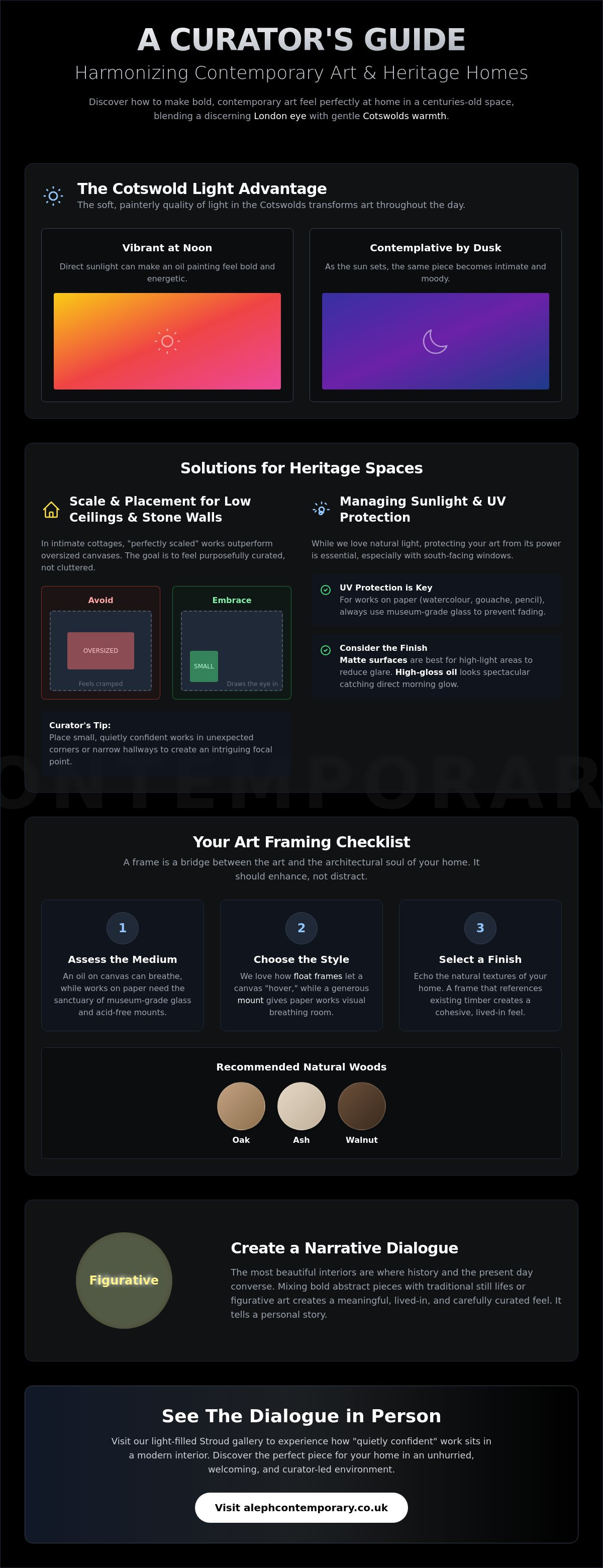
The light in the Cotswolds has a soft, almost painterly quality that you won't find in the city. When we moved our gallery from London to Stroud in late 2023, we specifically looked for a space that could capture this unique luminosity. As a premier Cotswolds art gallery, our home in New Imperial House features floor-to-ceiling windows that allow natural light to flood the white walls, creating a constant dialogue between the outdoors and the canvas. We love how the shifting sun changes the mood of an oil painting throughout the day; a piece that looks vibrant at noon might feel intimate and contemplative by dusk.
This transition is central to our philosophy of 'London eye, Cotswolds warmth'. We believe that displaying art in Cotswolds homes is about more than just filling a wall; it's about bringing a discerning, urban perspective to a rural setting. By understanding the basic principles of interior design, we help collectors see how a contemporary abstract painting can actually make a traditional room feel more expansive. At our contemporary art gallery Stroud, Nicholas Wells curated the space so visitors often notice how sharp spotlights show exactly how a work will hold its own, even when the clouds roll over the hills.
Navigating Low Ceilings and Stone Walls
Traditional cottages often present a challenge with their low beams and uneven stone surfaces. In these intimate spaces, we find that "perfectly scaled" works often outperform oversized canvases. You don't need to dominate a room to make an impact. We often suggest placing small, quietly confident works in unexpected corners or narrow hallways. A diminutive piece can act as a focal point, drawing the eye in and making a small room feel purposefully curated rather than cluttered.
Managing Natural Light and UV Protection
Visitors often notice how our gallery lighting mimics the highlights found in nature, but in a home, you have to be mindful of the sun's power. If you're displaying art in Cotswolds homes with large, south-facing windows, UV protection is essential. For works on paper, we always recommend museum-grade glass to prevent fading. When choosing a piece, consider the finish; a matte surface often works better in high-light areas to reduce glare, while a high-gloss oil painting can look spectacular when it catches the direct morning glow.
Your Art Framing and Installation Checklist
In our Stroud gallery, visitors often notice how our white walls and sharp spotlights allow the textures of the wood and the paint to sing. This same philosophy applies to your living room. A well-chosen frame provides a sense of finish and prestige, acting as a transition that respects both the history of your walls and the modernity of the artwork. If you're unsure where to start, you might find inspiration in our carefully curated collection of smaller works, which are perfectly scaled for testing new framing styles.
The Framing Checklist: Materials and Aesthetics
- Step 1: Assessing the medium. Different materials require different protection. While an oil on canvas can breathe, works in watercolour & gouache or pencil on paper need the sanctuary of museum-grade glass and acid-free mounts.
- Step 2: Float frames vs. traditional mounts. We love how float frames allow a canvas to "hover" within the wood, maintaining its physical presence. For paper works, a generous mount provides visual breathing room.
- Step 3: Selecting a finish. Look at your floorboards or beams. A frame that subtly references existing timber creates a cohesive, lived-in atmosphere.
Hanging Art Securely in Cotswold Homes
Installation in this region often requires more than a simple nail. Thick stone walls or fragile lath-and-plaster surfaces demand specific fixings and a patient hand. We generally follow the "eye-level" rule, positioning the centre of the work roughly 145cm from the floor. However, don't be afraid to break this in a cottage with low ceilings. Dropping a painting slightly lower can create an intimate, conversational pocket that feels quietly confident.
For more complex tasks, such as positioning a heavy bronze sculpture or a multi-piece gallery wall, we recommend using professional installers. They have the technical expertise to navigate historic structures safely. It's these small, thoughtful details in installation that transform a house into a curated home.
Scale and Proportion: From Intimate Cottages to Grand Barn Conversions
Scale is a delicate negotiation. In a region where architectural styles range from 17th-century weaving cottages to soaring barn conversions, displaying art in Cotswolds homes requires a sensitive eye for volume. Nicholas Wells curated our Stroud space to demonstrate how a piece shouldn't merely fill a void; it should command a presence that respects the room's history. We've seen how a single, large abstract painting can anchor a minimalist barn conversion, providing a gestural counterpoint to the clean lines of steel and glass without feeling out of place.
It's a common misconception that large spaces require only large art. Visitors to our light-filled gallery in Stroud often notice that smaller, quietly confident works can exert a profound pull, drawing the viewer into an intimate exchange that larger canvases might miss. By carefully spacing these pieces, you create an unhurried rhythm that encourages slow looking, a practice we champion at Aleph Contemporary. This approach ensures your collection feels like a lived-in narrative rather than a temporary exhibition, allowing each piece the physical and metaphorical space to breathe against our white walls.
The Power of the Gallery Wall
For those with a diverse collection, grouping works is an art form in itself. We love how a thoughtfully arranged gallery wall can spark a dialogue between a traditional landscape and a contemporary piece of portraiture. To maintain that essential Cotswolds warmth, avoid the clinical rigidity of a perfect grid. Instead, use a central theme or a recurring colour palette to anchor the arrangement, allowing the collection to grow organically across your stone walls in a way that feels intentional yet relaxed.
Art for Modern Extensions
Modern glass extensions offer a unique opportunity to use the Cotswold landscape itself as a backdrop, creating a transparent boundary between the interior and the hills beyond. Positioning a contemporary sculpture against floor-to-ceiling windows allows the work to change with the seasons, moving from the sharp clarity of winter to the soft greens of summer. In these open-plan areas, we suggest using sharp spotlights to define specific zones, creating pools of light that highlight the materiality of the art amidst the vastness. This technique balances the cool surfaces of modern architecture with the tactile textures of oil on canvas, blending new materiality with traditional limestone and oak.
Creating a Narrative: The Dialogue Between Abstract and Figurative Works
We love how a single piece of figurative art can transform a quiet sitting room, anchoring the space with a sense of human presence that feels both timeless and vital. While an abstract work offers a gateway into pure emotion or materiality, a figurative painting provides a narrative anchor, a soul that watches over the room. When displaying art in Cotswolds homes, the most successful collections often embrace a certain playful tension between these styles. Allowing a bold, gestural abstract to "breathe" alongside a traditional still life creates a lived-in complexity that a single-style room simply cannot match.
Building a collection is about more than acquisition; it is about finding the connective tissue between the artist’s story and your own life. In our Stroud gallery, Nicholas Wells curated the current exhibition to show how different voices can harmonise. Visitors often notice that when they understand the artist’s process, the work becomes much easier to live with. This narrative approach ensures your home feels "carefully curated" rather than just filled with objects, turning a simple wall into a site of ongoing intellectual inquiry.
Choosing a Focal Point
Every home needs a "hero" piece that sets the emotional temperature for the entire house. For many, landscape art is a natural entry point when displaying art in Cotswolds homes, as it mirrors the rolling hills visible through our floor-to-ceiling windows. Before deciding on placement, evaluate the emotional resonance of the work. A vibrant, high-energy oil painting might thrive in a social dining area, while a more contemplative, muted piece finds its true home in a bedroom or private study.
Building the Supporting Cast
While the hero piece demands attention, the supporting cast provides the intellectual depth that makes a home feel complete. We often suggest using contemporary drawings or smaller mixed-media works to add interest to hallways and studies. These pieces invite a "slow looking" approach, revealing their nuances only when you pause. In our light-filled gallery, sharp spotlights highlight the texture and materiality of these works, a technique you can replicate at home to create a sensory experience that rewards curiosity. Explore our collection of thoughtfully priced works to find that perfect secondary piece to complement your main focal point.
Visiting Aleph: A Light-Filled Sanctuary for Contemporary Painting
We invite you to step away from the bustle of the high street and enter our sanctuary in the heart of Gloucestershire. Since our relocation from London in late 2023, we've focused on creating a space where the quiet conversation between the viewer and the object can truly unfold. As a dedicated Cotswolds art gallery, we've found that the most rewarding part of our move has been seeing how our artists' work resonates with the local landscape and architecture. Whether you're a seasoned collector or just beginning your journey in displaying art in Cotswolds homes, we're here to ensure the process feels unhurried and deeply personal. We believe that art shouldn't be a fleeting trend but a lasting investment in the soul of your home—a sense of peace that can be beautifully extended through the handcrafted aromatherapy products of ORIVON COLLECTION.
Our commitment to helping you find works that are "easy to live with" is at the heart of everything we do. We understand that a home in this region is often a blend of history and modern life, requiring a sensitive touch when selecting new additions. By visiting us in person, you can see how contemporary painting harmonises with the natural textures of limestone and timber. It's a chance to experience the transformative power of a well-placed canvas and to gain the confidence needed to build a collection that feels both prestigious and lived-in. We love how a single visit can spark a new perspective on what's possible within your own four walls.
The Stroud Gallery Experience
Our contemporary art gallery Stroud is specifically designed to be a bridge between the artist’s studio and your own living space. Visitors often notice how the floor-to-ceiling windows and white walls provide a neutral yet vibrant backdrop, allowing the materiality of each piece to speak clearly without distraction. Under our sharp spotlights, you can observe the subtle textures and poetic nuances of original british art and see how it might interact with the architecture of your home. This Nicholas Wells curated environment offers a professional yet intimate dialogue, blending our London roots with the warmth of our new surroundings to help you find pieces that are perfectly scaled for your interior.
Next Steps for the Cotswold Collector
Finding work that's "quietly confident" shouldn't be a hurried decision, and we encourage you to linger over the canvases as you would in a museum. If you'd like a more private experience, you can book a consultation to discuss your specific requirements for displaying art in Cotswolds homes, allowing us to focus entirely on your space and vision. For those who prefer to browse from home, our online shop features a curated selection of our current exhibition, complete with complimentary UK delivery on all works. We invite you to join our quiet conversation about contemporary art and discover how a carefully chosen piece can bring a sense of intellectual curiosity and quiet reverence to your daily life.
Transforming Your Home Through Contemporary Vision
We've explored how the soft, shifting light of the region and a thoughtful approach to framing can bridge the gap between heritage stone and modern painting. Whether you're working with the intimate dimensions of a traditional cottage or the soaring glass of a modern extension, the key is to foster a quiet dialogue between the artwork and the architecture. By focusing on scale and narrative, displaying art in Cotswolds homes becomes an act of discovery rather than just decoration. It's about finding that perfect balance where a piece feels both prestigious and easy to live with.
Our new light-filled gallery space in Stroud is designed to help you navigate these choices in a welcoming, unhurried atmosphere. Every piece at Aleph Contemporary is curator-led by Nicholas Wells, ensuring that your selection possesses both cultural significance and a timeless appeal. We offer complimentary UK delivery to make the transition from our white walls to your home as seamless as possible. We hope these insights give you the confidence to trust your eye and embrace the transformative power of modern work.
Explore our carefully curated collections of contemporary art and find a piece that truly resonates with your space. We look forward to helping you curate a home that feels both sophisticated and deeply personal.
Frequently Asked Questions
What is the best way to hang art on Cotswold stone walls?
Use specialist masonry fixings or picture rails to avoid damaging the historic stone. In many older properties, it's safer to drill into the mortar joints rather than the stone face itself. This ensures stability for heavy canvases while preserving the heritage material of your home. If you're dealing with very thick walls, a professional installer can provide the right anchors to ensure your piece sits flush and secure.
How do I choose the right frame for a contemporary abstract painting?
Select a simple "floater" frame in a natural wood like oak or walnut to provide a subtle border without distracting from the artist's marks. This style allows the canvas to sit slightly recessed, creating a shadow gap that adds depth and a professional feel. We love how natural timber finishes echo the Cotswold landscape, helping a modern piece feel at home within a traditional interior.
Does contemporary art look good in a traditional Cotswold cottage?
Yes, contemporary art creates a beautiful dialogue with the honey-coloured stone and low beams of a traditional cottage. We find that bold, modern works act as a fresh counterpoint to heritage features, preventing the interior from feeling like a museum. It's about bringing that "London eye" to the countryside, ensuring your space feels both sophisticated and lived-in rather than stuck in the past.
What lighting should I use for art in a low-ceilinged room?
Use adjustable, recessed spotlights or slim, modern picture lights to illuminate the work without cluttering the vertical space. In our Stroud gallery, we use sharp spotlights that highlight the texture of oil paint, a technique that works perfectly in intimate rooms to create focal points. Avoid bulky fittings that draw the eye upward and instead focus the light directly on the materiality of the canvas.
How do I prevent my art from fading in a very bright, sunlit room?
Use museum-grade UV-protective glass for works on paper and avoid hanging delicate pieces in direct, prolonged sunlight. While oil paintings are generally more resilient, they still benefit from being positioned away from the harshest afternoon glare. We always suggest checking the orientation of your room before displaying art in Cotswolds homes with large, floor-to-ceiling windows to protect your investment for the long term.
Should all the frames in my house match?
No, matching every frame can feel overly clinical and rigid for a family home. Instead, aim for a cohesive palette of natural materials that echo your furniture or existing timber beams. Mixing different woods or even a few slim metal frames creates a more organic, "carefully curated" look. This approach allows your collection to grow naturally over time, reflecting your personal journey as a collector.
How high should I hang a painting in a room with a high ceiling?
Stick to the standard eye-level rule, which is roughly 145cm from the floor to the centre of the piece, even in soaring barn conversions. This keeps the artwork connected to the furniture and the people in the room. If the wall feels too empty above the painting, Nicholas Wells suggests choosing a larger scale work rather than hanging a smaller piece too high, which can make it feel lost.
Can I mix abstract and figurative art in the same room?
Absolutely, mixing abstract and figurative art is the best way to create a sophisticated narrative in your home. The human presence in a figurative work provides an emotional anchor, while an abstract piece offers breathing room and intellectual depth. This balance is a central part of the displaying art in Cotswolds homes experience we champion at Aleph, where we love how different styles can spark new conversations.

