
For the discerning collector, the traditional maritime scene has often felt confined by a repetitive sentimentality, where the predictable crashing wave serves as a mere decorative echo rather than a visceral experience. This article invites you to move beyond such cliché-ridden coastal depictions and enter a more rigorous dialogue regarding the evolution of seascapes within the contemporary landscape of South Gloucestershire. We explore how the Stroud artistic community is currently redefining the maritime tradition, shifting from the theatricality of Romanticism toward a profound engagement with materiality and gestural abstraction that honors the ocean's true, mercurial nature.
By interrogating the liminal space between the artist’s physical process and the haunting persistence of memory, you will gain a deeper understanding of how these works function as both intellectual inquiries and significant cultural investments. Whether you are seeking to connect with the authentic pulse of the local art scene or are in pursuit of original works that transcend the ordinary, this exploration serves as your visionary guide to the high-quality galleries and transformative practices currently flourishing in our region. Join us as we unfold the narrative of contemporary abstraction and discover the enduring power of the maritime dialogue.
Key Takeaways
- Trace the profound evolution of maritime art as it moves beyond literal representation toward a contemporary interrogation of the coastal sublime and the liminal experience of the shore.
- Examine how the specific materiality of oil and mixed media captures the kinetic energy and atmospheric weight of the Severn Estuary through bold, gestural expression.
- Gain a curatorial perspective on distinguishing enduring seascapes from decorative clichés by seeking works that offer deep intellectual resonance and cultural significance.
- Learn practical strategies for positioning maritime art within the unique light of South Gloucestershire to enhance the temporal and sensory qualities of the work.
- Discover the curated collection of Aleph Contemporary, where artists engage in a sophisticated dialogue between tradition and modern abstraction to ensure long-term value.
Beyond the Horizon: The Evolution of Seascapes in Contemporary Art
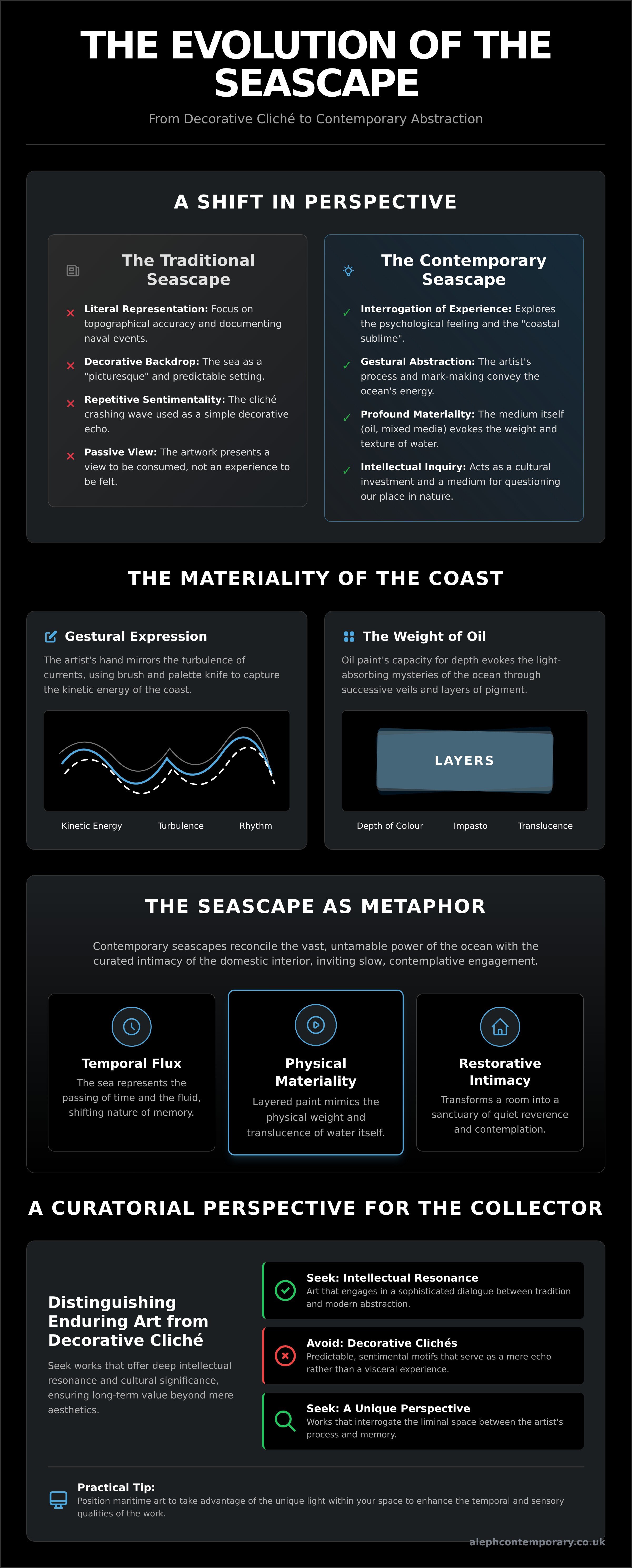
The contemporary seascape represents a profound departure from the rigid, literal maritime representations that defined the 19th century. Where once the genre was tethered to the documentation of naval prowess or topographical accuracy, today’s practitioners engage in an interrogation of the "experience" rather than the mere "view." This shift reflects a move toward the coastal sublime-an aesthetic territory where the horizon line becomes a site of psychological exploration. By examining the history of seascape art, we observe a lineage of atmospheric abstraction that traces its roots back to J.M.W. Turner, whose late works dissolved solid form into a visceral slurry of light and spray. Modern British artists continue this dialogue, treating the canvas as a "liminal space"-a threshold where the physical meeting of water and sky mirrors the metaphysical encounter between the artist’s gesture and the raw materiality of the medium.
The Legacy of the British Maritime Tradition
Historically, British artists utilized the sea as a crucible for national identity, framing the ocean as both a protective barrier and a gateway to the unknown. In the context of 21st-century coastal painting, the sublime is redefined as the unsettling yet transcendent recognition of our own fragility when confronted by the indifferent, eternal rhythm of the tide. Modern curation has shifted from the "picturesque"-the sea as a decorative backdrop-to the "interrogative," where seascapes serve as a medium to question our ecological and existential place within the natural world. This transition acknowledges that the coast is not merely a sight to be consumed, but a complex environment that demands a sophisticated emotional response.
Seascapes as Metaphor for the Human Condition
Within contemporary discourse, the sea serves as a potent metaphor for temporal and emotional flux, capturing the restless instability of the modern psyche. For discerning collectors, including those in the refined residences of South Gloucestershire, the acquisition of seascapes often stems from a desire to reconcile the vast, untamable power of the ocean with the curated intimacy of the domestic interior. Key elements of this dialogue include:
- Temporal Flux: The sea as a representation of the passing of time and the shifting nature of memory.
- Materiality: The use of impasto and layered glazes to mimic the physical weight and translucence of water.
- Restorative Intimacy: The ability of a large-scale canvas to transform a room into a sanctuary of quiet reverence.
This dialogue between the infinite and the immediate creates a restorative sanctuary, where the painting functions as a window into a deeper materiality, inviting a slow, contemplative engagement with the complexities of the human condition.
The Materiality of the Coast: Texture, Gesture, and Medium
The sea is never a static image; it is a visceral, physical force. Within the realm of contemporary seascapes, the choice of medium is not merely a technical decision but a conceptual one that dictates the "weight" and presence of the water. Artists engage in a rigorous physical interrogation of the canvas-utilising techniques of scraping, layering, and glazing-to mimic the rhythmic, cyclical nature of tidal movements. For instance, oil works possess an inherent capacity for an extraordinary depth of colour, allowing the artist to evoke the profound, light-absorbing mysteries of the deep Atlantic through successive veils of pigment.
This materiality is further articulated through the use of gestural marks, which are essential for capturing the kinetic energy of specific British locales, such as the Severn Estuary. Here, the artist’s hand must mirror the turbulence of the silt-laden currents, using the brush or palette knife to trace the dialogue between the water’s surface and the hidden topographies beneath. The resulting surface is one of rich complexity, where the paint itself becomes a surrogate for the elemental power of the coast.
Oil vs. Watercolour: Capturing Fluidity
The distinction between media allows for a nuanced exploration of the maritime environment. While the structural density of oil paint is uniquely suited to representing the violent, crashing waves and the formidable mass of the British shoreline, watercolour and gouache offer a different, more luminous truth. These media excel at capturing the ethereal, translucent quality of coastal light, where the boundaries between sea and sky become blurred. This specific materiality invites the viewer to feel the salt and spray through the paint surface, transforming the act of looking into a haptic experience of the liminal coast.
Abstracting the Shoreline
In many ways, abstraction provides a more "truthful" account of the sea than photorealism, as it prioritises the emotional and sensory resonance of the environment over mere mimesis. By employing mixed media-incorporating found materials or unconventional textures-artists can evoke the rugged, unyielding reality of the shore. This shift in contemporary maritime imagery reflects a sophisticated balance between form and formlessness. At Aleph Contemporary, our artists navigate this tension, ensuring that their seascapes function as profound inquiries into the temporal nature of the earth and the enduring power of the maritime tradition.
The Contemporary Seascape vs. The Cliché: A Curatorial Perspective
For the discerning collector, the primary challenge in acquiring maritime art is distinguishing the profound from the pedestrian. To avoid the trap of "souvenir" art-those literal, static depictions often found in coastal gift shops-one must look for an interrogation of the maritime environment rather than a mere view of it. The sophisticated eye seeks liminality: that threshold where the sea meets the sky, or where the tangible world dissolves into abstraction. This preference for the gestural over the illustrative ensures that contemporary seascapes function as dynamic explorations of light and temporal flux, rather than mere decorative echoes of a holiday memory.
Identifying Quality in Contemporary Maritime Art
True quality in contemporary practice is revealed through the dialogue between the artist’s hand and the materiality of the medium. When evaluating a work, consider the following markers of significance:
- The Artist’s CV: Look for a robust exhibition history within the UK art scene, specifically those connected to influential regional hubs like Stroud or the broader London gallery circuit.
- Material Presence: Distinguish between the flat uniformity of decorative prints and the raw, visceral power of original paintings, where the impasto or glaze carries the authentic weight of the artist’s process.
- Conceptual Depth: Does the work challenge the viewer’s perception of the horizon, or does it merely replicate it?
The Role of the Gallery as a Discerning Guide
Aleph Contemporary serves as a sophisticated interlocutor, bridging the gap between the isolation of the artist’s studio and the collector’s private world. We advocate for the practice of "slow looking"-a deliberate, unhurried engagement with the canvas that allows the nuances of the work to unfold. In our curation, seascapes are not treated as static objects but as entries into a living discourse on the human condition and our relationship with the natural world.
By framing an acquisition through Aleph Contemporary, the collector is not merely making a purchase; they are investing in a piece of enduring cultural significance. We guide our clients to see beyond the surface, ensuring that every work resonates with both intellectual rigour and the quiet reverence that the maritime subject demands.
Collecting Seascapes in South Gloucestershire: A Practical Guide
In the distinctive light of South Gloucestershire, where the Cotswold escarpment meets the expansive sky of the Severn Vale, the placement of seascapes requires a nuanced understanding of both architecture and atmosphere. To truly honor the temporal qualities of a maritime work-the shifting tides and fleeting luminosity-one must consider how natural light interacts with the canvas throughout the day. A well-positioned work becomes a living window, its materiality responding to the cool, northern light characteristic of our region.
When curating a private collection, integrating maritime themes within a broader landscape or abstract discourse creates a compelling visual narrative. This juxtaposition highlights the shared gestural energy between the rolling hills of the Stroud valleys and the rhythmic surge of the Atlantic, allowing the collector to explore the liminal spaces between earth and water.
Scaling the Sea: Choosing the Right Size
The scale of a work dictates its psychological impact within the domestic sphere. Large-scale maritime works function as immersive environments, commanding the room and inviting a deep, meditative engagement with the horizon. Conversely, smaller, intimate pieces foster a quiet dialogue within more confined spaces, such as hallways or studies, acting as poetic punctuation marks. For those beginning their journey, discovering works under £1,000 offers an accessible entry point into high-level contemporary practice without compromising on the intellectual rigor of the acquisition.
The Severn Estuary Influence
Local collectors often find a profound resonance in the "muddy sublime" of the Severn Estuary-a landscape defined by its dramatic tidal range and shifting silt. This specific aesthetic, where the earth and water dissolve into one another, is mirrored in the sophisticated palettes of many contemporary seascapes. While our online platform offers the convenience of complimentary UK delivery, we encourage a physical encounter with the work at our Stroud-based gallery. This allows for a deeper interrogation of the artist's process and the tactile reality of the medium.
Whether you are acquiring via Aleph Contemporary online or visiting us in person, the transition of a work from the studio to your home is handled with the utmost curatorial care, ensuring that the poetic essence of the coast is preserved in transit.
The Aleph Contemporary Seascape Collection: A Dialogue of Form
At Aleph Contemporary, our curation of seascapes transcends the merely decorative, positioning the maritime theme as a profound site of intellectual inquiry and emotional resonance. Located in the creative heart of Stroud, our gallery functions as a sophisticated cultural interlocutor, bridging the gap between the artist’s studio and the discerning collector. We remain steadfast in our commitment to quality and originality, championing works that eschew fleeting aesthetic trends in favour of enduring cultural significance and a rigorous interrogation of the natural world.
We invite you to explore our curated seascape collection online, where the dialogue between form, history, and the elemental comes to life through a diverse array of contemporary voices.
Featured Artists and Their Maritime Interrogations
Our roster includes artists who delve into the liminality of the coast, treating the meeting of land and water as a space of metaphysical exploration. Their work contributes significantly to the evolving narrative of British contemporary art, grounding abstract concepts in the visceral reality of the environment:
- Alun Williams: Williams engages in a sophisticated dialogue with historical narratives, utilizing a dense materiality to explore how the maritime past informs our temporal present.
- Tessa Whitehead: Her practice captures the gestural energy of the Atlantic, where the fluidity of the medium mirrors the shifting, ephemeral nature of the coastal light.
- Henry Ward: Through a meticulous process of layering, Ward interrogates the structural qualities of the shoreline, transforming the horizon into a site of geometric and tonal tension.
Acquisition and Concierge Services
The process of acquiring original art should be as contemplative and rewarding as the work itself. Aleph Contemporary offers a seamless e-commerce experience, allowing collectors to browse and purchase with absolute confidence from anywhere in the world. For those located in South Gloucestershire and the surrounding regions, we provide bespoke concierge advice, offering a tailored approach to building a collection that reflects your personal aesthetic and intellectual values.
Whether you are seeking a singular statement piece or looking to deepen an existing portfolio, our gallery provides the expertise and provenance required by the modern aesthete. Explore our curated selection of original seascapes and maritime art and discover the transformative power of the British coast.
The Enduring Dialogue of the Shore
Ultimately, the evolution of contemporary seascapes reflects a profound shift in our cultural consciousness-a transition from the static, picturesque view toward a more visceral interrogation of the coast as a site of both physical materiality and temporal memory. By examining the delicate tension between gestural expression and the medium itself, we uncover an artistic landscape that rejects the safety of the cliché in favour of intellectual depth and poetic nuance. These works, born from a rigorous engagement with the environment, serve as a vital bridge between the elemental forces of nature and the metaphysical inquiries of the modern viewer.
At Aleph Contemporary, situated in the historic artistic hub of Stroud, Gloucestershire, we are dedicated to fostering this high-level conversation. Our collection is meticulously curated by experts with a focus on intellectual rigor, ensuring that each acquisition possesses enduring cultural significance and aesthetic longevity. We invite you to explore this curated vision and find a piece that resonates with your own intellectual journey. To support our community of collectors, we are pleased to offer complimentary UK delivery on all original works, ensuring a seamless experience from our gallery to your collection. Discover the transformative power of the horizon and View the Seascape Collection at Aleph Contemporary to begin your next chapter of artistic discovery.
Frequently Asked Questions
What defines a "contemporary" seascape compared to a traditional one?
While traditional maritime art often prioritises topographic accuracy and the literal depiction of vessels, contemporary seascapes engage with the liminal space between abstraction and representation. These works frequently interrogate the materiality of paint-using gestural marks and textured surfaces-to evoke the sensory experience of the coast rather than a mere visual record. This shift moves the discourse from the external horizon to the internal landscape of the viewer’s perception.
Why are seascape paintings considered a good investment for new collectors?
Artworks depicting the sea possess a timeless cultural resonance that transcends fleeting trends, ensuring they remain a cornerstone of both private and institutional collections. For the nascent collector in the UK, acquiring an original work offers a tangible asset that bridges aesthetic pleasure with long-term value. The enduring popularity of maritime themes provides a degree of stability in the secondary market, making such an acquisition a sophisticated entry point into the art world.
How does the Severn Estuary influence artists in South Gloucestershire?
The Severn Estuary, with its dramatic tidal range and distinctive silt-laden waters, provides a unique palette of ochres and greys that profoundly informs the practice of South Gloucestershire artists. This specific landscape offers a dialogue between the industrial heritage of the shoreline and the raw, mercurial power of the Atlantic. The resulting works often capture the ephemeral quality of light reflecting off the expansive mudflats, grounding the abstract in a specific British geography.
What is the best medium for a seascape painting in a modern home?
For the modern interior, oil on canvas remains the preeminent choice due to its unparalleled depth and the way it captures the luminous, translucent qualities of water. The slow-drying nature of oil allows for a complex layering of glazes, creating a temporal depth that resonates within a curated domestic space. Alternatively, mixed media works can offer a contemporary materiality that complements minimalist architecture, though oil remains the standard for those seeking enduring prestige.
Can I view the seascapes in person at the Stroud gallery before buying?
We welcome collectors to experience our collection of seascapes firsthand at our Stroud location by prior appointment. Engaging with a work in a physical space allows for a necessary interrogation of its scale and the nuance of its surface, which digital screens cannot fully replicate. This private viewing experience fosters a deeper connection between the collector and the object, ensuring the work aligns with the specific atmosphere of its intended environment.
How do I care for an original oil painting of a seascape?
Preserving the integrity of an original oil painting requires a stable environment, ideally away from direct sunlight and significant fluctuations in humidity. In the UK climate, maintaining a consistent temperature is vital to prevent the canvas from expanding or contracting. One should avoid chemical cleaners; instead, a light dusting with a soft, natural-hair brush is sufficient. For long-term conservation, we recommend consulting a professional restorer to ensure the work’s longevity.
What should I consider when buying original art online for the first time?
When navigating the digital acquisition of art, one must scrutinize the work’s provenance and the gallery’s reputation for scholarly curation. It is essential to request high-resolution details of the surface texture and to confirm the total cost, including VAT and secure transit within the UK, which typically ranges from £50 to £200 depending on scale. A reputable gallery will provide a comprehensive condition report, ensuring the virtual encounter translates into a successful physical reality.
How does Aleph Contemporary select the artists for its seascape collection?
Our selection process is an interrogation of both technical mastery and conceptual depth. We seek artists who do not merely depict the coast but who engage in a sophisticated discourse with the history of the medium. By identifying creators who explore the intersection of memory, materiality, and the natural world, Aleph Contemporary curates a collection that prioritises enduring cultural significance over transient aesthetic fashions, fostering a meaningful dialogue between the artist’s studio and the collector.

