
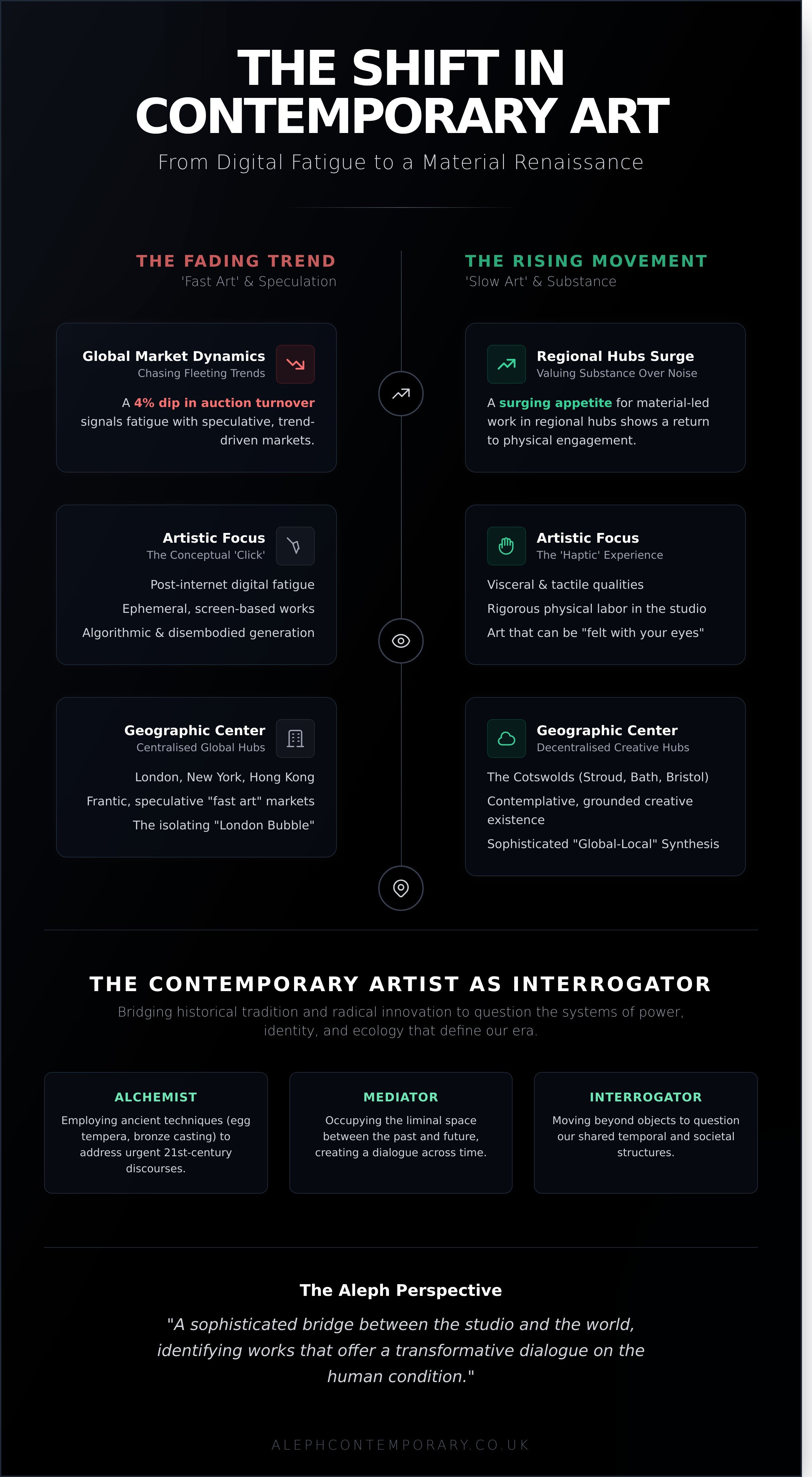
While *The Art Newspaper* recently reported a 4% dip in global auction turnover for the first half of 2024, the appetite for tactile, material-led work in regional hubs is surging. You've likely felt the exhaustion of chasing trends that lack a physical or historical anchor; it's a common frustration for collectors who value substance over the transient noise of the digital age. This guide explores the liminal space between international discourse and local materiality, offering a curated window into the lives of contemporary art artists who define our unique regional landscape. We'll help you understand the "why" behind the haptic contemporary aesthetic, moving beyond simple praise to interrogate how a piece functions intellectually and emotionally. By connecting the global insights of *Frieze* to the specific, storied heritage of the Cotswolds, we'll reveal how the creative hubs of Stroud, Cheltenham, and Bath are fostering a new era of enduring cultural significance. You'll discover how the unique light of the Five Valleys continues to inspire works that can be felt with your eyes.
Key Takeaways
- Discover why the global shift toward "Slow Art" marks a pivotal return to physical materiality, inviting a deeper engagement with the tactile essence of the artist’s touch.
- Learn how the "Haptic Contemporary" finds its home within the Five Valleys, bridging the global discourse of the Venice Biennale with the visceral, craft-led heritage of the Cotswolds.
- Explore how contemporary art artists are currently interrogating the liminal space between abstraction and figuration to produce works that refuse simple categorization.
- Gain insight into the decentralisation of the UK art market and the burgeoning importance of independent regional galleries as essential conduits for the discerning collector.
- Understand the gallery’s role as a sophisticated bridge between the studio and the world, identifying works that offer a transformative dialogue on the human condition.
Defining the Contemporary Art Artist in 2026: Beyond the Canvas
The October 2025 headlines from Frieze London heralded a definitive pivot toward "Slow Art," a movement that rejects the ephemeral flicker of the screen in favour of enduring physical presence. This shift marks a significant departure from the post-internet digital fatigue that dominated the early 2020s. Today, contemporary art artists are reclaiming the studio as a site of rigorous physical labour, moving away from algorithmic generation toward a profound engagement with materiality. It's a return to the tactile, where the weight of the paint and the resistance of the stone provide a necessary anchor in an increasingly fluid world.
This evolution represents more than a stylistic change; it is a metaphysical realignment. While the previous decade often prioritised the conceptual "click," the current landscape values the "haptic contemporary," art that possesses a visceral quality you can feel with your eyes. We see this manifested in works that demand a longer gaze, rewarding the viewer with layers of meaning that only reveal themselves through a process of slow looking. This contemplative pace is at the heart of our philosophy, where the dialogue between the creator and the medium becomes a shared experience with the collector.
The Interrogation of Modernity
To truly grasp what is contemporary art in this mid-decade moment, one must view the artist as an interrogator of our shared temporal structures. Unlike the modernists who sought a clean break from the past, today's practitioners occupy a liminal space, standing between historical tradition and radical innovation. They don't merely create objects; they question the systems of power, identity, and ecology that define our era. At Aleph Contemporary, our artists bridge this gap by employing ancient techniques, such as egg tempera or traditional bronze casting, to address urgent 21st-century discourses. This tension creates a rhythmic complexity in the work, ensuring it remains both historically grounded and fiercely relevant.
The Global-Local Lens in Stroud
While the "fast art" markets of New York or Hong Kong often chase fleeting speculative trends, the Cotswolds has emerged as a vital liminal hub for those seeking a more grounded creative existence. Here in the Five Valleys, we witness a unique "Global-Local" synthesis. Artists are increasingly fleeing the London bubble, drawn by the proximity to the creative arteries of Bristol and Bath, yet seeking the quietude necessary for deep interrogation. This geographic shift has transformed the region into a sophisticated cultural interlocutor, where international perspectives are filtered through a landscape of ancient industry and rural persistence.
The unique light of the Five Valleys provides a specific atmospheric quality that informs the palettes of our roster, grounding global themes in a local sensory experience. This isn't provincialism; it's a deliberate choice to prioritise substance over speed. By contrasting the frantic pace of major art fairs with the contemplative environment of our Stroud-based practice, we foster an atmosphere where artistic ideas can reach full maturity. We invite you to witness this evolution firsthand by exploring our figurative collection, where the human form serves as a site of both personal and universal exploration, beautifully rendered through this new lens of materiality and slow looking.
Materiality and the Haptic: Why Form Matters in the Cotswolds
A recent essay published in e-flux in late 2024 posits that "New Materialism" will serve as the philosophical spine of the 2026 Venice Biennale. This prediction highlights a growing fatigue with the ephemeral nature of the digital screen, signaling a vigorous return to the tactile and the visceral. This resurgence defines what we call the Haptic Contemporary, a movement where the physical weight of an object carries as much intellectual currency as the concept behind it. It's a return to the physical. While Tate's definition of contemporary art focuses on the temporal aspect of work made "in our time," the current shift toward materiality adds a necessary physical dimension to that timeline, grounding the abstract in the tangible.
Feeling with Your Eyes: The Haptic Experience
Materiality functions as a silent, pre-linguistic exchange between the object and the viewer. When you stand before a work, the texture communicates through a visual shorthand of grain, grit, and softness. Many contemporary art artists in Britain are currently abandoning traditional oil on canvas for more provocative, unconventional media. We see industrial felt, harvested beeswax, and even local limestone integrated into the creative process to provoke a sensory response that transcends mere sight. This shift forces a deeper interrogation of the object's origin and its right to occupy space. Haptic Contemporary is art that prioritizes the sensory impact of form.
The most compelling contemporary art artists working today understand that "feeling with your eyes" is a cognitive process. It bridges the gap between the intellectual "why" and the physical "how." Consider the following elements of this tactile discourse:
- The Agency of Matter: Materials are no longer passive tools; they're active participants in the narrative.
- Sensory Memory: Rough surfaces can trigger subconscious associations with the natural world or industrial decay.
- Craft as Concept: The labor of the hand is visible, celebrating the "made-ness" of the object.
This celebration of “made-ness” resonates across various disciplines where traditional skills are reclaimed as a response to mass production. The same principles of materiality and expert craftsmanship that define the Haptic Contemporary art movement can be seen in the literary world, where independent publishers like Plume Charmers create bilingual editions of ancient texts, transforming historical languages into beautifully crafted, tactile objects for the modern reader.
Spatial Dynamics and the Gallery Environment
The way an object occupies a room creates a "spatial dialogue" that can't be ignored. Here in the Cotswolds, our Stroud gallery utilizes its industrial heritage to frame these interrogations. The high ceilings and raw, honest light of the Five Valleys provide a stark backdrop for works that demand a physical presence. This connection to the local landscape is vital. Stroud was built on the 17th-century textile industry; the rhythmic clatter of looms is embedded in our architectural DNA. Experimental weaving and heavily textured surfaces aren't just trends here; they're a continuation of a regional narrative that values the integrity of the make.
Collectors in Cheltenham or Bath should consider how a piece interacts with the specific light of a Cotswold stone interior. A heavy, textured bronze or a delicate fiber piece can transform the temporal feel of a living space, moving it from a domestic setting to a site of active inquiry. When placing art, think of the work as an anchor for the room's energy. Take a moment to consider the weight and surface of our sculpture works; they invite a quiet reverence for the physical world that digital mediums simply cannot replicate.
The Dialogue Between Abstract and Figurative Art
A June 2024 report in The Art Newspaper highlighted a profound dissolution of the traditional boundaries between abstraction and representation. This shift suggests that the contemporary viewer no longer requires a binary choice between a recognizable subject and a purely formalist composition. Instead, we're witnessing a fluid exchange where the two modes inform and enrich one another. This isn't a conflict of styles; it's a sophisticated conversation about how we perceive reality through the medium of paint.
The current climate of modern painting prioritizes a gestural energy that refuses simple categorization. We often describe this as "Haptic Contemporary," an aesthetic where the craft and the visceral quality of the work are as vital as the image itself. It's art that you can feel with your eyes, where the physical presence of the medium speaks to the viewer's own sensory experience. This emphasis on the "why" behind the mark-making elevates the work from mere decoration to a rigorous intellectual inquiry.
Abstract Interrogations
In our curation, we define abstraction not as an absence of form, but as a concentrated study of materiality. An abstract brushstroke functions as a temporal record; it's a physical trace of the artist’s movement through time and space. Here in the Cotswolds, the unique light of the Five Valleys often finds its way onto the canvas through these non-objective forms. The influence of the British landscape is undeniable, yet it manifests as a feeling or a rhythmic tension rather than a literal depiction of the hills. It's a way of capturing the essence of the land through the weight and texture of the pigment.
The Return of the Figurative
As we look toward the artistic discourse of 2026, the human figure remains a vital site for exploration. Modern portraiture has evolved beyond simple likeness to reflect the complexities of the human condition in an increasingly digital world. These works often connect deeply to our local heritage in Gloucestershire, where the history of the textile industry in Stroud mirrors the layered, woven textures of the contemporary canvas. The figure becomes a vessel for memory, identity, and the shared experience of our community, grounded in a sense of place that resonates from Bristol to Bath.
At Aleph Contemporary, we curate a deliberate dialogue between these seemingly disparate styles to challenge the collector's perspective. Our contemporary art artists aren't interested in chasing fleeting trends; they're invested in the longevity of ideas and the poetic nuances of their craft. This approach is supported by recent contemporary art market analysis which indicates that discerning collectors are moving away from speculative "flipping" toward works that offer genuine intellectual depth and material integrity. Whether a piece is entirely non-objective or features a hauntingly familiar silhouette, the focus remains on the transformative power of the object itself.
We invite you to engage with these works and consider how the tension between form and void shapes your own response. View our latest abstract paintings to find your own narrative within the layers of gestural expression and find a piece that speaks to your specific journey.
Navigating the Contemporary Art Market: London to the Five Valleys
A 2023 market analysis published by Frieze identified a compelling decentralisation within the British art ecosystem. While the gravity of London’s "mega-galleries" remains undeniable, there is a measurable shift toward regional hubs that offer a more intimate, curated experience. Collectors are increasingly looking beyond the polished glass of Mayfair to find authenticity; they’re seeking spaces where the dialogue between the object and the observer feels personal rather than transactional. This movement reflects a desire for a deeper interrogation of the work itself, moving away from the high-volume models of global conglomerates toward independent galleries that prioritize the poetic nuances of the medium.
Aleph Contemporary functions as a sophisticated cultural interlocutor within this shifting terrain. We bridge the gap between the global discourse found in publications like The Art Newspaper and the lived experience of the Cotswolds. Our focus isn't on the fleeting; we look for the "Haptic Contemporary," art that possesses a visceral, tactile quality that can be felt with the eyes. We believe the unique light of the Five Valleys provides a perfect backdrop for this slow looking. By championing contemporary art artists who prioritize the "why" over the "what," we ensure our collection avoids the pitfalls of the merely decorative. For those beginning their journey, we offer a curated selection of original paintings under £1,000 that embody these rigorous standards.
The Discerning Collector’s Criteria
Identifying contemporary art artists with enduring cultural significance requires a move away from the noise of social media trends. A collection should be an extension of an intellectual inquiry, not just a series of acquisitions. We advise our collectors to prioritize materiality and the spatial dynamics of a piece. True originality often lies in the liminal space between tradition and innovation. You should look for works that reflect a "Global-Local" perspective, pieces that resonate with international themes while maintaining a connection to a specific sense of place or history. This ensures the collection remains relevant for decades rather than seasons.
Stroud as a Site of Active Inquiry
Often described as the "Covent Garden of the Cotswolds," Stroud is a town where industrial heritage meets avant-garde thinking. The local textile mills, once the engine of the region’s economy, now serve as a metaphor for the layered, "haptic" art we champion, echoing a legacy of making that resonates through every gestural brushstroke. We understand that our collectors might be based in Bristol, Cheltenham, or London, which is why we provide complimentary UK delivery on all works. This ensures that the transformative power of a new acquisition isn't hindered by logistics. Our role is to facilitate a seamless transition from the artist's studio to your private space, maintaining the integrity of the work throughout its journey.
Explore our current collection and discover works that challenge the status quo. View our latest exhibition online.
The Aleph Perspective: Curating the Future of Contemporary Art
A June 2024 analysis published by The Art Newspaper suggests that by 2026, the vitality of the global art market will rest primarily on the shoulders of independent, mid-tier galleries. These institutions serve as the essential curators of taste in an increasingly fragmented digital age. The gallery functions as much more than a retail space; it is a vital bridge that spans the distance between the private sanctuary of the artist’s studio and the discerning environment of the collector’s home. For contemporary art artists, this transition represents a critical moment where technical experimentation meets public discourse.
At Aleph Contemporary, we take this responsibility seriously. We don't just hang paintings; we curate experiences that demand intellectual rigor and emotional presence. Our commitment to quality, originality, and poetic nuance is reflected in every exhibition we host in our Stroud gallery. We believe that art should be a transformative encounter, one that challenges the viewer to look beyond the surface and engage with the underlying narrative of the work.
The Visionary Guide
Our role is that of a sophisticated cultural interlocutor, guiding you through the complexities of the current market with an unhurried, deliberate approach. We champion the philosophy of "slow looking," a practice that rejects the rapid-fire consumption of imagery in favor of deep, contemplative engagement. This focus on materiality, spatial dynamics, and the "why" allows us to explore how a piece functions intellectually within a space. We're interested in the haptic quality of art; the way a gestural mark or a particular texture can be felt with the eyes, creating a visceral connection that transcends simple visual appreciation.
Within our Stroud location, we emphasize the physical presence of the object. Whether it's the liminal qualities of a landscape or the temporal nature of an abstract form, we provide the context necessary to understand the artist's intent. This analytical precision is balanced with a palpable passion for the craft, ensuring our collectors feel both informed and inspired.
Join the Dialogue
Engaging with Aleph Contemporary means participating in a high-level conversation about the future of British art. We frequently frame our exhibitions as interrogations of specific themes, such as the tension between tradition and innovation or the dialogue between different generations of creators. By connecting the work of our contemporary art artists to the local heritage of the Five Valleys, we create a "Global-Local" perspective that is unique to our region. We might link a piece of experimental textile art to Stroud’s historic wool industry or compare the unique light of the Cotswolds to the atmospheric qualities found in a New York studio.
This silent exchange between the viewer and the object is where the true power of art lies. We invite you to become part of this ongoing exploration of the human condition. Art is not a static commodity; it's a living, breathing discourse that evolves with every gaze. Our gallery serves as a site of active inquiry, where you can discover works that possess enduring cultural significance rather than fleeting trendiness.
Please visit us at our gallery in Stroud to experience these "Haptic Contemporary" works firsthand. We're conveniently located for collectors from Bristol, Cheltenham, and Bath who are seeking a more intimate and intellectually stimulating art experience. If you require a more tailored approach to your collection, you may book a private consultation. We'll work with you to find pieces that resonate with your personal aesthetic and provide a lasting sense of discovery.
Begin Your Journey with the New Guard of Materiality
The dialogue between the global stage and our local landscape has never been more vital. As we look toward 2026, the definition of contemporary art artists continues to evolve, moving beyond the digital screen to embrace a visceral, haptic materiality that resonates deeply with the textile heritage of Stroud. This shift, highlighted in recent issues of The Art Newspaper, underscores a return to form and craft that transcends the traditional divide between abstract and figurative modes.
Aleph Contemporary remains a steadfast bridge for collectors navigating the journey from London’s West End to the quiet brilliance of the Cotswolds. Our selection is curated by seasoned experts based right here in the Five Valleys, ensuring every piece reflects both intellectual rigor and enduring cultural value. It's a collection that's been featured in major regional hubs and leading art publications alike. We're proud to offer complimentary UK delivery on all original works to ensure your next acquisition arrives with the care it deserves.
Explore our curated selection of Contemporary Artists
We invite you to step into this ongoing interrogation of form and spirit, where every canvas offers a new way to see the world and your place within it.
Frequently Asked Questions
What is the difference between modern and contemporary art artists?
Modern artists produced work between 1860 and roughly 1970, focusing on the internal logic of the medium, whereas contemporary art artists are those creating work in the present moment. Modernism sought to break from tradition through stylistic experimentation; contemporary practice prioritizes the conceptual "why" and the complex social discourses of our time. It's an essential distinction for any collector navigating the 110 year span of the modern era versus the immediate, temporal nature of today's market.
How do I start a contemporary art collection in the UK?
You should begin by visiting regional hubs like the Five Valleys or major events like Frieze London to identify the specific materiality that resonates with your aesthetic. Setting an initial budget between £1,200 and £4,500 for emerging talent allows you to acquire original works while supporting the UK’s 35,000 active professional artists. Focus on pieces that invite a silent exchange between the viewer and the object rather than chasing fleeting market trends.
Why is Stroud considered a hub for contemporary art artists?
Stroud’s reputation as a creative crucible is built on its history in the textile industry, an heritage that now attracts over 500 contemporary art artists to the district. The unique light of the Five Valleys and the proximity to creative centers like Bristol and Bath foster a dense network of practitioners. These artists often explore the tension between tradition and innovation, making the Cotswolds a vital site for active intellectual inquiry in the arts.
What should I look for in the materiality of a contemporary painting?
You should examine the haptic quality of the surface, seeking a visceral engagement where the paint behaves as both image and physical substance. A 2023 analysis in The Art Newspaper suggests that collectors increasingly value "felt" textures, where the dialogue between pigment and substrate creates a palpable presence. Look for gestural marks and layered compositions that reveal the artist’s process, ensuring the work possesses a depth that can be explored over many years.
Is contemporary art a good investment in 2026?
Contemporary art remains a resilient asset class, with the Artprice 100 index demonstrating a 1.5 percent annual outperformance compared to traditional equity markets over the last two decades. As we move through 2026, focus on artists with established museum provenance or those featured in the 61st Venice Biennale to ensure cultural longevity. Investing in art requires a discerning eye for works that offer both financial potential and a profound connection to the human condition.
How does Aleph Contemporary select the artists it represents?
We select artists through a rigorous interrogation of their technical mastery and the poetic nuances within their practice. Our curatorial vision favors "Haptic Contemporary" works that bridge the gap between the studio and the collector’s world, focusing on materiality and spatial dynamics. We don't follow the ephemeral whims of the market; instead, we champion creators whose work reflects a deep appreciation for history and the liminal spaces of modern life.
Can I buy original contemporary art online with confidence?
You can buy original art online with complete confidence by choosing galleries that provide comprehensive provenance and high resolution documentation of the work’s materiality. We offer a 14 day return policy and secure, insured shipping across the United Kingdom to ensure your acquisition is seamless. Digital platforms now account for 22 percent of global art sales, reflecting a shift toward a more accessible yet still highly sophisticated collecting environment.
What are the current trends for British contemporary artists?
British artists are currently pivoting toward "slow art" and sustainable materiality, a movement highlighted in recent discourse by e-flux. There's a renewed interest in the intersection of traditional craft and digital spatial dynamics, particularly among the 12 percent of UK graduates focusing on multidisciplinary practices. Here in the Cotswolds, we see a significant rise in works that explore our relationship with the landscape through a lens of quiet reverence and intellectual curiosity.

