
Why do we often feel we need to "solve" a painting before we're allowed to love it? Many collectors who visit our light-filled gallery in Stroud tell us they worry about "getting it wrong" when weighing up abstract vs figurative art, fearing they might miss a hidden meaning or misuse a technical term. It's a completely natural hesitation, yet we believe that art should always invite you in rather than shut you out.
In this curator's guide, I'll help you move past the jargon to discover the poetic differences between these styles and how they truly function within a modern home. You'll gain the confidence to choose a piece that resonates with your spirit while considering how the sharp spotlights and floor-to-ceiling windows of a room can transform a work's energy. We'll explore how natural light interacts with the materiality of oil paint and mixed media, ensuring your next acquisition feels perfectly scaled and easy to live with. By the end, you'll have a clear framework for selecting artwork that brings a sense of quiet confidence to your personal collection.
Key Takeaways
- Learn why the choice between abstract vs figurative art is less about "solving" a puzzle and more about how a piece speaks to your personal history and emotions.
- Discover how the physical act of making, from the rich texture of oil to the immediacy of acrylic, gives a painting its unique and quietly confident character.
- Understand how the light-filled gallery environment in Stroud reveals the true materiality of a work as natural light shifts throughout the day.
- Follow a simple, curator-led framework to ensure your chosen artwork is perfectly scaled and easy to live with in your own home.
- Gain the confidence to start or grow your collection with Nicholas Wells curated pieces that offer lasting beauty and cultural significance.
Understanding the Dialogue: Abstract vs. Figurative Art
At Aleph Contemporary, we often speak about "London eye, Cotswolds warmth." This philosophy reflects our roots in the international art scene and our relocation to a light-filled gallery in Stroud. When you step into our space, where the floor-to-ceiling windows allow natural light to wash over the white walls, you'll see that the tension between abstract vs figurative art is actually a harmonious conversation. These styles aren't opposites; they're different languages used to describe the same human experience. We've found that the most engaging collections often embrace both, allowing the literal and the lyrical to live side by side.
We love how a thoughtfully curated home can balance these two approaches. A figurative piece might provide a sense of grounded companionship, while an abstract work offers a space for open-ended contemplation. Together, they create a rhythmic depth that makes a living space feel both sophisticated and personal. It's about finding a balance that resonates with your own aesthetic sensibilities and the unique character of your home.
What is Figurative Art Today?
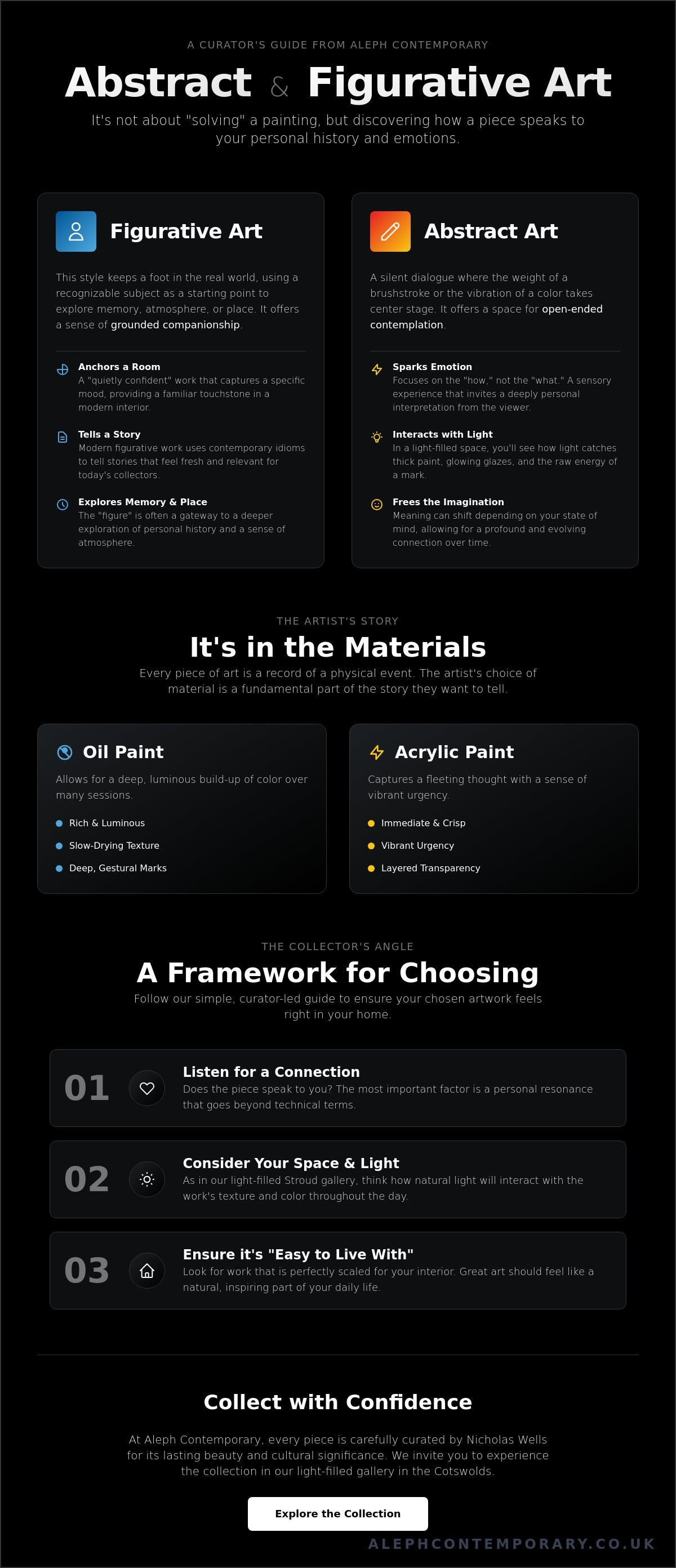
Modern figurative work has moved far beyond the constraints of traditional realism. It uses contemporary idioms to capture the essence of a subject, ensuring the work feels fresh and relevant for today's interiors. By Understanding Figurative Art in a modern context, we recognize that the "figure" is often just a starting point for a deeper exploration of memory, atmosphere, or place. It keeps a foot in the real world while inviting the viewer to look closer at the artist's unique perspective.
Visitors often notice a "quietly confident" quality in our figurative collection. These works don't just depict a person or a landscape; they capture a specific mood that anchors a room. In our Stroud gallery, our sharp spotlights highlight the subtle textures of these paintings, making them feel intimate and perfectly scaled for domestic settings. They're designed to be easy to live with, offering a familiar touchstone within a modern interior.
The Essence of Abstract Expression
Abstraction functions as a silent dialogue between the artist's emotion and the canvas. Instead of looking for a literal story or a recognizable object, we're invited to respond to the materiality of the paint and the physical gesture of the creator. It's a sensory experience where the weight of a brushstroke or the vibration of a color field takes center stage. This style allows for a deeply personal interpretation, as the meaning of the work often shifts depending on the viewer's own state of mind.
In our abstract collection, the focus is on the "how" rather than the "what." When you view these pieces in a light-filled space, you'll see how the work changes throughout the day. You might notice:
- The way natural light catches the ridges of thick, gestural oil paint.
- The transparency of layered acrylic glazes that seem to glow from within.
- The raw energy of a mark that suggests movement and temporal depth.
Each Nicholas Wells curated piece is chosen for its enduring significance and its ability to transform a space. Whether you're drawn to a recognizable form or a purely gestural expression, the goal is to find a work that sparks a profound connection every time you enter the room.
The Artist’s Story: Materials, Gesture, and Meaning
Every piece of art is a record of a physical event. When we look at the dialogue surrounding abstract vs figurative art, we're really looking at how an artist chooses to translate their lived experience into physical matter. Artists don't merely select a subject; they select a substance. Some prefer the rich, slow-drying texture of oil, which allows for a deep, luminous build-up of color over many sessions. Others gravitate toward the immediacy and crispness of acrylic, capturing a fleeting thought with a sense of vibrant urgency. This choice is never just technical. It's a fundamental part of the story the artist wants to tell.
The gestural nature of contemporary work is something we find deeply compelling at Aleph Contemporary. Whether it's a bold sweep of a brush or a delicate, tentative mark, every artwork tells the story of its own creation. It's the tangible history of an artist's hand moving across a surface, a quiet dance between intention and happy accident. We believe this focus on quality and originality is what gives a piece its soul, ensuring it remains as captivating in a decade as it is today.
Materiality and Texture
The physical surface of a painting invites a "slow looking" experience that digital screens simply cannot replicate. In our light-filled gallery in Stroud, the sharp spotlights reveal the subtle topography of the paint. In an abstract wash, you might find yourself drifting through a liminal space where color and light dissolve into one another. In contrast, a figure often provides a more solid, recognizable anchor for the eye. We often suggest mixed media works for collectors who want a bridge between these worlds. This multifaceted approach fits within the museum definition of figurative art, which acknowledges that art can be representational without being strictly realistic.
The Curator's Perspective
Nicholas Wells curated our collection with a discerning eye for works that avoid the noise of fleeting trends. We look for pieces that are "quietly confident," possessing an inherent authority that doesn't need to shout to be noticed. This curator-led approach ensures that every painting we champion has the depth to sustain a long-term relationship with its owner. If you're looking for a piece that balances technical skill with emotional resonance, you might enjoy exploring our collection of contemporary oil paintings.
The Gallery Experience: Seeing Art in the Cotswold Light
Our relocation to Stroud in late 2023 allowed us to create a space that truly honors the materiality of contemporary painting. While our London roots remain a vital part of our identity, the light-filled gallery we've built in the Cotswolds offers a different kind of engagement with the work we represent. Here, the white walls and floor-to-ceiling windows invite the outside in, creating a setting where natural light becomes an active participant in the viewing experience. As the sun moves across the sky, the dialogue between Abstract vs. Figurative Art shifts; a morning glow might emphasize the delicate glazes of a portrait, while the late afternoon sun highlights the thick, impasto textures of an abstract work.
Visitors often find that the surrounding hills influence their perception of the landscape art we exhibit. We call this the "Stroud effect." It's the way the rolling terrain and shifting mists of the Five Valleys prepare the eye for the subtle color shifts on a canvas. We encourage our guests to imagine how these works will respond to the light-filled modern interiors of their own homes, where the art isn't just displayed but lived with. This contemporary art gallery Stroud was designed specifically to bridge the gap between the professional studio and the personal living space.
Slow Looking in Stroud
We've designed this as an intimate exhibition space because we believe art requires time. Our sharp spotlights are carefully positioned not just to illuminate, but to reveal. They cast light into the physical depth of a brushstroke, showing the history of the artist's gesture. This environment encourages "slow looking," a practice where you linger in front of a piece until its quieter details begin to emerge. This focus is a hallmark of any Nicholas Wells curated show, ensuring that the work is seen with the clarity it deserves.
Art Scaled for Living
Choosing art for a domestic setting is different from selecting for a museum. We prioritize works that are perfectly scaled for modern living, ensuring they possess a presence that is sophisticated without being overwhelming. We've found that understanding the nuances of abstract vs figurative art becomes much simpler when you see them in a domestic-scale environment. Every quietly confident work in our Cotswolds art gallery is chosen because it is easy to live with. It should offer a sense of quiet reverence that enhances your daily life, fitting seamlessly into the architecture of your home.
How to Choose the Right Artwork for Your Interior
Choosing a new piece for your home is a deeply personal journey that moves beyond mere decoration. It's about finding a work that resonates with your spirit while enhancing the architecture of your living space. When you're navigating the choice between abstract vs figurative art, we suggest a simple, curator-led approach to help you decide with confidence. We've found that the most successful acquisitions happen when a collector stops worrying about "rules" and starts listening to the work itself.
- Identify your emotional response. Does the painting spark a sense of quiet reverence? Trust your intuition; if a work moves you, it belongs in your life.
- Consider the dialogue. Look at your existing space. A bold abstract can provide a vibrant counterpoint to traditional furniture, while a quiet figure might bring a sense of calm to a busy room.
- Study the materiality. Think about where the piece will hang. Will the rich textures of an oil painting "sing" in your morning light, or would the crisp edges of an acrylic work better under your evening spotlights?
- Choose your narrative. Ask yourself if you prefer the clear "story" of a recognizable subject or the open-ended "mood" created by gestural marks and color fields.
- Consult an expert. Nicholas Wells curated our collection to ensure every piece is of enduring quality. He often helps collectors find that perfect match that feels both intimate and sophisticated.
Mixing Abstract and Figurative
We love how different styles can create a layered, thoughtful atmosphere when hung together. You don't have to choose just one language for your home. In fact, using a piece of portraiture to anchor a room can provide a wonderful focal point that allows surrounding abstract washes to feel more grounded. The key to a cohesive look is a carefully curated color palette that ties the different works together, creating a visual rhythm that feels intentional and easy to live with.
The Collector's Angle: Value and Longevity
Originality is always the best indicator of a piece's lasting significance. When you invest in a painting, you're investing in your daily wellbeing and the cultural story of our time. We often discuss the art painting as a lifelong dialogue, a work that continues to reveal new layers of meaning as the years pass. By choosing works that avoid fleeting trends, you ensure your collection remains relevant and inspiring for decades to come.
Ready to find a piece that speaks to you? We invite you to explore our carefully curated selection of artworks under £1,000 to begin your collecting journey today.
Collecting with Confidence at Aleph Contemporary
Our philosophy of "London eye, Cotswolds warmth" is the foundation of how we bridge the gap between world-class artistry and the personal collector's world. Whether you're still weighing up the nuances of abstract vs figurative art or you've already found a piece that speaks to you, we want your journey to be as unhurried as a morning in our Stroud gallery. We believe that everyone should have the opportunity to live with exceptional work. That's why we've made it easy to start your collection with carefully curated pieces under £1,000.
Choosing the right painting should be an act of discovery rather than a source of stress. We're proud to offer a diverse selection of original british art for sale, all of which comes with complimentary UK delivery. This ensures that the quietly confident work you fell in love with on our white walls reaches your home safely and simply. We invite you to step into our light-filled gallery to see how the floor-to-ceiling windows and sharp spotlights bring every brushstroke to life.
A Personal Invitation
Nicholas Wells is committed to keeping the art world welcoming and approachable. He's always available for a curator-led conversation, helping you understand how a specific piece functions within the broader context of abstract vs figurative art. If you'd like to experience the materiality of our paintings in person, please get in touch to arrange a private viewing. Visitors often notice how a quiet afternoon in the gallery helps them find a piece that's perfectly scaled for their own interior.
Stay in the Dialogue
The conversation doesn't have to end when you leave the gallery. We'd love for you to stay in the dialogue by signing up for our newsletter. It's the best way to discover up and coming artists and receive updates on our intimate exhibitions before they hit the mainstream. Join us as we continue our journey from our London roots to the heart of the Cotswolds, exploring the transformative power of contemporary painting together.
Start Your Collecting Journey in the Cotswold Light
We've explored how the choice between abstract vs figurative art is ultimately a personal dialogue between your intuition and the artist's gesture. Whether you're drawn to the recognizable forms of a contemporary portrait or the lyrical materiality of an abstract wash, the most important factor is finding a piece that feels easy to live with. By considering how natural light interacts with the surface of a painting, you can choose a work that brings a sense of quiet reverence to your daily life.
Every Nicholas Wells curated piece in our light-filled gallery in Stroud is chosen for its enduring significance and Red Dot level design appreciation. Our floor-to-ceiling windows and sharp spotlights are designed to reveal the raw beauty of original paintings, ensuring they're perfectly scaled for modern interiors. To find a work that resonates with your own aesthetic, we invite you to explore our carefully curated collection of original artworks.
With complimentary UK delivery on all original works, starting or growing your collection has never been more approachable. We look forward to welcoming you to our intimate exhibition space in the heart of the Cotswolds soon.
Frequently Asked Questions
What is the main difference between abstract and figurative art?
The main difference lies in whether the work references recognizable forms from the physical world. While we often discuss abstract vs figurative art as distinct categories, both use the same building blocks of color and gesture. Figurative art keeps a foot in reality, whereas abstraction focuses on the sensory impact of the paint itself. We love how both styles can capture a specific mood, even if they use different visual languages to do so.
Can I hang abstract and figurative art in the same room?
You can absolutely mix these styles to create a sophisticated dialogue on your walls. Many of our collectors find that hanging a recognizable landscape alongside a gestural abstract adds a rhythmic depth to a room. It's a wonderful way to ensure your collection feels personal rather than prescriptive. The key is finding a common thread, such as a shared color palette or a similar intensity of light, to tie the pieces together.
Is abstract art more 'modern' than figurative art?
Neither style is inherently more modern; both are vital parts of the contemporary art landscape. While abstraction often feels synonymous with the avant-garde, modern figurative art uses fresh idioms and techniques that feel entirely relevant for today's interiors. We choose works that avoid fleeting trends, focusing instead on pieces with enduring cultural significance. Whether a piece is abstract or representational, its value lies in its ability to spark a profound connection.
How do I know if an abstract painting is 'good'?
A "good" abstract painting is defined by its technical integrity and the confidence of the artist's hand. When evaluating abstract vs figurative art, look for a sense of purpose in the marks and a thoughtful use of materiality. Visitors often notice that the most successful works possess a quiet authority that holds your attention over time. It's about how the layers of paint and the balance of composition create a lasting emotional resonance.
What does 'figurative' mean in contemporary art?
In the contemporary world, "figurative" refers to art that retains a clear reference to the real world, though not necessarily through strict realism. It might be a portrait where the features are slightly dissolved or a landscape that captures an atmosphere rather than a specific map coordinate. We find that these works are particularly easy to live with, as they offer a familiar anchor while still inviting a high-level conversation about the human condition.
Why is lighting so important for original paintings?
Lighting is essential because it reveals the physical topography and "soul" of a painting. In our Stroud gallery, our sharp spotlights are positioned to highlight the ridged textures of oil paint and the subtle glazes of mixed media. Natural light from floor-to-ceiling windows also plays a role, causing the work's energy to shift as the sun moves. This interaction ensures the art feels alive and responsive to its environment throughout the day.
How do I start an art collection on a budget?
Starting a collection is most successful when you focus on smaller, original works or high-quality prints. We've carefully curated a selection of pieces under £1,000 to help new collectors begin their journey with confidence. Look for works on paper or smaller acrylics that resonate with you personally. These pieces are perfectly scaled for modern homes and offer an intimate way to experience the transformative power of art without a significant initial investment.
What makes Aleph Contemporary different from other galleries?
We offer a unique blend of "London eye" expertise and "Cotswolds warmth" in a welcoming, curator-led space. Aleph Contemporary isn't just about acquisition; it's a bridge between the artist's studio and your home. Our light-filled gallery in Stroud provides a focused environment where you can linger in front of carefully curated works. We prioritize art that is easy to live with, ensuring every piece Nicholas Wells selects has the depth to sustain a lifelong dialogue.

