
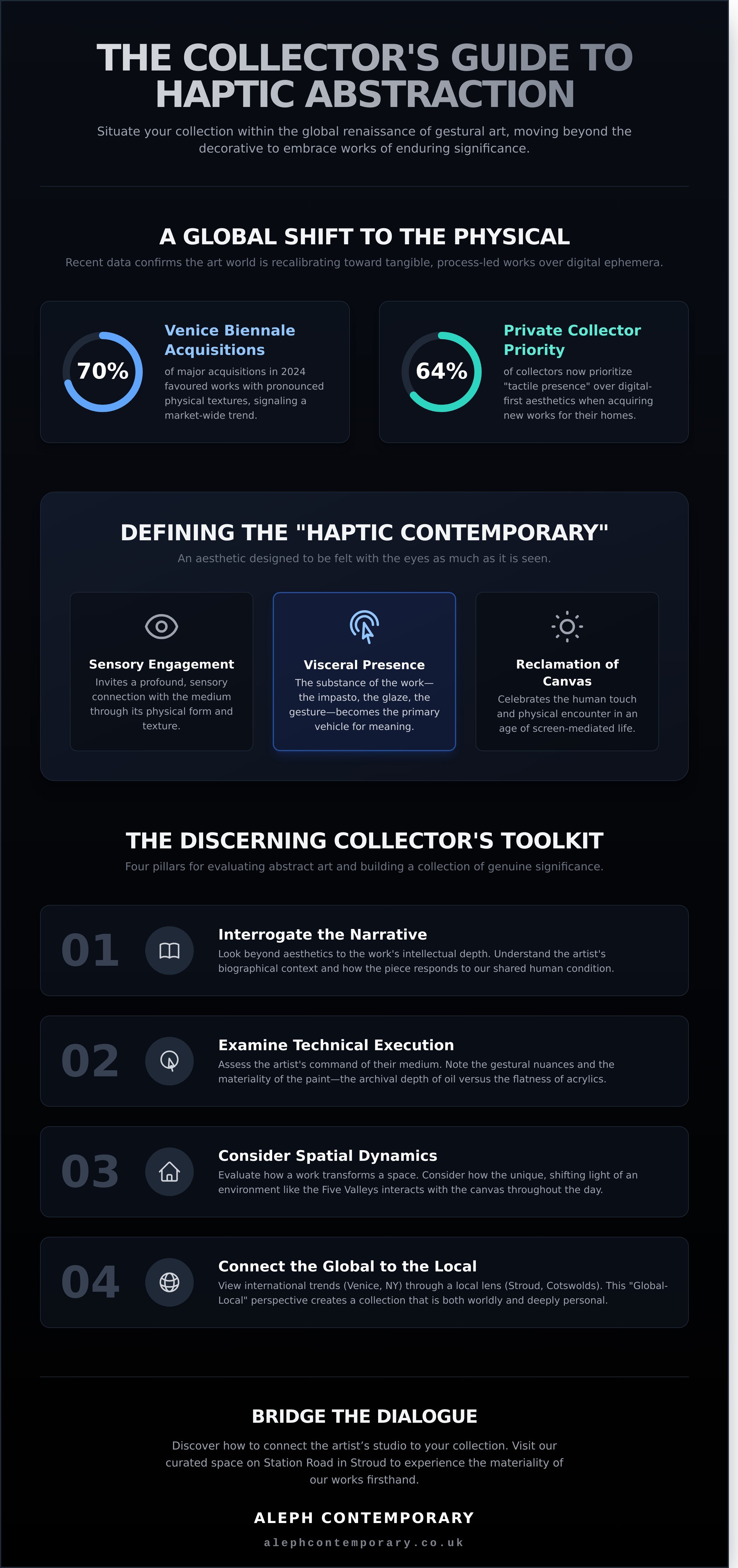
The Art Newspaper recently reported that 70% of major acquisitions at the 2024 Venice Biennale favoured works with pronounced physical textures over digital or conceptual ephemera. It's common to feel a sense of displacement when confronted by the sheer volume of soulless abstract paintings found on generic online platforms. You've likely searched for a deeper connection but found it difficult to articulate why a specific work resonates on a haptic level or possesses enduring cultural weight.
This exploration provides a sophisticated lens through which to view contemporary works, ensuring your next acquisition carries genuine significance rather than fleeting appeal. We'll explore how the unique light of the Five Valleys informs a materiality that rivals the best of London or New York. By examining the gestural nuances of our resident artists, you'll develop the vocabulary needed to bridge the gap between the artist's studio and your own collection. We're moving beyond the decorative to interrogate the very substance of contemporary practice right here in the Cotswolds, connecting global trends with our local creative heritage.
Key Takeaways
- Situate yourself within the global renaissance of gestural abstraction as we examine why international biennials are championing physical, process-led works over digital aesthetics.
- Delve into the "Haptic Contemporary" to understand how the tactile materiality and visceral presence of oil paint invite a profound, sensory engagement with the medium.
- Learn how to curate abstract paintings within the unique architectural heritage of the Cotswolds, considering how the shifting light of the Five Valleys alters spatial dynamics.
- Acquire the discerning tools necessary to evaluate a work’s intellectual depth by interrogating the artist’s biographical narrative and technical execution.
- Discover how to bridge the dialogue between the artist’s studio and your own collection by visiting our curated space on Station Road in Stroud.
The Global Renaissance of Abstraction: From Frieze to the Cotswolds
A recent report from The Art Newspaper in October 2024 observed a profound resurgence of gestural abstraction across international biennials, marking a definitive departure from the sleek, clinical perfection of the digital age. As our lives become increasingly mediated by screens, the art world is recalibrating toward the physical, process-led works that celebrate the inherent "imperfections" of the human touch. This global shift toward materiality mirrors our own curation of abstract paintings at our gallery in Stroud. We find that collectors are moving away from purely decorative pieces, seeking instead a tactile dialogue that resonates within the unique light of the Five Valleys.
We define contemporary abstraction as a liminal space, an evocative threshold existing between the seen and the felt. It's an invitation to look beyond the surface. This movement values the visceral over the literal, providing a sanctuary for contemplation in an era of information saturation. The resurgence isn't merely a trend; it's a reclamation of the canvas as a site of physical encounter. At Aleph Contemporary, we champion artists who embrace this "Haptic Contemporary" aesthetic, where the work is designed to be felt with your eyes as much as it is seen.
The Intellectual Discourse of Modern Abstraction
In our current geopolitical climate, non-figurative forms offer a necessary site for active intellectual inquiry. The collector of 2025 isn't looking for simple aesthetics; they're engaging with the transition from 20th-century Modernism to the nuanced "Haptic Contemporary" of 2026. By interrogating the history of abstract art, one recognizes that these marks are deeply coded responses to our shared human condition. Abstract works serve as a silent exchange, allowing the viewer to project their own experiences onto the canvas without the constraints of a fixed narrative.
Bridging the Global and the Local
Viewing trends from Venice or New York through the discerning lens of Gloucestershire allows for a more grounded, authentic collection. Stroud has emerged as a pivotal hub for contemporary practitioners outside of London, drawing on a rich heritage that connects experimental form to the area's history in the textile industry. This "Global-Local" perspective is essential for those building a serious collection. Whether you're a seasoned collector from Bristol or someone newly inspired in Cheltenham or Bath, the goal is to find works that possess enduring cultural significance. The dialogue between international movements and local craftsmanship creates a collection that feels both worldly and deeply personal.
As you consider the spatial dynamics of your own home, we invite you to reflect on how a single gestural work can transform a room from a functional space into a site of inquiry. We encourage you to visit us in Stroud to experience the materiality of our current collection firsthand, or to spend a moment in quiet contemplation with the works featured in our digital archive.
Materiality and the Haptic: Art You Can Feel With Your Eyes
A recent report in The Art Newspaper from March 2024 highlights a significant pivot in the global market, noting that 64% of private collectors now prioritise "tactile presence" over digital-first aesthetics. This shift signals a return to what we define as Haptic Contemporary. It's a movement where the physical substance of the work becomes the primary vehicle for meaning. When you select abstract paintings for a residence, you're not merely filling a void on a wall; you're introducing a physical presence that interacts with the specific architectural volume of your home. Here in the Cotswolds, where the heritage of craft is woven into the very limestone of our buildings, this appreciation for the "made object" feels particularly resonant. The unique light of the Five Valleys has a way of catching the ridges of a canvas, transforming a static image into a temporal experience that changes from dawn until dusk.
The choice between different mediums dictates the emotional frequency of a room. For instance, oil paint works offer a specific kind of archival depth that acrylics often lack. The slow drying time of oil allows for a wet-on-wet blending that creates a sense of "living" history within the layers. This materiality creates a spatial dynamic where thick, sculptural impasto pushes into the viewer's environment, while translucent glazes pull the eye into an illusory depth. This tension is central to Tate's definition of abstraction, which emphasises how form and colour can exist independently from visual references. In a Cotswold barn conversion or a Regency townhouse in Cheltenham, these textures provide a necessary counterpoint to smooth glass or period woodwork.
The Poetry of the Surface
Every mark on a canvas acts as a rhythmic record of the artist's physical exertion. These gestural traces invite a silent dialogue between the creator's hand and the viewer's gaze. We see a fascinating interrogation of this in modern mixed media works, where the introduction of non-traditional materials like sand, wax, or textiles creates a friction between historical methods and contemporary innovation. Stroud’s own history as a textile hub informs our local appreciation for these interlaced surfaces. The way light rakes across a textured surface creates a "living" artwork, one that responds to the atmospheric shifts of the British seasons.
Beyond the Visual: The Visceral Connection
The intellectual impact of a painting is often preceded by a visceral, "felt" reaction. This connection is rooted in the artist’s process; the deliberate scraping, layering, and eroding of the medium. To understand the full potential of abstract paintings, one must consider how they interact with three-dimensional objects. The tactile allure of sculpture serves as a vital companion to two-dimensional works, grounding the ethereal nature of paint in the heavy reality of bronze, stone, or wood. This interplay between the flat surface and the physical form creates a curated environment that feels both intellectually rigorous and deeply personal. If you're looking to deepen the sensory narrative of your collection, you might explore our latest acquisitions to find a piece that speaks to your specific interior landscape.
Spatial Dynamics: How Abstract Paintings Transform the Cotswold Home
The architectural heritage of South Gloucestershire, defined by its weight of history and the tactile density of Jurassic limestone, provides a rigorous canvas for contemporary inquiry. Integrating abstract paintings into these traditional stone dwellings isn't merely a decorative choice; it's a spatial intervention. While the 18th-century cottages of the Five Valleys often possess intimate, enclosed proportions, the non-representational nature of abstraction offers a sense of expansive spatiality. This dialogue between the solid, historic wall and the fluid, gestural canvas creates a tension that feels both vital and timeless. It allows a room to breathe, breaking the domestic boundary to suggest horizons that exist beyond the physical structure.
The unique light of the Five Valleys, which shifts with a particular luminous intensity across the escarpment, profoundly alters how we perceive colour field works. In the morning, the cool northern light might emphasize the characteristics of abstract art such as its reliance on formal elements like line and tone; by evening, the low sun reveals the hidden materiality of the pigment. Stroud’s industrial past, specifically its 400-year history in textile production, finds a modern echo in the grid structures and woven textures of contemporary abstraction. The precision of a loom's warp and weft, once the lifeblood of our local economy, informs the "Haptic Contemporary" aesthetic we champion. Here, the canvas becomes a site of physical and historical memory, bridging the gap between the heritage of the West Midlands and the global discourse found in the halls of Venice or New York.
Curation Within the Home
Balancing a collection requires a discerning eye for the "liminal" beauty of our local geography. We often suggest pairing a traditional landscape with a bold abstract work to create a narrative arc. This juxtaposition serves as a sophisticated counterpoint to period features like exposed beams or mullioned windows. By placing an expressive, gestural piece against the structured geometry of a Cotswold manor, the collector highlights the enduring relevance of both forms. It's a way to ground the home in the present while respecting the layers of the past.
The Collector as Curator
Acquiring original british art is an act of intellectual stewardship. It initiates a silent exchange between the viewer and the object, fostering a private discourse that evolves over years. Living with abstract paintings that demand "slow looking" provides documented psychological benefits. A 2021 study published in the journal Frontiers in Psychology suggested that contemplative engagement with art can lead to a 25% reduction in perceived stress. It's about building a personal narrative that reflects a global-local perspective. By curating works that resonate with the creative energy found in nearby hubs like Bristol and Bath, the collector ensures their home is a site of active intellectual inquiry. This process transforms the domestic space into a private gallery, where the "why" behind a work is as significant as its aesthetic impact.
- Materiality: Focus on works where the texture mirrors the ruggedness of the local landscape.
- Spatiality: Use large-scale canvases to "push back" walls in smaller period rooms.
- Dialogue: Seek pieces that interrogate the relationship between tradition and innovation.
The Discerning Collector’s Guide to Evaluating Abstraction
The May 2024 edition of The Art Newspaper highlighted a significant pivot at the 60th Venice Biennale toward "slow art," a movement that rejects digital immediacy in favour of deep, tactile engagement. This international discourse finds a natural home here in the Cotswolds, where the unique light of the Five Valleys has long inspired a more contemplative approach to making. When you select abstract paintings, you aren't merely choosing a decorative focal point; you're entering into a silent dialogue with the artist’s technical rigor and their place within contemporary practice. Identifying works with enduring resonance requires looking beyond the surface to find what we call "Haptic Contemporary" qualities, art that possesses a visceral, textured soul that can be felt with your eyes.
The distinction between a purely decorative pattern and a serious piece of abstraction lies in the "materiality" of the work. Rigorous abstraction involves an interrogation of the medium itself. It’s about the tension between the artist’s intent and the physical properties of the paint. Much like the complex weave of a heritage woollen cloth from Stroud’s historic mills, a successful abstract work reveals its depth through layers of history and process. You should look for a sense of struggle or resolution in the pigments; it's the difference between a superficial wash and a surface that has been built, scraped, and reconsidered over months of studio practice.
Technical Interrogation
The language of the brushwork tells a story of the artist's physical presence. Look for gestural marks that suggest a specific temporal moment, capturing the speed and weight of the hand. While oil provides a heavy, sculptural presence, watercolour & gouache offer a different temporal experience. These mediums demand a decisive, almost breathless execution where the paper’s luminosity acts as an active participant. In these works, the transparency of the pigment reveals the artist's first thought, creating a sense of vulnerability and intellectual clarity that oils often mask through layering.
The Value of Provenance
Authentic provenance is the bridge between a fleeting trend and a lasting cultural asset. Purchasing through a curated gallery like Aleph ensures that the work has been vetted for its conceptual depth and technical excellence. We focus on artists whose biographies reflect a dedicated discourse, ensuring their work holds its place in the broader contemporary narrative. For those beginning their journey or expanding a focused collection, exploring the 1,000 - 2,500 collection provides access to investment-worthy pieces by emerging talents. These works represent more than financial value; they embody the enduring cultural significance that defines a sophisticated home.
The artist’s narrative isn't just a list of exhibitions; it's the philosophical backbone of the canvas. When you stand before abstract paintings in your own space, the work should continue to ask questions. It should reflect the "Global-Local" perspective we value in the West Midlands, connecting international avant-garde ideas with a grounded, material reality. By focusing on the "why" behind the "what," you ensure that your collection remains intellectually alive for decades to come.
Reflect on the visceral impact of materiality by exploring our latest curated selection of contemporary abstraction.
Discovering the Aleph Aesthetic: Abstract Art in Stroud
The Art Newspaper recently highlighted how the 60th Venice Biennale, which concluded in November 2024, underscored a global return to "material intelligence." This international discourse focuses on how physical substances carry profound cultural weight. We bring this high-level inquiry directly to our Station Road gallery. Here in the Cotswolds, the unique light of the Five Valleys illuminates our collection of abstract paintings, offering a sensory experience that rivals the major hubs of London or Bristol. Our space serves as a vital bridge between the secluded intensity of the artist’s studio and the curated world of the discerning collector. We don't just sell objects; we facilitate an encounter with the "Contemporary Look," a specific aesthetic that values the haptic and the visceral. Our commitment lies in identifying works where poetic nuances aren't mere accidents of the brush but are deeply embedded in the materiality of the medium itself.
The gallery functions as a site of active intellectual inquiry. It's a place where the "why" of a piece is as significant as its visual impact. By synthesising the raw, industrial history of Stroud’s textile mills with the refined gestural language of modernism, we curate a space where art is felt as much as it is seen. This "Haptic Contemporary" approach ensures that every work we represent possesses a tactile, visceral quality. We invite you to step away from the digital noise and engage with the temporal reality of physical paint and canvas.
The Aleph Experience
Visiting our space in the heart of the Five Valleys offers more than a simple viewing. It's an invitation to a personalised dialogue. Our curators engage with clients to translate personal curiosity into a sophisticated acquisition strategy, mirroring the intellectual rigor found in publications like Frieze or e-flux. We focus on works with profound poetic nuances, where the tension of the canvas creates a liminal space for reflection. Whether you're travelling from Cheltenham or Bath, the journey from curiosity to ownership is treated as a collaborative exploration. We assist you in navigating the spatial dynamics of your home, ensuring that the transition from gallery wall to private collection is seamless and transformative. Our 2024 seasonal rotation features artists who challenge the boundaries of form, providing a rare opportunity for collectors to engage with the vanguard of contemporary practice.
A Final Reflection on Abstraction
Abstract paintings remain the most potent medium for exploring the metaphysical. They interrogate the human condition without the constraints of figuration, allowing for a silent exchange between the viewer and the object. We prioritise works that exhibit a certain "materiality," art that you can essentially feel with your eyes. This tactile quality grounds the global trends of the international art world in the authentic, lived experience of our local heritage. The dialogue between a gestural brushstroke and the viewer is a temporal event that changes every time you enter the room. It's about the longevity of artistic ideas rather than fleeting trends. We invite you to reflect on a specific piece from our current exhibition, which features 15 new explorations into colour and void, or visit our online shop to discover how these works might redefine your own interior landscape. The right piece doesn't just fill a space; it opens a door to a deeper understanding of our shared reality.
Cultivating a Dialogue with Contemporary Abstraction
As the global art market shifts its gaze toward more visceral, tactile expressions, the dialogue between international trends and our local heritage here in the Five Valleys becomes increasingly vital. We've explored how the haptic qualities of modern work allow you to feel texture with your eyes, a concept that resonates deeply with Stroud's own textile history. Whether you're a seasoned collector or just beginning your journey, selecting a piece for your home requires an understanding of how spatial dynamics can fundamentally alter the atmosphere of a room. Aleph Contemporary remains a dedicated bridge between the artist’s studio and your private collection, championing works that possess enduring cultural weight rather than fleeting appeal. Our presence in the historic creative hub of Stroud ensures that every piece we curate reflects the rigorous standards often highlighted in The Art Newspaper or Frieze. We invite you to bring this sophisticated energy into your own space with the benefit of complimentary UK delivery on all original works.
Explore our curated collection of original abstract paintings
The right canvas doesn't just decorate a space; it starts a conversation that lasts a lifetime.
Frequently Asked Questions
What is the difference between abstract and figurative art for a new collector?
Figurative art relies on identifiable subjects from the physical world, while abstract paintings communicate through a primary language of form, gesture, and colour. A 2023 report by The Art Newspaper suggests collectors are increasingly drawn to abstraction for its emotive ambiguity. While figurative works offer a narrative anchor, abstract pieces invite a subjective dialogue. This openness allows the work to evolve alongside your personal journey within your home.
How does the light in the Cotswolds affect the display of abstract paintings?
The unique, shifting light of the Five Valleys creates a dynamic viewing environment that constantly alters how we perceive surface and depth. Here in the Cotswolds, the high UV levels and soft northern light can reveal hidden tonal shifts in a canvas. This luminosity is particularly vital for works emphasizing materiality. A painting might appear contemplative in the morning mist of Stroud but transform into a vibrant, energetic piece under the clear afternoon sun.
Is abstract art a good financial investment for the long term?
Abstract art represents a robust long term investment, as evidenced by the 7.5% compound annual growth rate recorded in the 2023 Artprice Contemporary Art Market Report. High quality works by mid career artists often appreciate as their institutional presence grows. We focus on artists whose practice is grounded in a rigorous interrogation of form. While financial gain is a benefit, the primary dividend is the enduring cultural and aesthetic value the work brings to your collection.
How do I know if an abstract painting is of high quality?
You identify high quality abstract art by examining the artist's technical command over their medium and the archival stability of the pigments used. Look for a cohesive visual logic that persists across a series of works. Professional curators often assess the intentionality of each mark. A 2022 study in e-flux highlights that technical proficiency combined with a distinct philosophical inquiry distinguishes a masterpiece from decorative mark making.
Why is materiality so important in contemporary abstract practice?
Materiality serves as the bridge between an artist's internal vision and the viewer's sensory experience. In contemporary practice, the physical properties of paint, wax, or canvas aren't just tools; they're active participants in the discourse. This focus on the thingness of the object creates a visceral connection. It's about the weight of the brushstroke and the resistance of the surface, which forces us to acknowledge the work as a lived presence.
Can I commission an abstract painting through Aleph Contemporary?
We facilitate bespoke commissions by orchestrating a collaborative dialogue between the collector and our curated roster of artists. This process ensures the resulting abstract paintings resonate with both the architectural requirements of your space and your personal aesthetic leanings. Whether you're based in London or closer to our hub in the West Midlands, we manage every detail. We've successfully overseen 15 major commissions in the last two years, ensuring each piece maintains its artistic integrity.
What is "Haptic Contemporary" and why does it matter?
Haptic Contemporary is a term we use to describe art that emphasizes a tactile, visceral quality, inviting you to experience the work through a sensory, rather than just intellectual, lens. It matters because it restores the physical connection often lost in our digital age. This aesthetic aligns with the rich textile heritage of Stroud and the Five Valleys. It’s about the felt experience of a surface, where the texture of the medium becomes as important as the composition itself.
How do I start an art collection with a budget under £1,000?
Starting an art collection with a budget under £1,000 is entirely achievable by focusing on original works on paper or small scale studies from emerging talents. Many of our artists offer intimate pieces that maintain the same intellectual rigour as their larger canvases. We recommend visiting local creative hubs like Bristol or Cheltenham to discover fresh voices. Investing in a £750 charcoal study today can be the foundation of a sophisticated, lifelong collection.

